
Longevity News

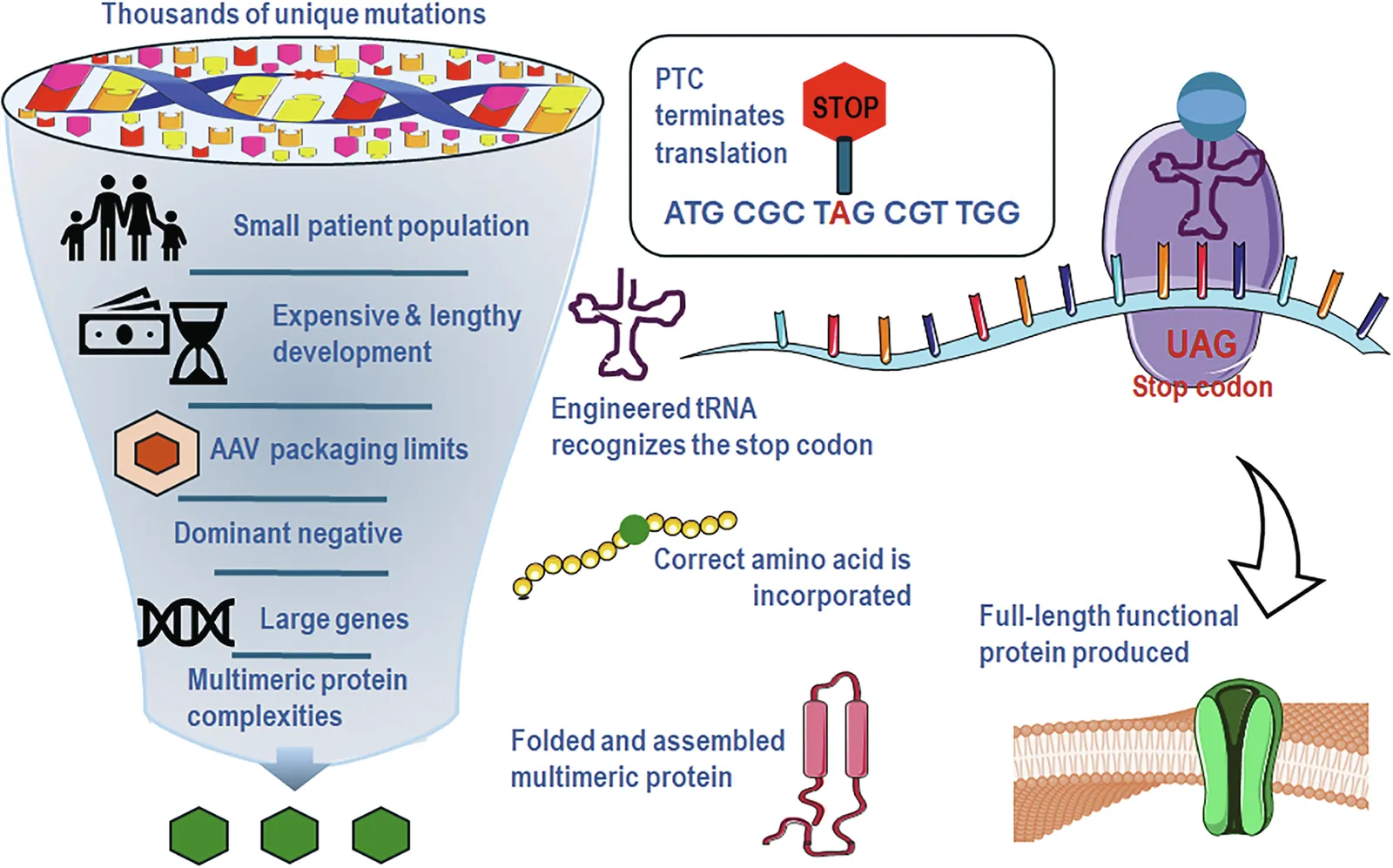
Reprogramming translation for rare disease therapy: challenges posed by large genes

Source: Nature - Biotechnology • Published: 26 Aug 2026, 00:00

Reprogramming translation for rare disease therapy: challenges posed by large genes

Discusses translation-reprogramming strategies as alternatives to dual-AAV gene replacement for treating rare large-gene disorders and sensory loss.

Key Takeaways
  • Delineates a breakthrough in the treatment of inherited hearing loss through gene therapy
  • Bespoke cell and gene therapy approach is revolutionizing precision medicine for genetically diverse diseases
  • This gene was linked to hereditary deafness in 1999 by Christine Petit’s group
Read Original Source

Continue exploring

Related longevity signals

Frontiers - HealthSpatial immune ecosystems and therapy resistance in large B-cell lymphoma: from single-cell multi-omics to immunotherapy-matched validationReview of how single-cell and spatial multi-omics map tumor and immune architectures in large B-cell lymphoma and guide pathology-ready biomarker development.PR NewswireFibroBiologics Announces Australian Patent Accepted for Cannabidiol Adjuvant Therapy for the Treatment of Degenerative Disc DiseaseA biotech news article about a newly accepted patent application describing a proposed CBD-plus-fibroblast approach for treating degenerative spinal discs, inviting readers to learn how the company frames this combined therapy and its potential pathway.Frontiers - HealthRevisiting macrophage metabolic reprogramming in metabolic dysfunction-associated steatotic liver disease: mechanisms, regulation, and therapeutic breakthroughsMacrophage metabolic reprogramming in fatty liver disease — a review article guiding readers through mechanisms, regulatory circuits, and therapeutic research directions.Frontiers - HealthTherapy-related acute myeloid leukemia with 24-month latency after CD19 CAR-T cell therapy in relapsed/refractory diffuse large B-cell lymphoma: A case reportCovers a case report of therapy-related acute myeloid leukemia developing two years after CAR-T therapy, with longitudinal genomic evolution documented.