
Longevity News

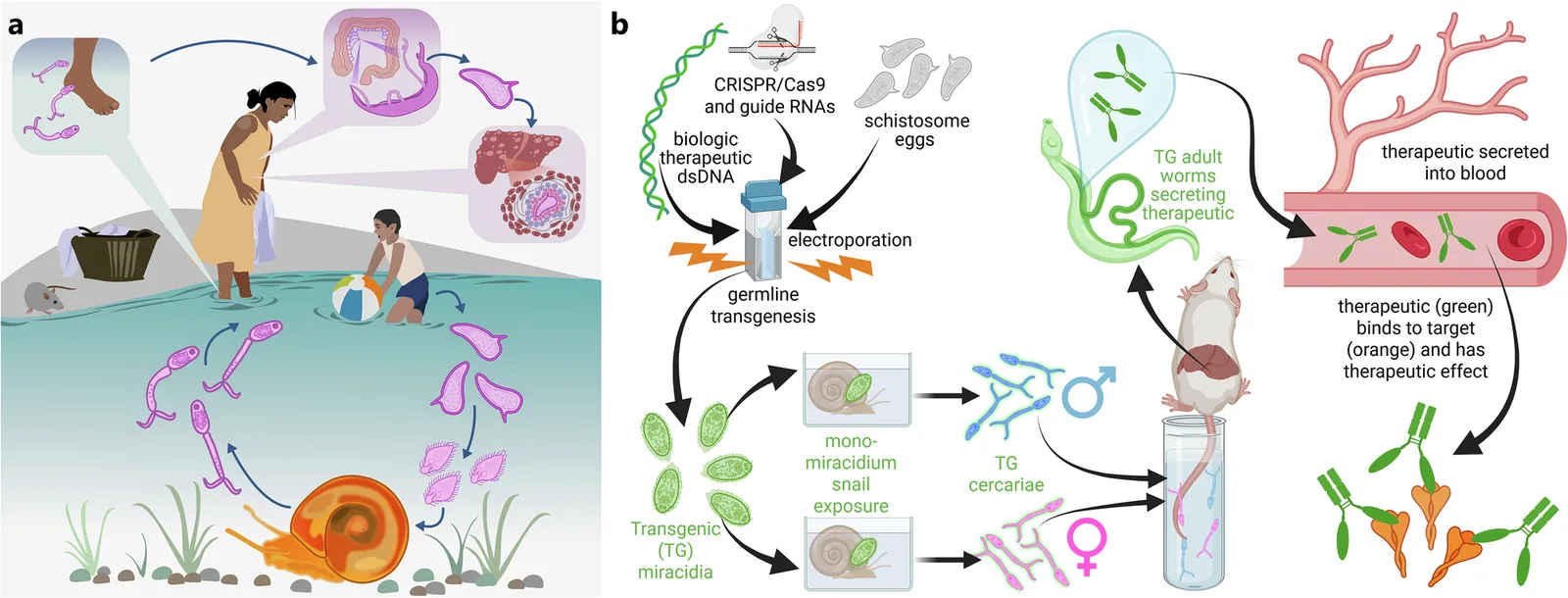
Heritable transgenic schistosomes as a living platform for SARS-CoV-2 neutralizing antibody secretion

Source: Nature - Biotechnology • Published: 26 Aug 2026, 00:00

Heritable transgenic schistosomes as a living platform for SARS-CoV-2 neutralizing antibody secretion

Heritable transgenic schistosomes that secrete a therapeutic antibody fragment in vivo — a research article describing a living-platform approach for sustained protein delivery.

Key Takeaways
  • Researchers generated the first heritable transgenic Schistosoma mansoni line with chromosomal transgene insertion
  • Transgenic worms secreted a VHH–IgG1 Fc (C5-Fc) antibody fragment into mouse circulation systemically
  • Sera from mice carrying C5-Fc worms neutralized SARS-CoV-2 in vitro consistent with ACE2-blocking activity
Read Original Source

Continue exploring

Related longevity signals

Frontiers - HealthA fully human afucosylated anti-GARP antibody PBA-0111 drives anti-tumor immunity through combined ADCC induction and TGF-β1 pathway blockadeReport on a dual-action human afucosylated anti-GARP antibody that combines ADCC induction with blockade of TGF-β1 activation to boost anti-tumor immunity.Nature - BiotechnologyCellular assemblies as living therapeuticsSurvey of design principles and translational pathways for engineered multicellular assemblies as programmable therapeutics in regeneration and immunomodulation.Frontiers - HealthMild autonomous cortisol secretion and brain function: cognitive, structural, and functional correlatesReports combined structural and resting-state functional MRI with cognitive and sleep assessments to compare brain function in patients with mild autonomous cortisol secretion and non-functioning adrenal tumors.Frontiers - HealthAnti-CD6 monoclonal antibody UMCD6 induces CD6 internalization, remodels costimulatory receptor availability, and modulates CD4+ T-cell activationExamines how an anti-CD6 monoclonal antibody triggers CD6 internalization and alters costimulatory receptor availability to reshape CD4+ T-cell activation.