
Longevity News

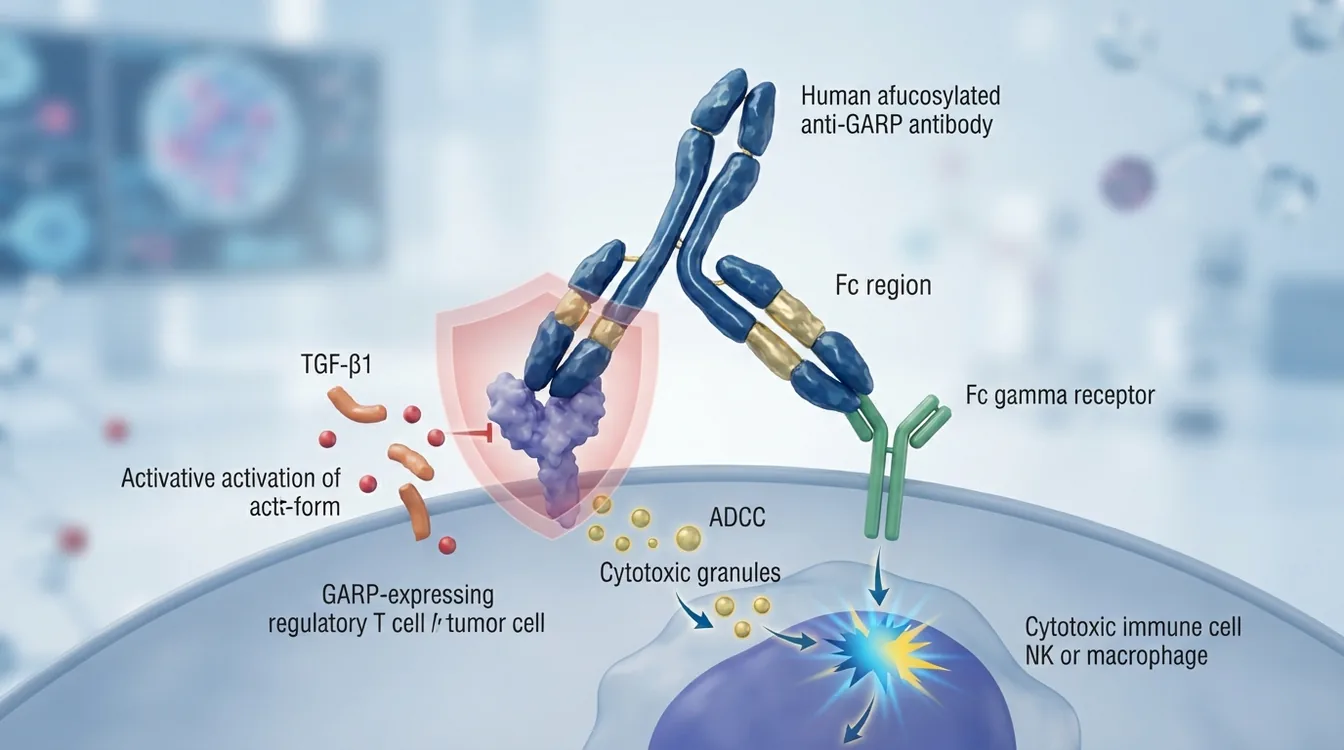
A fully human afucosylated anti-GARP antibody PBA-0111 drives anti-tumor immunity through combined ADCC induction and TGF-β1 pathway blockade

Source: Frontiers - Health • Published: 24 Aug 2026, 00:00

A fully human afucosylated anti-GARP antibody PBA-0111 drives anti-tumor immunity through combined ADCC induction and TGF-β1 pathway blockade

Report on a dual-action human afucosylated anti-GARP antibody that combines ADCC induction with blockade of TGF-β1 activation to boost anti-tumor immunity.

Key Takeaways
  • Presage Biosciences, Inc., Seattle, WA, United States The final, formatted version of the article will be published soon
  • You have multiple emails registered with Frontiers: You don't have a Frontiers account ?
  • PBA-0111 was compared with clinically tested anti-GARP antibodies, including DS-1055a- and ABBV-151- like antibodies
Read Original Source

Continue exploring

Related longevity signals

Frontiers - HealthA dual-action humanized DKK-1 antibody that activates the Wnt/β-catenin signaling pathway and inhibits the RANKL signaling pathway for osteoporosis therapyReports preclinical development of a humanized anti-DKK-1 antibody that aims to both stimulate bone formation and suppress bone resorption via Wnt/β-catenin and OPG-RANKL pathways.Nature - MainSystems vaccinology and the architecture of human immunity - NatureSurvey of systems vaccinology methods that use multi-omics and computation to map human immune programs and guide vaccine design.PR NewswireAnbogen Therapeutics and The University of Tokyo Enter Collaborative Research Agreement to Evaluate ABT-301 Across Multiple Tumor Types, Targeting Accelerated Human Clinical Indication ExpansionComparative oncology collaboration examining a selective cancer therapy in naturally occurring animal tumors to guide which human indications and combinations to pursue.Frontiers - HealthAnti-CD6 monoclonal antibody UMCD6 induces CD6 internalization, remodels costimulatory receptor availability, and modulates CD4+ T-cell activationExamines how an anti-CD6 monoclonal antibody triggers CD6 internalization and alters costimulatory receptor availability to reshape CD4+ T-cell activation.