
Longevity News

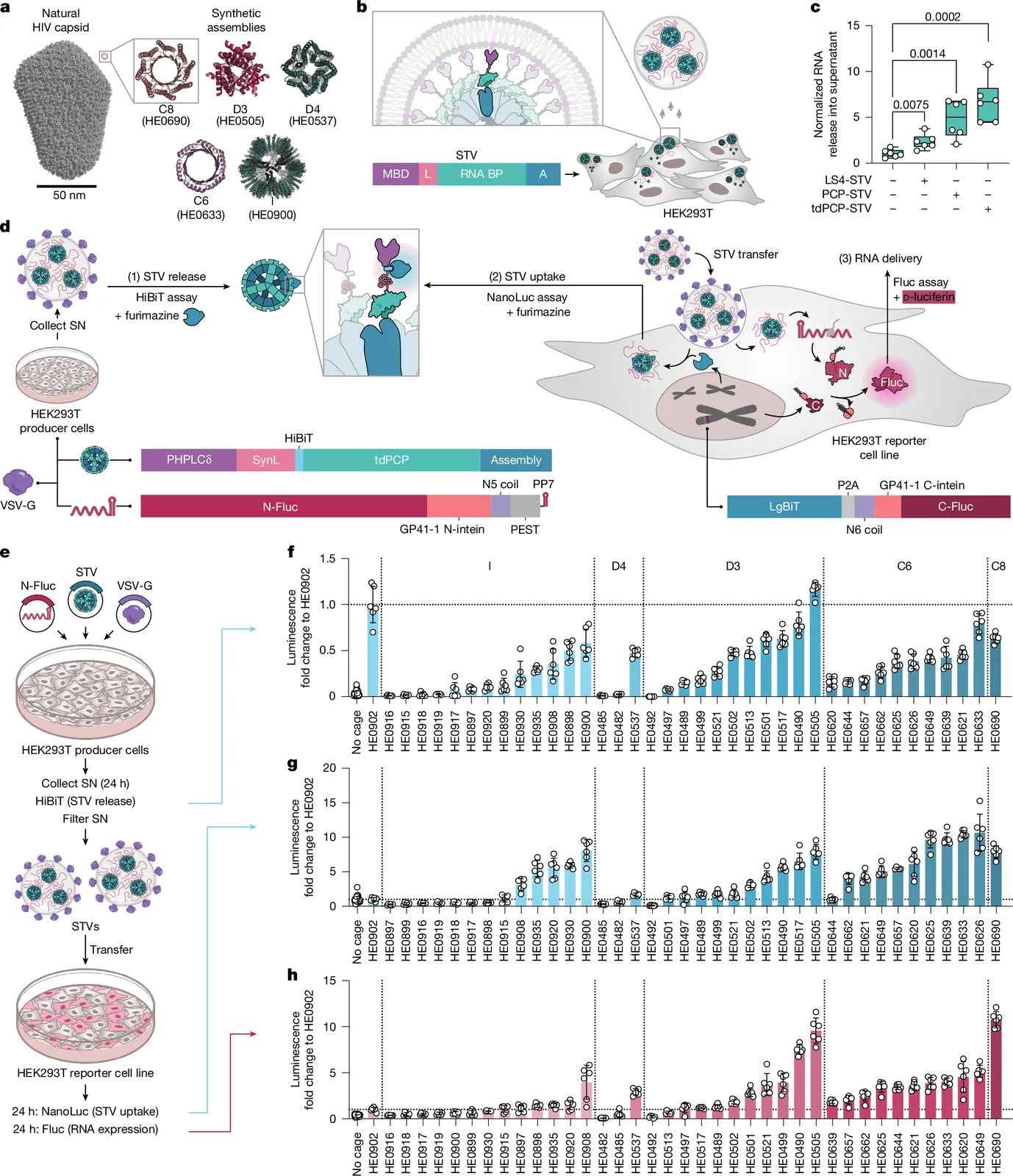
Creating bottom-up RNA transfer vehicles from synthetic protein assemblies

Source: Nature - Biotechnology • Published: 02 Sept 2026, 00:00

Creating bottom-up RNA transfer vehicles from synthetic protein assemblies

Covers creation of AI-designed synthetic protein assemblies engineered to function as programmable RNA delivery vehicles and tested across cells and animals.

Key Takeaways
  • Viruses evolved over billions of years to efficiently transfer genetic information
  • Generative models for protein design enable the creation of protein architectures that are absent from nature 3
  • STVs are distinct from known natural RNA transfer vehicles
Read Original Source

Continue exploring

Related longevity signals

Nature - BiotechnologyPhotochemical internalization enhances in vivo immunity to peptide‑ and protein‑based vaccines with synthetic dsRNA adjuvantsPhotochemical internalization as a strategy to boost immune responses to peptide- and protein-based vaccines paired with synthetic dsRNA adjuvants; a research article preview inviting readers to learn how this method was evaluated in preclinical models.Fight Aging!Bacterial Lipoic Acid Protein Ligase A Improves Mammalian Mitochondrial Function and HealthThis article previews research on using a bacterial enzyme to boost mitochondrial protein modification and overall cellular energy, framed as a potential metabolic-enhancing therapy. It invites readers curious about cross-species gene therapy approaches aimed at improving healthspan and age-related function.Nature - BiotechnologyCellular assemblies as living therapeuticsSurvey of design principles and translational pathways for engineered multicellular assemblies as programmable therapeutics in regeneration and immunomodulation.Nature - BiotechnologyAdaptive model-guided protein evolution with sparse data optimizes compact eukaryotic genome editorsCompact eukaryotic genome editors are examined through a data-efficient, model-guided engineering pipeline; the article previews methods and implications for optimizing small nucleases.