
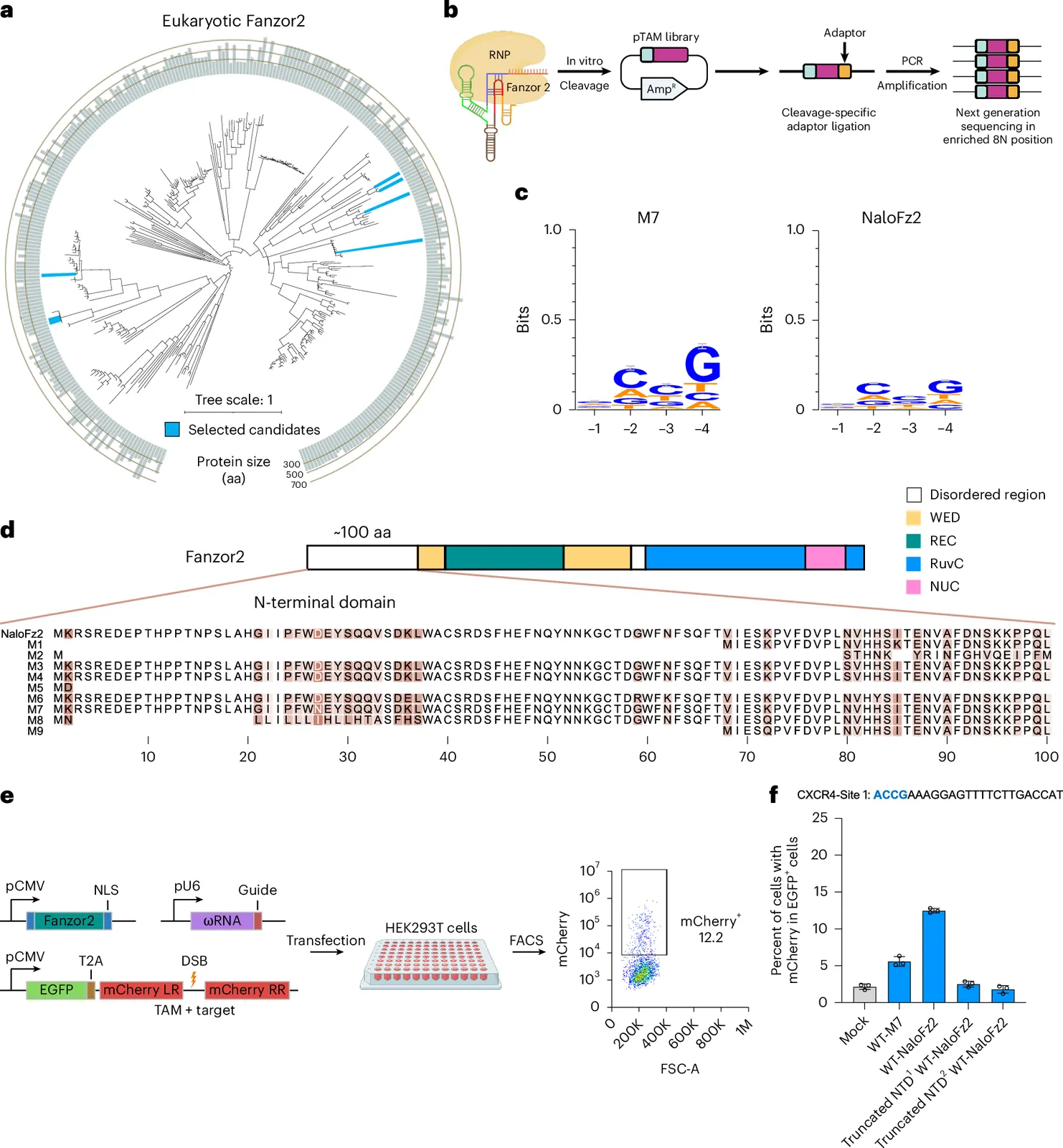
Compact eukaryotic genome editors are examined through a data-efficient, model-guided engineering pipeline; the article previews methods and implications for optimizing small nucleases.
Key Takeaways
- Efficient protein engineering is constrained by vast sequence space and limited experimental throughput
- In vivo editing of hPCSK9 in humanized mice supported the translational potential of optimized Fz2 editors
- Machine learning has enabled in silico prediction of mutational effects and accelerated protein optimization 4