
Longevity News

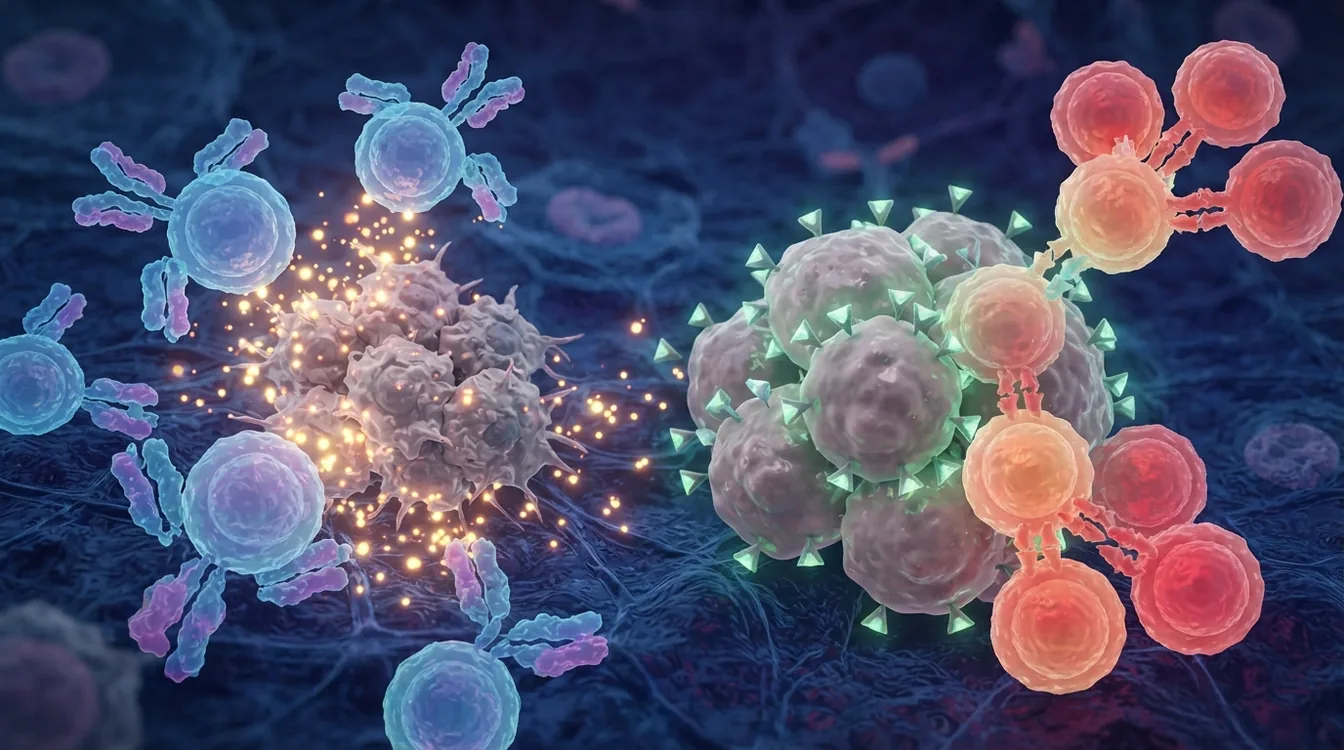
CAR T Cell-Induced Interferon Gamma Enhances MHC Class I Expression and Sensitizes Neuroblastoma to TCR-Engineered T Cell Therapy

Source: Frontiers - Health • Published: 04 Sept 2026, 00:00

CAR T Cell-Induced Interferon Gamma Enhances MHC Class I Expression and Sensitizes Neuroblastoma to TCR-Engineered T Cell Therapy

A lab research article examining a proposed two-step immunotherapy strategy that uses CAR T cell–driven inflammation to prime tumors for follow-up TCR-engineered T cell attack, offering insight into rationale and experimental approaches.

Key Takeaways
  • You have multiple emails registered with Frontiers: You don't have a Frontiers account ?
  • Chimeric antigen receptor (CAR) T cell effector function, including IFNγ production, is MHC class I-independent
  • Aim: We aimed to enhance neuroblastoma immunotherapy by combining CAR- and TCR-engineered T cells
Read Original Source

Continue exploring

Related longevity signals

Frontiers - HealthSpatial immune ecosystems and therapy resistance in large B-cell lymphoma: from single-cell multi-omics to immunotherapy-matched validationReview of how single-cell and spatial multi-omics map tumor and immune architectures in large B-cell lymphoma and guide pathology-ready biomarker development.Longevity TechnologyXellSmart scores FDA fast track for Parkinson’s cell therapyNews about regulatory momentum for an off-the-shelf cell therapy for Parkinson’s, previewing a piece on its clinical and manufacturing implications.Frontiers - HealthPre-treatment T cell features and immune-milieu characteristics shape treatment-induced exhaustion and resistance to Blinatumomab in B-cell acute lymphoblastic leukemiaReports how baseline T cell states and circulating immune signals predict T cell exhaustion and resistance to sustained CD3-engaging therapy in B-cell ALL.Nature - BiotechnologyOral nano-delivery of a gut microbial metabolite enhances T cell stemness for cancer immunotherapyReports an oral nano-emulsion prodrug of a gut microbial metabolite that preserves CD8+ T cell stemness and boosts antitumor immunity in mouse models.