
Longevity News

A binding-to-release strategy for targeted anticancer drug delivery - Nature

Source: Nature - Main • Published: 26 Aug 2026, 00:00

A binding-to-release strategy for targeted anticancer drug delivery - Nature

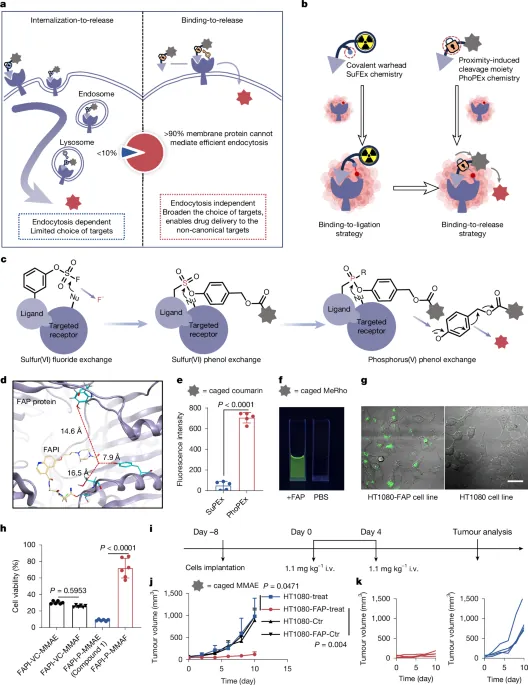
Covers a chemistry-driven binding-to-release strategy that enables targeted payload release from cell-surface receptors without cellular internalization, expanding conjugate targets.

Key Takeaways
  • For poorly internalizing targets, drug conjugates dissociate and clear rapidly, limiting efficacy
  • This platform demonstrated high specificity from in vitro to clinical specimens
  • FAP-BTR-SMDC achieved 5.9-fold higher monomethyl auristatin E exposure (AUC 0–120 h )
Read Original Source

Continue exploring

Related longevity signals

Longevity TechnologyNRG Therapeutics shows promising lab results for new ALS drug candidateNRG Therapeutics’ preclinical report invites readers to examine lab and mechanistic data for a novel ALS drug candidate and its next-stage plans.Nature - MainHuman brain organoids record the passage of time over multiple years - NatureReports multi‑year human cerebral organoid cultures that continue cell‑type specific maturation and record elapsed time via transcriptional and epigenomic changes.Nature - MainFirst-of-its-kind narcolepsy drug opens door to new therapies for the brainReport on a newly approved orexin-mimicking oral therapy that targets narcolepsy's underlying biology and signals a shift in sleep disorder treatment approaches.Nature - BiotechnologyVirus-like particles enable targeted gene engineering and pooled CRISPR screening in primary human myeloid cellsA methods-focused article describing a virus-like particle toolkit for delivering diverse CRISPR edits and enabling pooled functional genomics in primary human myeloid cells.