
News summary

Transplanted Immune Cells Donate Mitochondria to Neighbors

Source: Lifespan.io • Published: 22 Sept 2026, 16:52

Summarized by Masters of Longevity from Lifespan.io.

This article previews a research report on immune-cell transplantation and how donor cells interact with brain neighbors at the cellular level. Expect a scientific exploration of cell replacement and intercellular mitochondrial exchange, highlighting experimental approaches and implications for treating metabolic brain disorders.
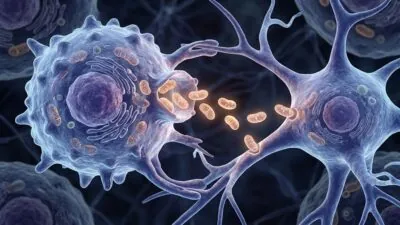
Transplanted Immune Cells Donate Mitochondria to Neighbors
Key Takeaways
  • Bone marrow transplantation produced roughly 82% donor-derived microglial/myeloid cells in affected mouse brains five months after grafting.
  • Recipient brain cells, including neurons and glia, acquired donor mitochondrial signal and showed upregulation of nuclear energy-metabolism genes.
  • In vitro co-culture showed contact-dependent mitochondrial transfer, with diseased fibroblasts acquiring more donor mitochondria than healthy fibroblasts.
Read the full article at Lifespan.io

Continue exploring

Recommended MoL Picks

MoL PickReducing Inflammation from Ageing Cells: What a Mouse Study FoundResearchers reduced the inflammatory signals released by cells that had stopped dividing. Older mice also improved on some strength and frailty tests. Whether this approach could help people remains unknown.MoL PickWhat Changes in the Human Hippocampus with Age?A study of 40 postmortem brains maps a midlife shift in immune cells and a wider loss of cellular and genome organisation—but it does not show how to prevent cognitive decline.MoL PickNucleotides and Longevity: Is the Evidence Ready?They help build DNA and keep cells working. Early human studies make nucleotide supplements interesting—but leave important questions about healthy ageing unanswered. Yet.