
Longevity News

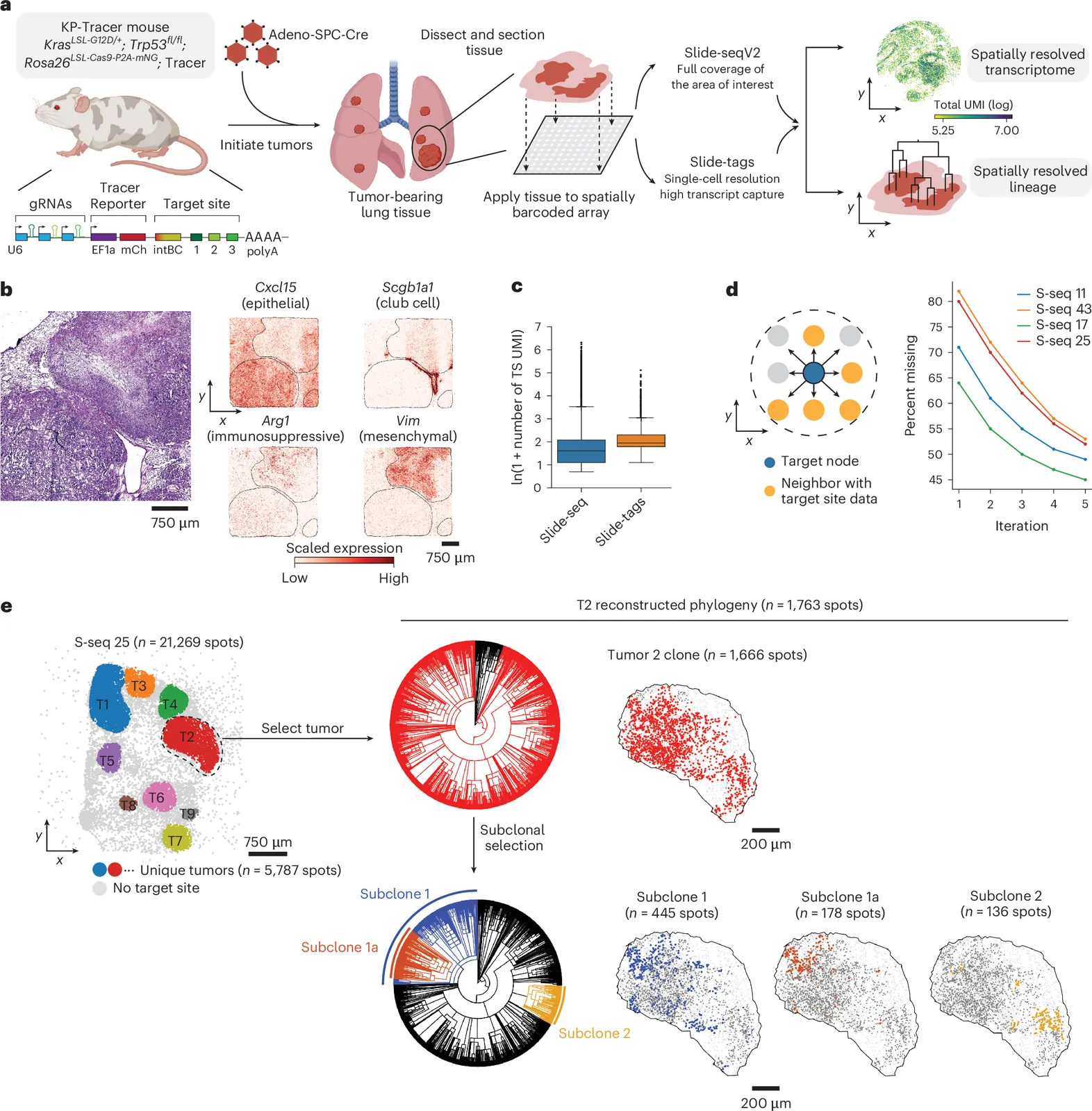
Spatiotemporal lineage tracing reveals the dynamic spatial architecture of tumor growth and metastasis

Source: Nature - Biotechnology • Published: 02 Sept 2026, 00:00

Spatiotemporal lineage tracing reveals the dynamic spatial architecture of tumor growth and metastasis

This article previews a research paper that combines spatial transcriptomics and lineage tracing to map how tumor subclones and their niches evolve over time, offering insights into tumor growth and metastatic progression.

Key Takeaways
  • Tumor progression is driven by dynamic interactions between cancer cells and their surrounding microenvironment
  • Raw data are available under BioProject accession code PRJNA1381728
  • Processed data from the KP-Tracer study 49 are available via Zenodo at https
Read Original Source

Continue exploring

Related longevity signals

Fight Aging!An Adiponectin Receptor Agonist Promotes Muscle Growth in RatsA short primer on a preclinical research article testing a small‑molecule adiponectin receptor agonist as a potential way to stimulate muscle growth and function in rodent models, useful for readers curious about emerging pharmacological strategies against muscle atrophy.Nature - BiotechnologyA CRISPR-based ‘dam-break drainage’ sensing architecture for rapid, affordable and ultrasensitive pathogen detectionA chip-based CRISPR-Cas13a fluidic sensor translates target RNA into a visible dam-break drainage signal for rapid, instrument-free detection.Fight Aging!Senescent Cells in Metabolic DisordersReview of how senescent cells and their inflammatory secretions interact with metabolic dysfunction and drive diseases like fatty liver and diabetes.Nature - MainLate-life semaglutide treatment slows ageing and extends lifespan in female mice - NatureLate-life semaglutide treatment in mice: a research article examining whether a diabetes drug can mimic calorie restriction to slow ageing and preserve function. Open to learn what kind of experimental and comparative study the paper presents and why it matters for ageing research.