
Longevity News

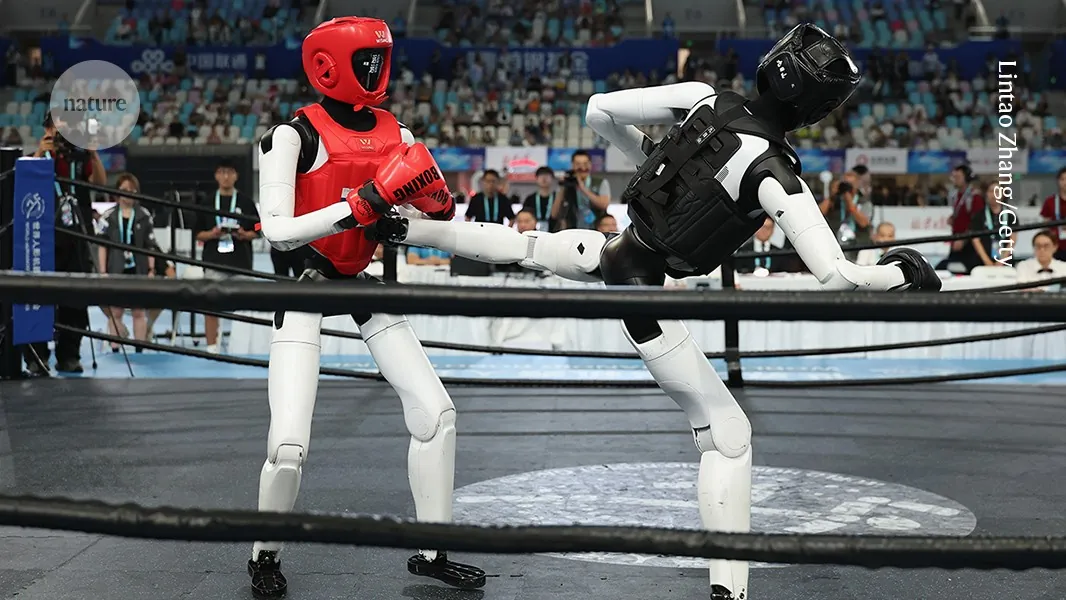
‘Robot Olympics’ reveal humanoids’ rapid progress — and flaws

Source: Nature - Main • Published: 27 Aug 2026, 00:00

‘Robot Olympics’ reveal humanoids’ rapid progress — and flaws

Humanoid-robot competition coverage that previews athletic feats and practical-task challenges, inviting readers curious about embodied AI’s real-world limits.

Key Takeaways
  • More than 600 teams competed at the second World Humanoid Robot Games in Beijing
  • Humanoid robot sprinted 100 metres in 8.64 seconds, faster than the human record referenced in the article
  • Robots excelled at prescribed athletic motions but failed practical tasks like hammering and precise tool use
Read Original Source

Continue exploring

Related longevity signals

Nature - BiotechnologySupporting upper limb movements with a soft robot after a brachial plexus injuryA research article describing a wearable soft robotic exosuit designed to assist multi-joint upper‑limb movements after brachial plexus injury, and what readers can expect to learn about its design and immediate functional effects.Nature - BiotechnologyRoot Ion flux and transcriptomic analyses reveal the response mechanisms of Gleditsia sinensis seedlings to salt stressReports root ion flux measurements and transcriptomics revealing how a salt-tolerant tree seedling reallocates resources to maintain ion balance under salinity stress.Nature - BiotechnologyA CRISPR-based ‘dam-break drainage’ sensing architecture for rapid, affordable and ultrasensitive pathogen detectionA chip-based CRISPR-Cas13a fluidic sensor translates target RNA into a visible dam-break drainage signal for rapid, instrument-free detection.PR NewswireHenlius Reports 2026 Interim Results: Sustained Profitability Leap, Advancing Global Value Validation, and Accelerating Progress Towards C-MNCReport on a biopharma's midyear financial and commercial update highlighting global sales momentum and pipeline progress in oncology.