
Longevity News

Molecular mechanisms and pathogenesis of MASH - Nature

Source: Nature - Main • Published: 02 Sept 2026, 00:00

Molecular mechanisms and pathogenesis of MASH - Nature

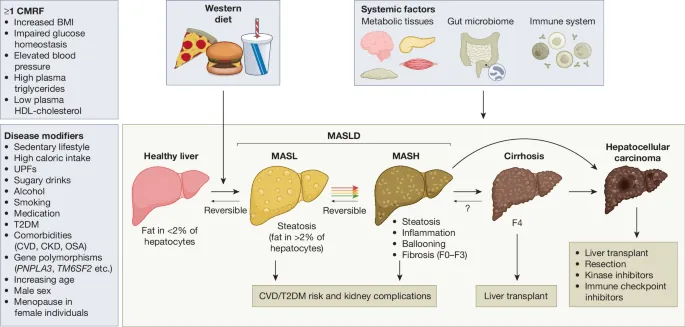
Survey of current molecular and cellular mechanisms driving metabolic dysfunction-associated steatotic liver disease and its progression to hepatocellular carcinoma.

Key Takeaways
  • G polymorphism confers an increased risk of non-alcoholic fatty liver disease associated hepatocellular carcinoma
  • MASLD is now the most prevalent chronic liver disease worldwide and a rising indication for liver transplantation
  • MASH is a significant risk factor for fibrosis
Read Original Source

Continue exploring

Related longevity signals

Nature - MainLate-life semaglutide treatment slows ageing and extends lifespan in female mice - NatureLate-life semaglutide treatment in mice: a research article examining whether a diabetes drug can mimic calorie restriction to slow ageing and preserve function. Open to learn what kind of experimental and comparative study the paper presents and why it matters for ageing research.Nature - MainHuman brain organoids record the passage of time over multiple years - NatureReports multi‑year human cerebral organoid cultures that continue cell‑type specific maturation and record elapsed time via transcriptional and epigenomic changes.Nature - MainStimulation modulates gene-linked cell assemblies in the human brain - NatureDescribes an ex vivo platform linking microelectrode stimulation with single-nucleus genomics to map how cortical stimulation reshapes cell assemblies and gene programs.Fight Aging!Senescent Cells in Metabolic DisordersReview of how senescent cells and their inflammatory secretions interact with metabolic dysfunction and drive diseases like fatty liver and diabetes.