
News summary

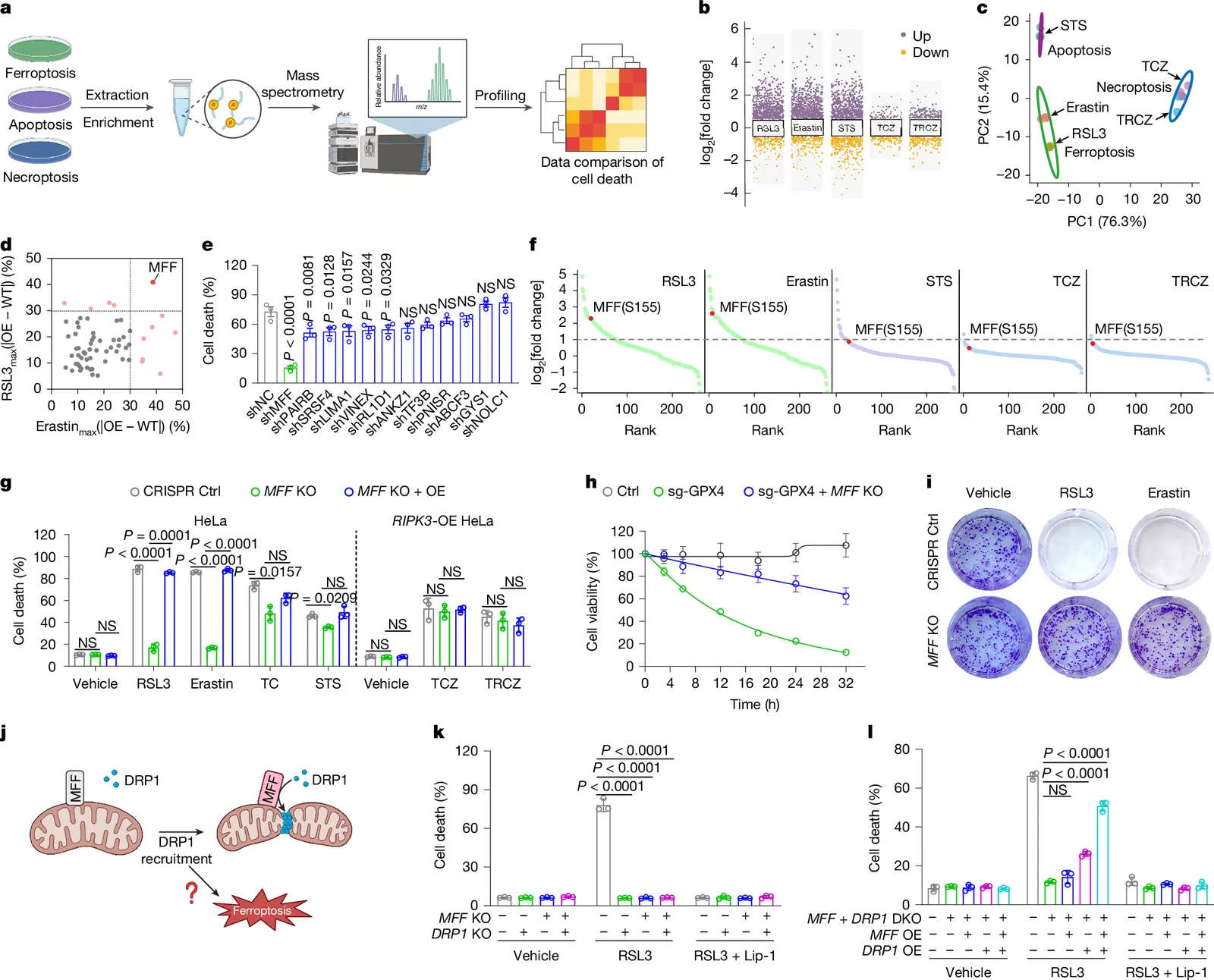
Mitochondrial fission factor senses and governs ferroptosis

Source: Nature - Main • Published: 16 Sept 2026, 00:00

Summarized by Masters of Longevity from Nature - Main.

Mitochondrial fission factor-focused research that explains how organelle dynamics link to ferroptosis and showcases a live-cell biosensor for probing this pathway.
Mitochondrial fission factor senses and governs ferroptosis
Key Takeaways
  • Phosphorylation of mitochondrial fission factor (MFF) at Ser155 is induced by 17-HETE and specifically promotes ferroptosis through organelle remodeling.
  • MFF S155 phosphorylation drives coordinated mitochondrial and peroxisomal fragmentation, increasing interorganelle crosstalk and oxidative stress to accelerate ferroptotic death.
  • A live-cell MFF-SPARK biosensor revealed PKCβ and DUSP22 as a kinase–phosphatase pair regulating MFF phosphorylation, enabling pharmacological screening such as avermectin B1 activation.
Read the full article at Nature - Main

Continue exploring

Recommended MoL Picks

MoL PickFrom Metrics to Better LivingEverstride’s May 2026 Consumer Health Market Briefing shows a wellness market moving from products to systems, from tracking to guidance, and from optimization to meaning. The next winners in longevity may not be the companies that measure the most. They may be the ones that help consumers translate health data into a life they actually want to live.MoL PickNucleotides and Longevity: Is the Evidence Ready?They help build DNA and keep cells working. Early human studies make nucleotide supplements interesting—but leave important questions about healthy ageing unanswered. Yet.MoL PickReducing Inflammation from Ageing Cells: What a Mouse Study FoundResearchers reduced the inflammatory signals released by cells that had stopped dividing. Older mice also improved on some strength and frailty tests. Whether this approach could help people remains unknown.