
Longevity News

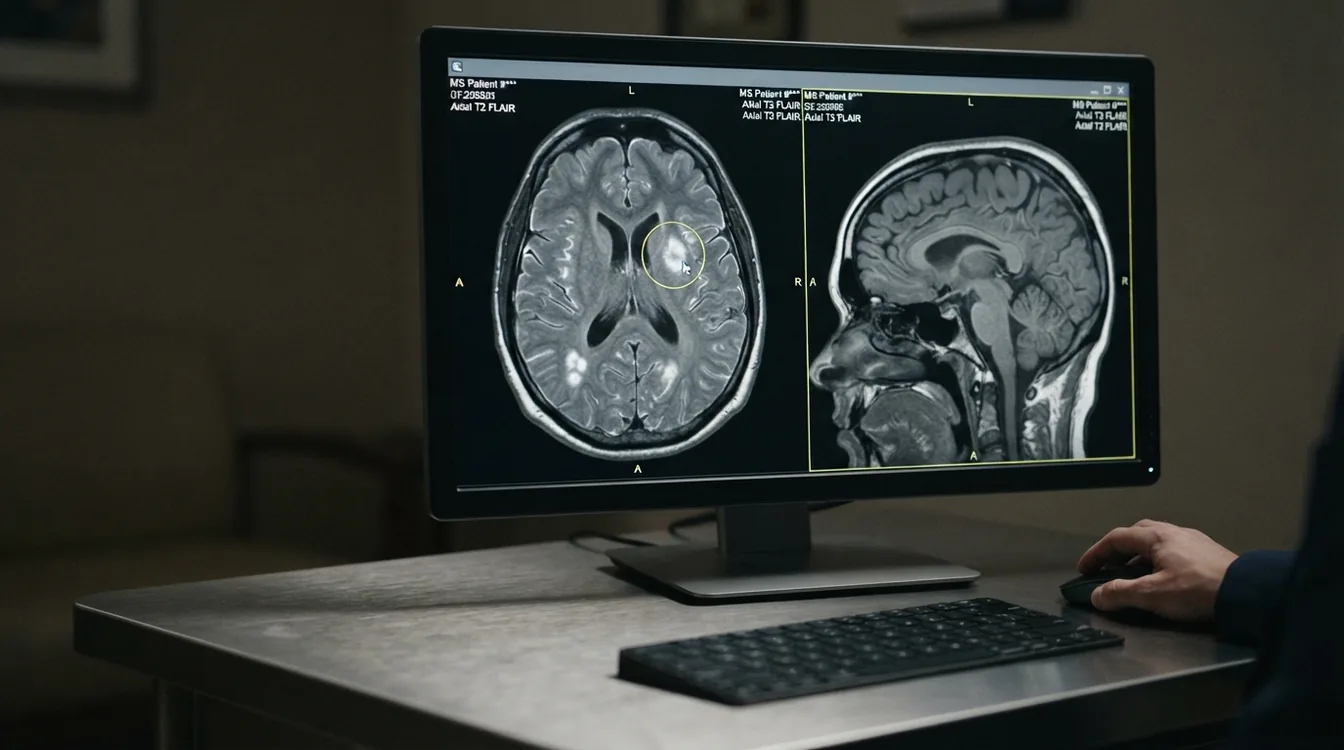
From MRI activity to treatment escalation in relapsing multiple sclerosis: what can new T2 lesions tell us?

Source: Frontiers - Health • Published: 25 Aug 2026, 00:00

From MRI activity to treatment escalation in relapsing multiple sclerosis: what can new T2 lesions tell us?

Assessment of new T2 MRI lesions in relapsing multiple sclerosis and their limits for guiding treatment escalation and individual prognosis.

Key Takeaways
  • 2 T2Ls on confirmed disability progression, suggesting strong predictive capability (7)
  • While it is possible to convert ORs to individual risk
  • This is critical because the relationship is nonlinear
Read Original Source

Continue exploring

Related longevity signals

PR NewswireAnbogen Therapeutics and The University of Tokyo Enter Collaborative Research Agreement to Evaluate ABT-301 Across Multiple Tumor Types, Targeting Accelerated Human Clinical Indication ExpansionComparative oncology collaboration examining a selective cancer therapy in naturally occurring animal tumors to guide which human indications and combinations to pursue.PR NewswireFibroBiologics Announces Australian Patent Accepted for Cannabidiol Adjuvant Therapy for the Treatment of Degenerative Disc DiseaseA biotech news article about a newly accepted patent application describing a proposed CBD-plus-fibroblast approach for treating degenerative spinal discs, inviting readers to learn how the company frames this combined therapy and its potential pathway.Frontiers - HealthPre-treatment T cell features and immune-milieu characteristics shape treatment-induced exhaustion and resistance to Blinatumomab in B-cell acute lymphoblastic leukemiaReports how baseline T cell states and circulating immune signals predict T cell exhaustion and resistance to sustained CD3-engaging therapy in B-cell ALL.Nature - MainHuman brain organoids record the passage of time over multiple years - NatureReports multi‑year human cerebral organoid cultures that continue cell‑type specific maturation and record elapsed time via transcriptional and epigenomic changes.