
Longevity News

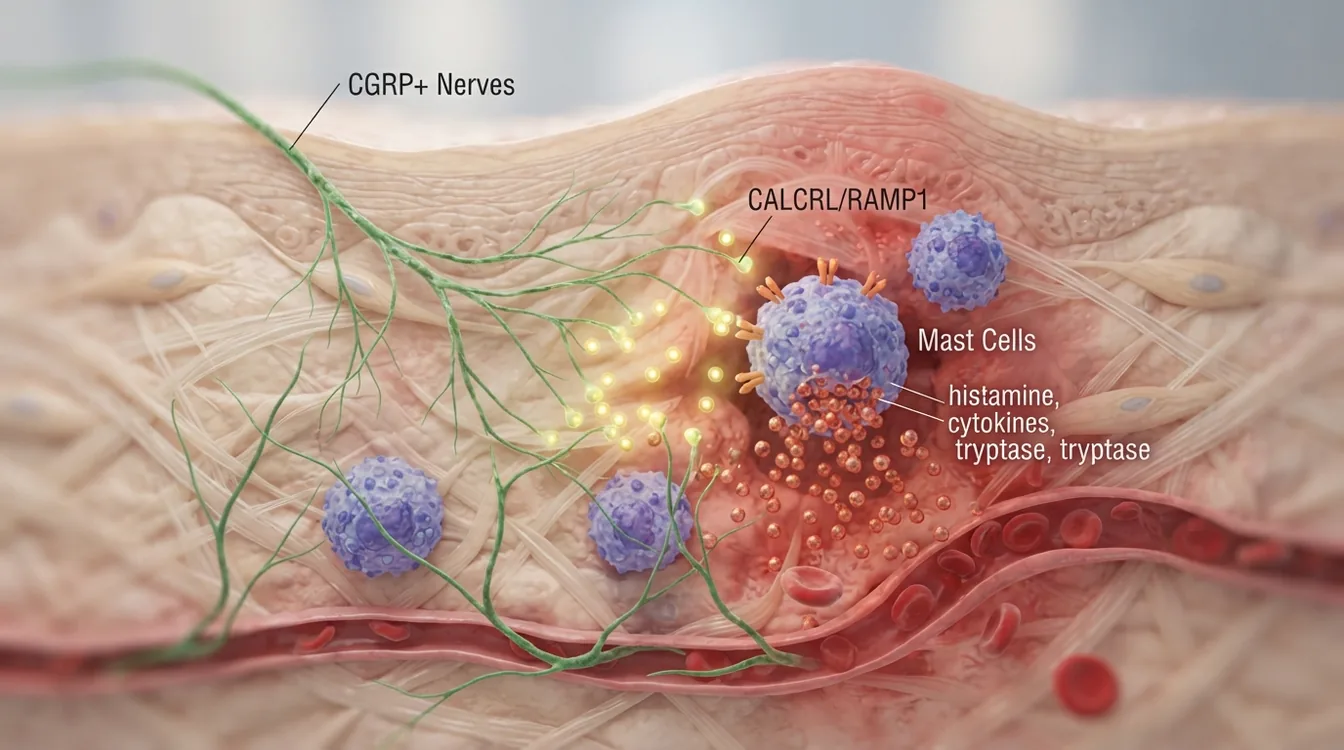
Calcitonin gene-related peptide promotes mast cell-mediated neuroimmune inflammation through the CALCRL/RAMP1–JAK3–STAT1 axis in rosacea

Source: Frontiers - Health • Published: 02 Sept 2026, 00:00

Calcitonin gene-related peptide promotes mast cell-mediated neuroimmune inflammation through the CALCRL/RAMP1–JAK3–STAT1 axis in rosacea

Reports how a neuropeptide-driven signaling axis links sensory nerves to mast cell activation and inflammation in chronic facial skin disease.

Key Takeaways
  • Patients with the skin disease had elevated serum CGRP that correlated with flushing and erythema severity
  • Lesional mast cells showed increased CALCRL, RAMP1, phosphorylated JAK3, and phosphorylated STAT1 protein localization
  • CGRP stimulated mast-cell degranulation and inflammatory mediator release that was reduced by rimegepant or ritlecitinib
Read Original Source

Continue exploring

Related longevity signals

Nature - MainStimulation modulates gene-linked cell assemblies in the human brain - NatureDescribes an ex vivo platform linking microelectrode stimulation with single-nucleus genomics to map how cortical stimulation reshapes cell assemblies and gene programs.Fight Aging!An Adiponectin Receptor Agonist Promotes Muscle Growth in RatsA short primer on a preclinical research article testing a small‑molecule adiponectin receptor agonist as a potential way to stimulate muscle growth and function in rodent models, useful for readers curious about emerging pharmacological strategies against muscle atrophy.Frontiers - HealthToward nursing-integrated biomarker surveillance for immune-related adverse events during immune checkpoint inhibitor therapyDescribes nursing-integrated biomarker surveillance strategies to detect immune-related adverse events during immune checkpoint inhibitor therapy and how to operationalize them.Nature - BiotechnologyNanopore-enabled time-resolved monitoring of catecholamine-related phenylalanine metabolismA nanopore single-molecule platform was used to monitor the full phenylalanine-to-adrenaline biosynthetic pathway in real time, detecting key intermediates and perturbations.