
Longevity News

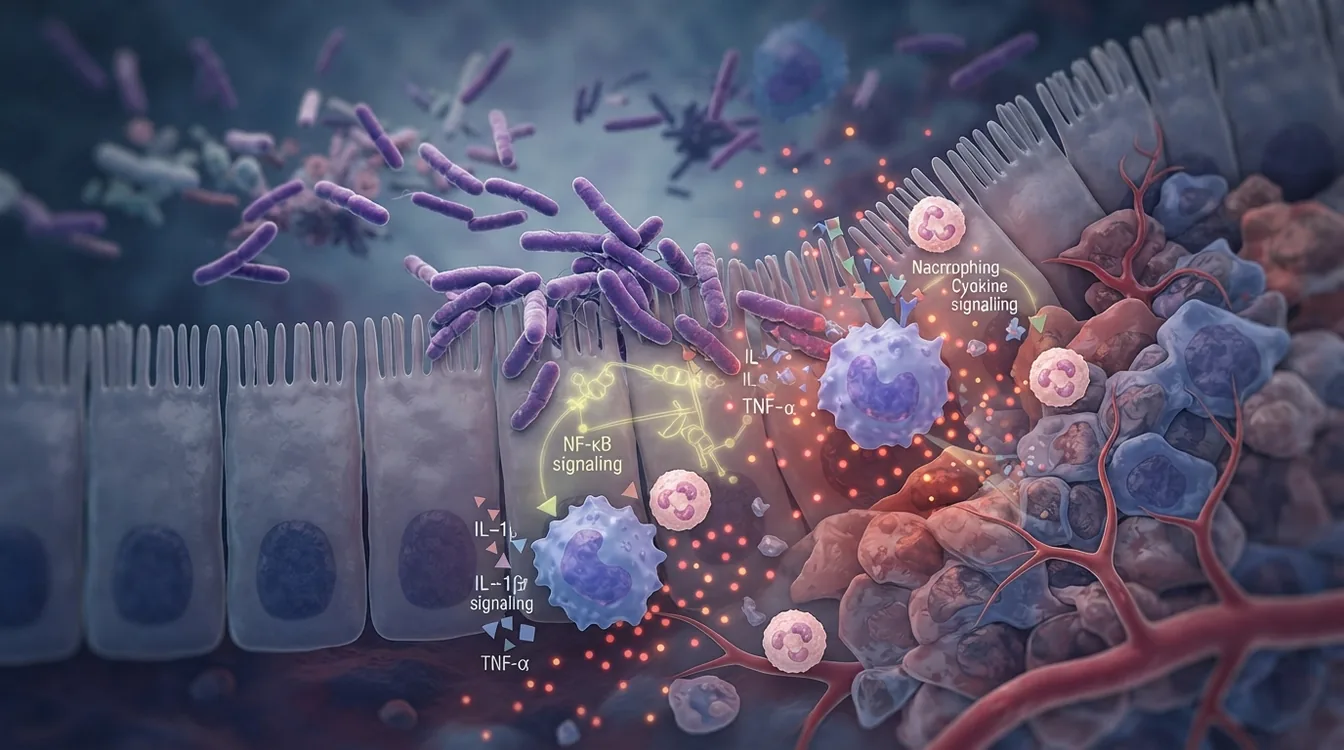
Unveiling Fusobacterium nucleatum’s role in colorectal cancer: the inflammatory microenvironment connection

Source: Frontiers - Health • Published: 12 Aug 2026, 00:00

Unveiling Fusobacterium nucleatum’s role in colorectal cancer: the inflammatory microenvironment connection

Examines how Fusobacterium nucleatum interacts with the tumor microenvironment to drive colorectal cancer via inflammatory signaling and myeloid cell recruitment.

Key Takeaways
  • Introduction Intestinal flora homeostasis is essential for maintaining health and preventing disease
  • Dysbiosis of the gut microbiota has been linked to various human diseases
  • Increasing evidence shows that intestinal flora imbalance plays a significant role in the occurrence
Read Original Source

Continue exploring

Related longevity signals

Nature - BiotechnologySpirulina‑mediated silver nanoparticles induce apoptosis and autophagy in Caco‑2 colorectal cancer cellsA study reports green synthesis of silver nanoparticles using a microalga extract and examines their effects on human colon cancer cells, focusing on cell death pathways.Frontiers - HealthCEA-Targeted CAR-NK Cells Derived from Embryonic Stem Cells Exhibit Potent Anti-tumor Activity Against Colorectal CancerCovers generation of CEA-specific CAR-expressing NK cells from engineered human embryonic stem cells and their anti-colorectal cancer activity in models.Frontiers - HealthMacrophage polarization regulated by the βTrCP-NF-κB inflammatory signaling pathway is required for valproic acid’s dual role in breast tumor radiosensitivity and normal tissue radioprotectionCovers how valproic acid modulates macrophage polarization via the βTrCP–NF-κB pathway to increase breast tumor radiosensitivity while protecting normal tissues.Frontiers - HealthPredictive modeling of axillary web syndrome in Chinese postoperative breast cancer patients using interpretable machine learningA paper develops and validates interpretable machine learning models to predict axillary web syndrome risk after breast cancer surgery, comparing algorithms and clinical predictors.