
News summary

Tissue‐Level Transcriptomic Entropy Reveals Organ‐Specific Aging Patterns and Predicts Cancer Progression

Source: Aging Cell • Published: 04 Sept 2026, 11:36

Summarized by Masters of Longevity from Aging Cell.

Tissue-level transcriptomic entropy is presented as a tool for studying how gene-expression patterns change with age across organs, inviting readers to learn how this approach frames aging and disease risk.
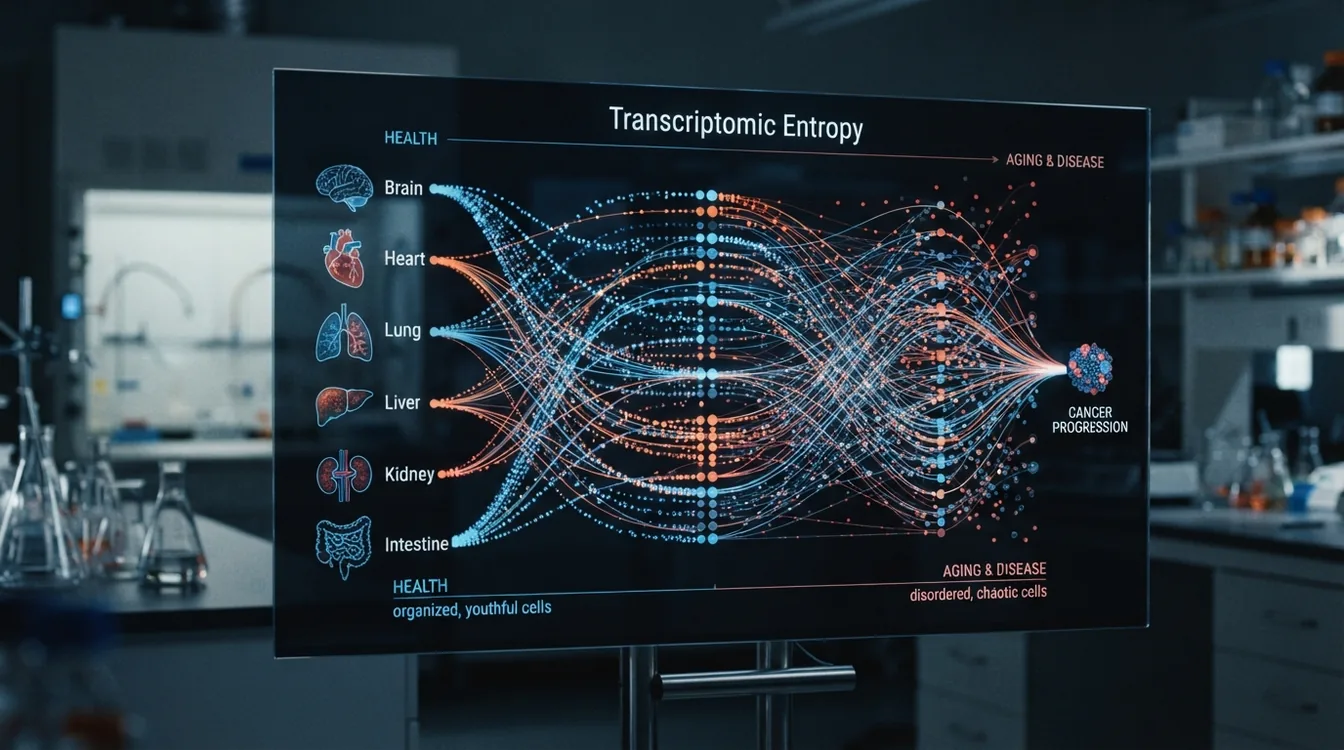
Tissue‐Level Transcriptomic Entropy Reveals Organ‐Specific Aging Patterns and Predicts Cancer Progression
Key Takeaways
  • Researchers developed a transcriptomic entropy measure computed from tissue-level gene expression profiles that quantifies aging-related transcriptome disorganization.
  • Organ-specific entropy patterns were identified, showing distinct aging trajectories across different organs.
  • Higher tissue transcriptomic entropy correlated with increased cancer progression risk in analyzed cohorts.
Read the full article at Aging Cell

Continue exploring

Recommended MoL Picks

MoL PickCreatine and Cancer: Why New Mouse Studies Point in Opposite DirectionsCreatine strengthened antitumour immune cells in one mouse study—and promoted metastasis through platelets in another. The apparent contradiction reveals why neither result is a supplement recommendation.MoL PickCan You Really Measure Whether You’re Aging More Slowly?A younger epigenetic-age score can look like proof that an intervention is working. A major new analysis shows which clocks detect change—and why movement is not yet the same as longer healthspan.MoL PickBiotin for Hair Growth: The Weak Evidence—and the Blood-Test Risk Most People MissBiotin deficiency can affect hair. That does not mean more biotin makes healthy hair grow—and high doses can distort important laboratory results.