
News summary

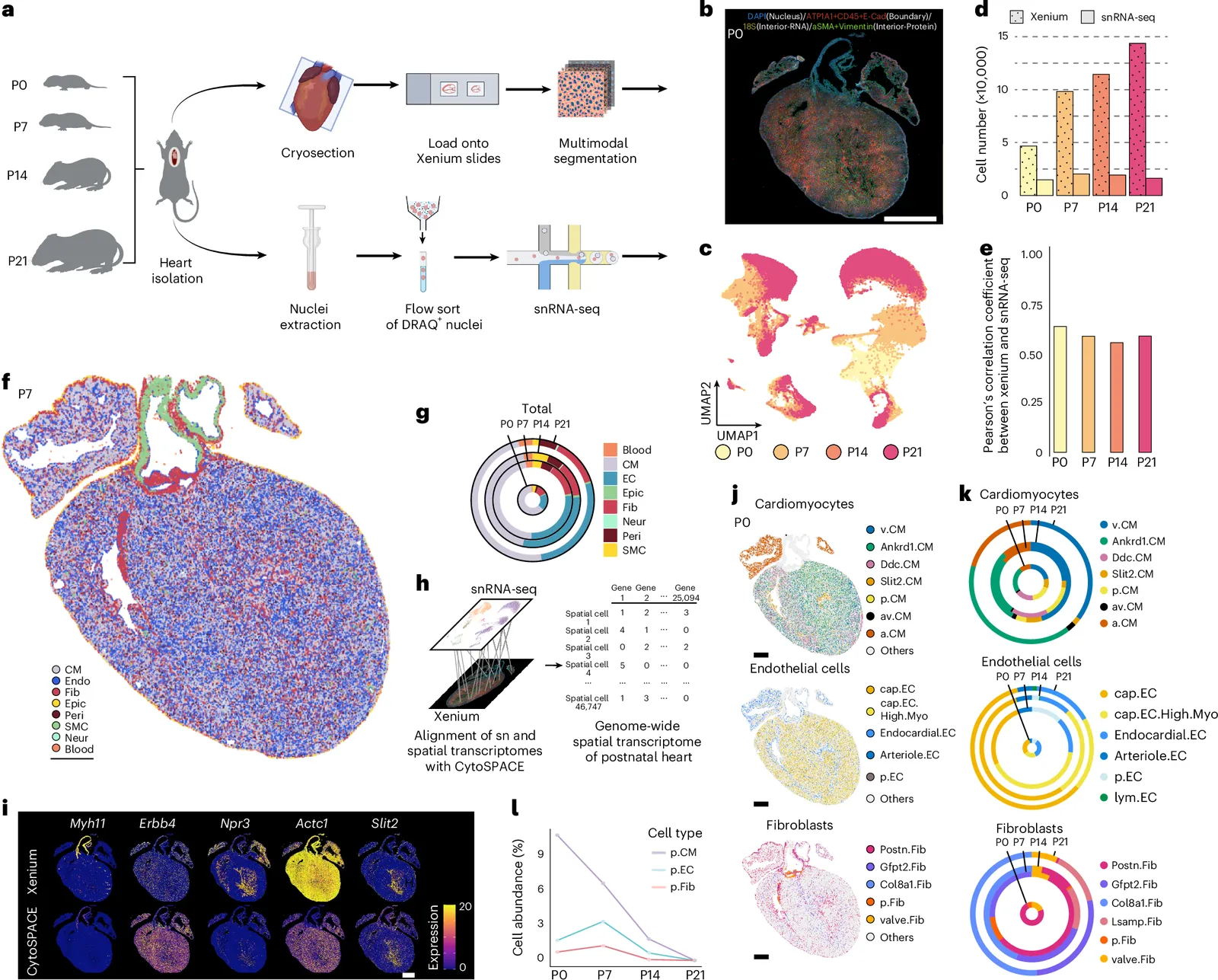
Spatially guided in vivo single-cell functional genomics of postnatal heart

Source: Nature - Biotechnology • Published: 07 Sept 2026, 00:00

Summarized by Masters of Longevity from Nature - Biotechnology.

Reports a spatially resolved single-nucleus atlas of the postnatal mouse heart and introduces PIP-seq, a probe-based, high-throughput in vivo perturbation platform.
Spatially guided in vivo single-cell functional genomics of postnatal heart
Key Takeaways
  • The study integrated single-nucleus RNA sequencing with image-based spatial transcriptomics to map postnatal heart maturation across space and time.
  • PIP-seq was developed to detect sgRNA identity, infer CRISPR editing, and profile transcription from fixed nuclei at scale.
  • Using PIP-seq, the authors identified 21 previously uncharacterized regulators required for cardiomyocyte maturation roles like sarcomere assembly and metabolic reprogramming.
Read the full article at Nature - Biotechnology

Continue exploring

Recommended MoL Picks

MoL PickApoB: The cholesterol signal LDL can missIn longevity medicine, the useful biomarkers are not always the exotic ones. ApoB is a relatively simple blood test that can sharpen cardiovascular prevention when LDL-C looks reassuring but particle burden remains high.MoL PickThe Next Obesity-Drug Race Is About What Weight You LoseRegeneron’s myostatin and activin A antibodies point to a sharper question for the GLP-1 era: not whether people can lose more weight, but whether medicine can preserve the tissue that makes weight loss healthier.MoL PickCreatine and Cancer: Why New Mouse Studies Point in Opposite DirectionsCreatine strengthened antitumour immune cells in one mouse study—and promoted metastasis through platelets in another. The apparent contradiction reveals why neither result is a supplement recommendation.