
News summary

Reprogramming Glia into Neurons Becomes Less Effective with Advancing Age

Source: Fight Aging! • Published: 18 Sept 2026, 10:22

Summarized by Masters of Longevity from Fight Aging!.

A study using the retina shows that glia-to-neuron reprogramming loses effectiveness with age as glia adopt reactive inflammatory states and the tissue mounts stronger neuroimmune responses.
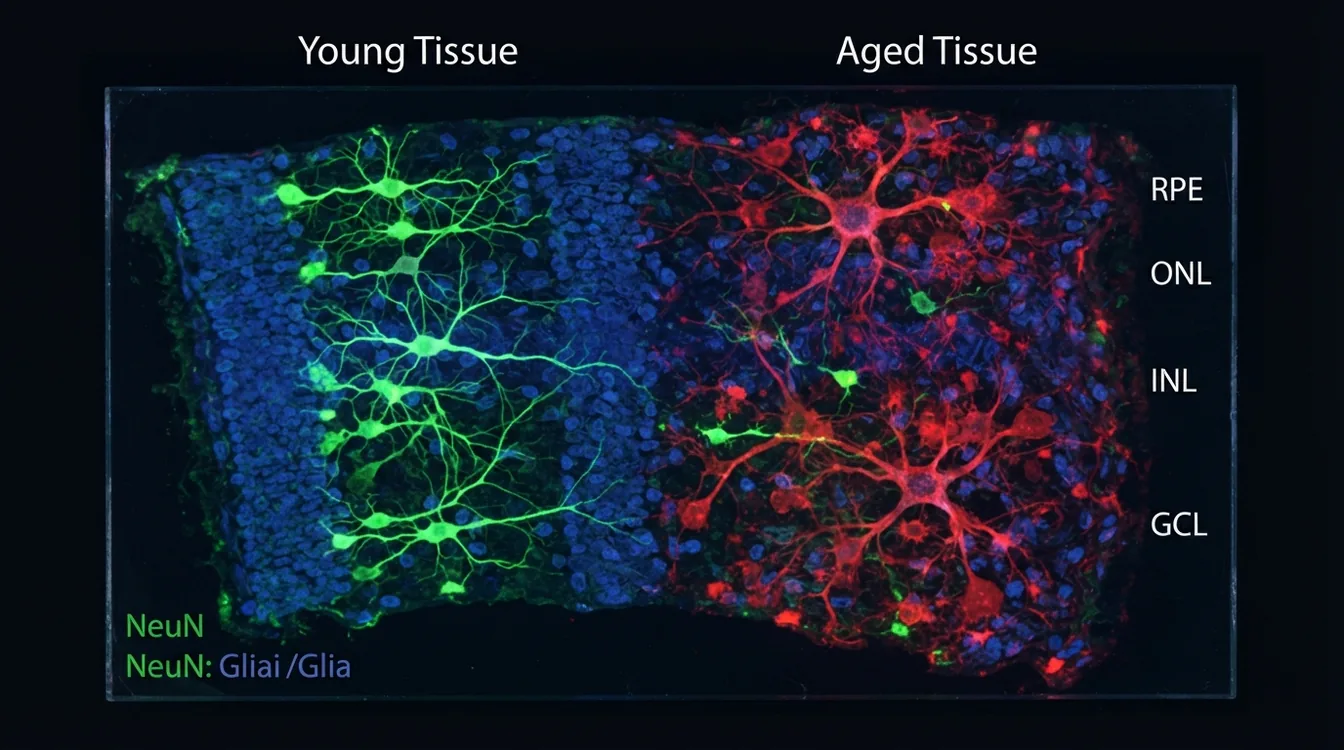
Reprogramming Glia into Neurons Becomes Less Effective with Advancing Age
Key Takeaways
  • Aged Müller glia across three transcription factor strategies showed consistently reduced neurogenesis compared with young glia.
  • Single-cell transcriptomics found aged glia failed to activate progenitor programs and instead expressed reactive inflammatory signatures.
  • Immunomodulation with dexamethasone partially restored neurogenesis in the aged retina.
Read the full article at Fight Aging!

Continue exploring

Recommended MoL Picks

MoL PickPlan Your Health Tests in Three MinutesThe free Personal Health Diagnostics Planner turns a short questionnaire into a ranked, personalised PDF: a clearer starting point for deciding which health checks deserve attention now.MoL PickCan Doctors Be Trained for the Longevity Era?A new global survey suggests that healthy longevity medicine education can change how physicians think and talk about ageing. But the evidence also highlights how much work remains before a rapidly growing field becomes routine clinical care.MoL PickReducing Inflammation from Ageing Cells: What a Mouse Study FoundResearchers reduced the inflammatory signals released by cells that had stopped dividing. Older mice also improved on some strength and frailty tests. Whether this approach could help people remains unknown.