
Summarized by Masters of Longevity from Longevity Technology.
A clinical-research feature about applying multiple proteomic aging clocks to trial samples to assess whether a drug shows geroprotection signals. Read on for a perspective piece that weighs methodological strengths, ambiguities, and next steps for translating such dual-purpose trials into convincing aging science.
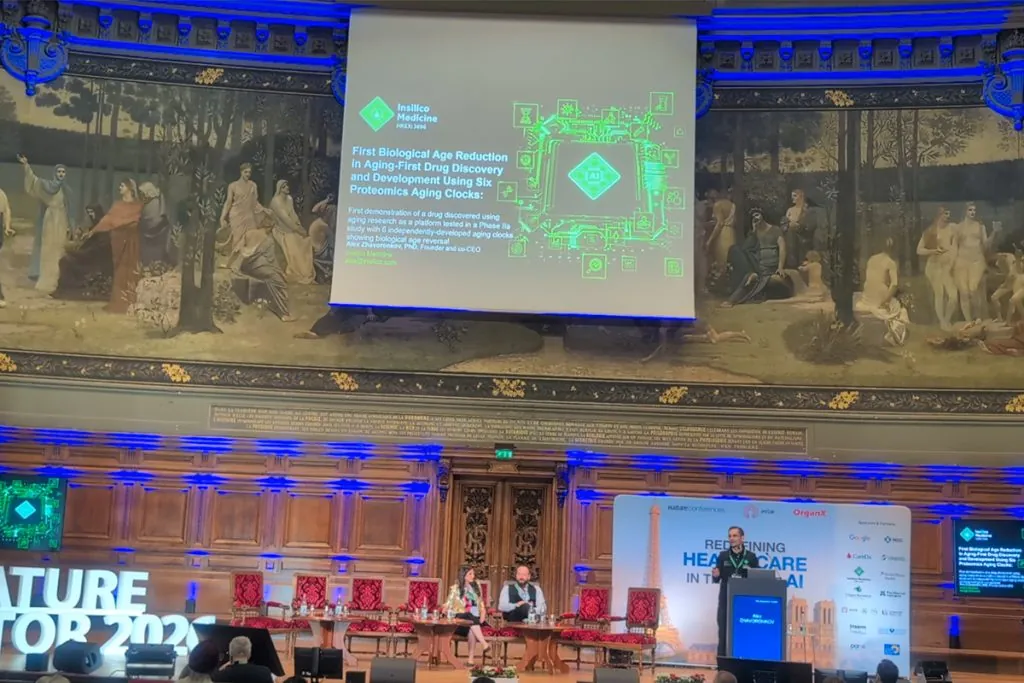
Key Takeaways
- Six distinct proteomic aging clocks all detected treatment-associated reductions in predicted biological age after rentosertib dosing.
- The strongest and most consistent clock responses occurred at week four with the 30 mg twice-daily regimen, where five of six clocks showed negative effect sizes.
- Changes in forced vital capacity explained little of the variance in predicted biological age, with a median R² of 0.06 across the six clocks.


