
Summarized by Masters of Longevity from Nature Aging.
RamanOmics is a methods-focused article introducing a multimodal imaging and molecular framework to map biochemical and transcriptional states in tissues. It invites readers to learn how label-free vibrational imaging is combined with spatial and single-nucleus transcriptomics to profile cellular states during aging and repair.
Key Takeaways
- Aging and tissue repair involve heterogeneous remodeling across transcriptional, biochemical and cellular dimensions, yet prevailing definitions rely on isolated molecular markers that obscure how these states co-evolve.
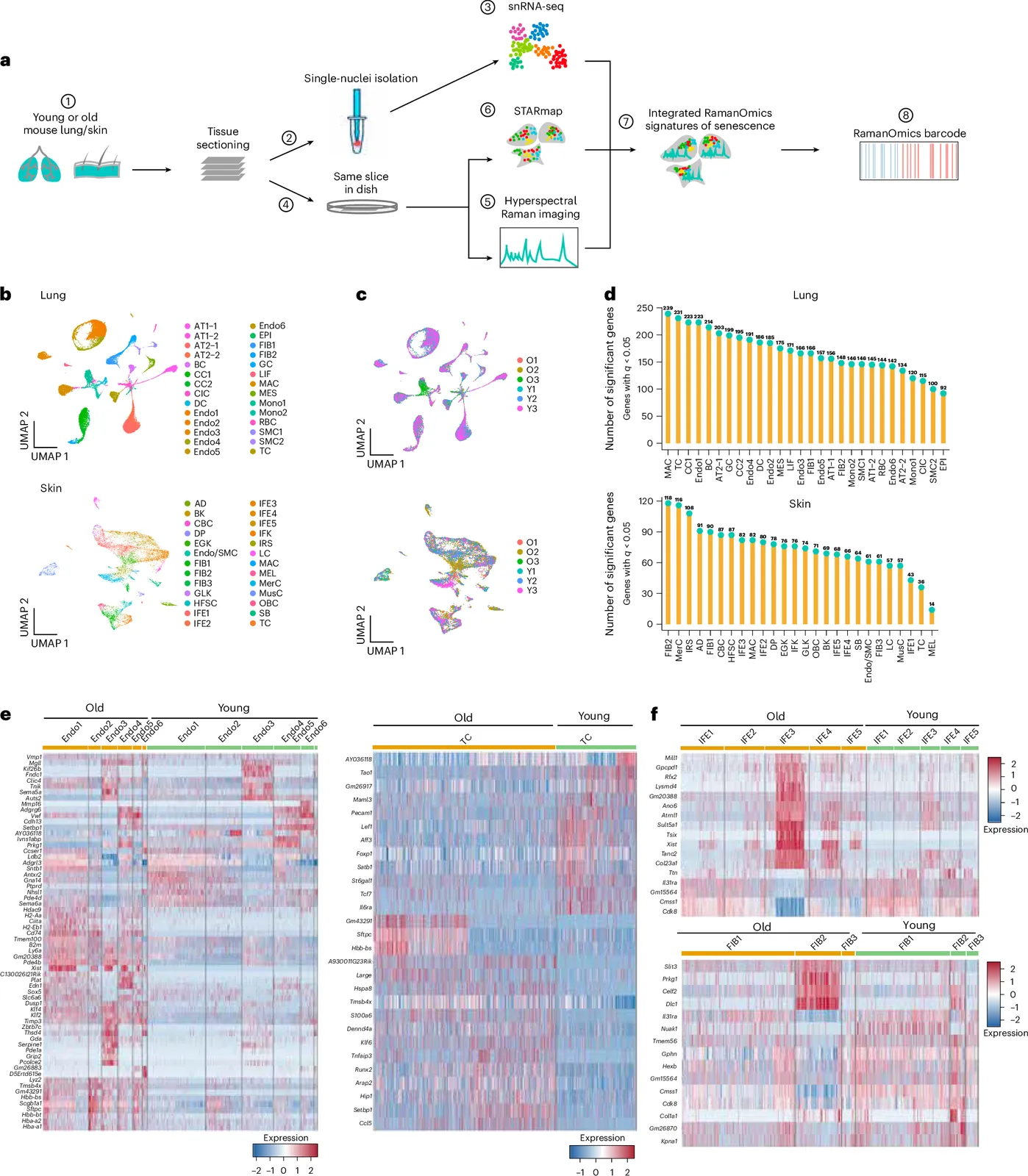
- Here we present RamanOmics, a multimodal framework integrating label-free hyperspectral Raman imaging with single-nucleus RNA sequencing and spatial transcriptomics to link biochemical states with transcriptional programs at single-cell spatial resolution.
- Across tissues, we identified a conserved lipid-linked Raman signature (1,131–1,135 cm −1 ) marking p21 + senescent cells and developed a machine learning-derived, multimodal barcode enabling nondestructive senescence identification in situ.


