
News summary

Proximity-guided graph learning reveals tumour-associated proximity antigens

Source: Nature - Main • Published: 09 Sept 2026, 00:00

Summarized by Masters of Longevity from Nature - Main.

Membrane-protein proximity mapping and graph learning methods are used to reveal how tumour-associated antigens arrange on the cell surface, guiding readers to a methods-forward research article exploring proximity-informed antigen co-targeting strategies.
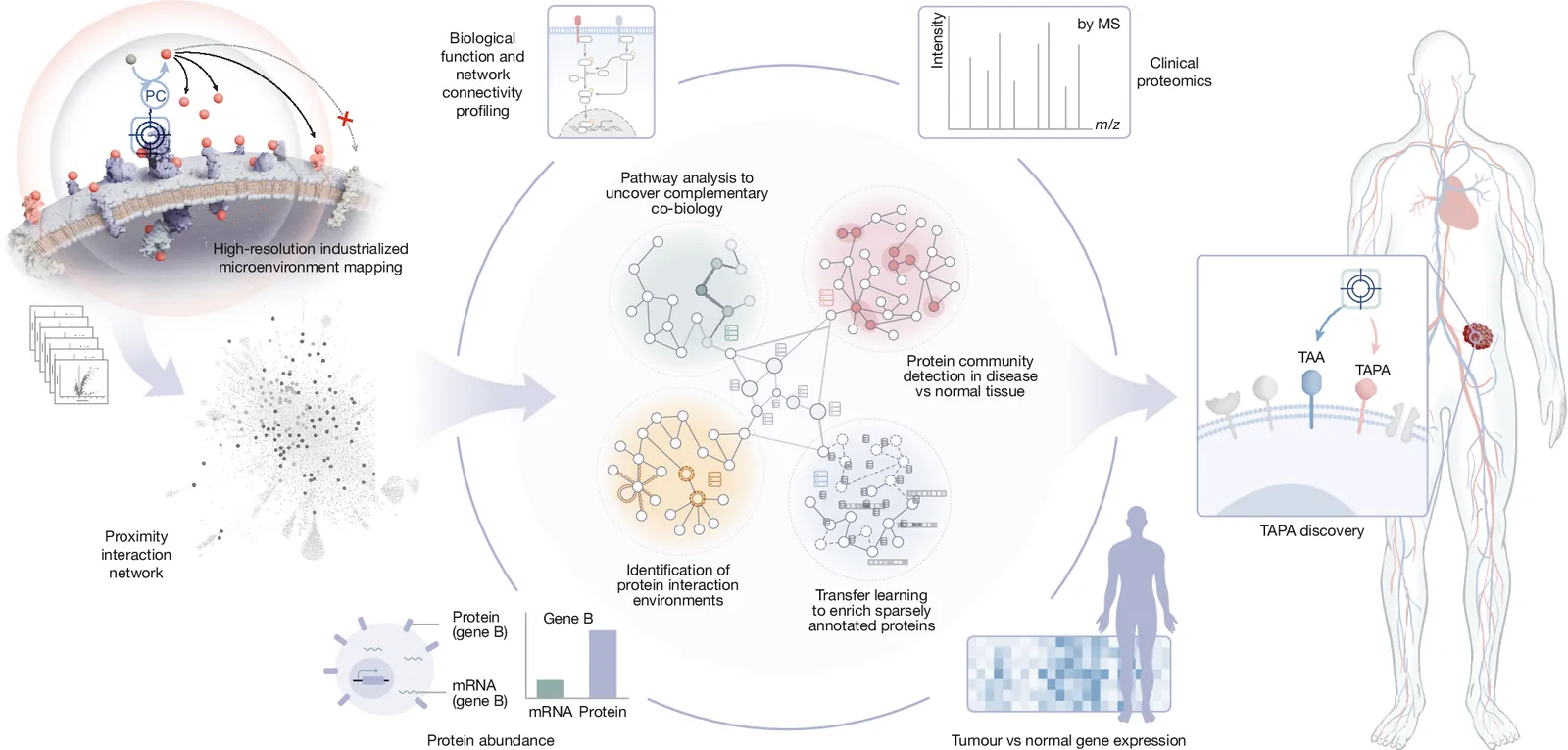
Proximity-guided graph learning reveals tumour-associated proximity antigens
Key Takeaways
  • The authors generated 248 membrane proximity maps across 12 receptor tyrosine kinases and 28 cancer cell systems.
  • They developed MetaMap to define conserved spatial protein communities and infer tumour-associated proximity antigens.
  • EGFR and CDCP1 were validated as a TAA–TAPA pair that enhances tumour cell killing across multiple therapeutic modalities.
Read the full article at Nature - Main

Continue exploring

Recommended MoL Picks

MoL PickCreatine and Cancer: Why New Mouse Studies Point in Opposite DirectionsCreatine strengthened antitumour immune cells in one mouse study—and promoted metastasis through platelets in another. The apparent contradiction reveals why neither result is a supplement recommendation.MoL PickGrowth Hormone Receptor Deletion Extends Mouse LifespanStudy summary: researchers switched off the growth hormone receptor in middle-aged mice and followed survival and physical function.MoL PickFrom Metrics to Better LivingEverstride’s May 2026 Consumer Health Market Briefing shows a wellness market moving from products to systems, from tracking to guidance, and from optimization to meaning. The next winners in longevity may not be the companies that measure the most. They may be the ones that help consumers translate health data into a life they actually want to live.