
News summary

Programmable CAR-engaging particles rewire human CAR T-cell signaling for sustainable ex vivo expansion

Source: Nature - Biotechnology • Published: 07 Sept 2026, 00:00

Summarized by Masters of Longevity from Nature - Biotechnology.

CAR-targeting microparticle technology that programs repeated stimulation to drive prolonged, functional ex vivo expansion of human CAR T cells.
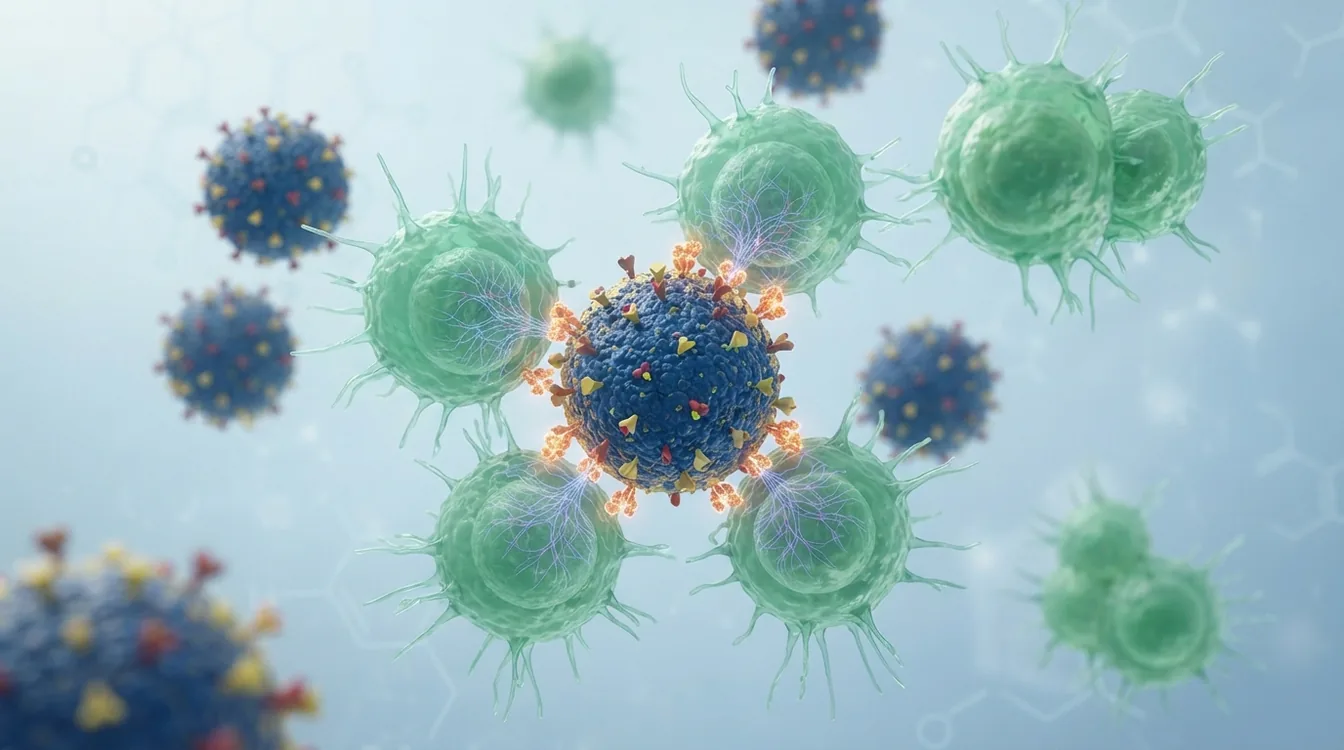
Programmable CAR-engaging particles rewire human CAR T-cell signaling for sustainable ex vivo expansion
Key Takeaways
  • Programmable DNA-scaffolded PLGA microparticles repeatedly expanded human CD8+ CAR T cells for over 100 days.
  • CAREp stimulation achieved up to 10^18-fold cumulative expansion and outperformed tumor-cell and CD3/CD28-Dynabead stimulation.
  • Expanded CAR T cells retained effector function, mitochondrial fitness, delayed exhaustion, and transient telomerase activation.
Read the full article at Nature - Biotechnology

Continue exploring

Recommended MoL Picks

MoL PickCreatine and Cancer: Why New Mouse Studies Point in Opposite DirectionsCreatine strengthened antitumour immune cells in one mouse study—and promoted metastasis through platelets in another. The apparent contradiction reveals why neither result is a supplement recommendation.MoL PickCan You Really Measure Whether You’re Aging More Slowly?A younger epigenetic-age score can look like proof that an intervention is working. A major new analysis shows which clocks detect change—and why movement is not yet the same as longer healthspan.MoL PickBiotin for Hair Growth: The Weak Evidence—and the Blood-Test Risk Most People MissBiotin deficiency can affect hair. That does not mean more biotin makes healthy hair grow—and high doses can distort important laboratory results.