
News summary

Inhibition of the PGAM1-CHK1 Interaction as a Novel Approach to Destroy Senescent Cells

Source: Fight Aging! • Published: 10 Sept 2026, 10:11

Summarized by Masters of Longevity from Fight Aging!.

Reports a preclinical discovery that blocking a specific metabolic protein interaction selectively kills senescent cells and reduces their inflammatory secretions in animals.
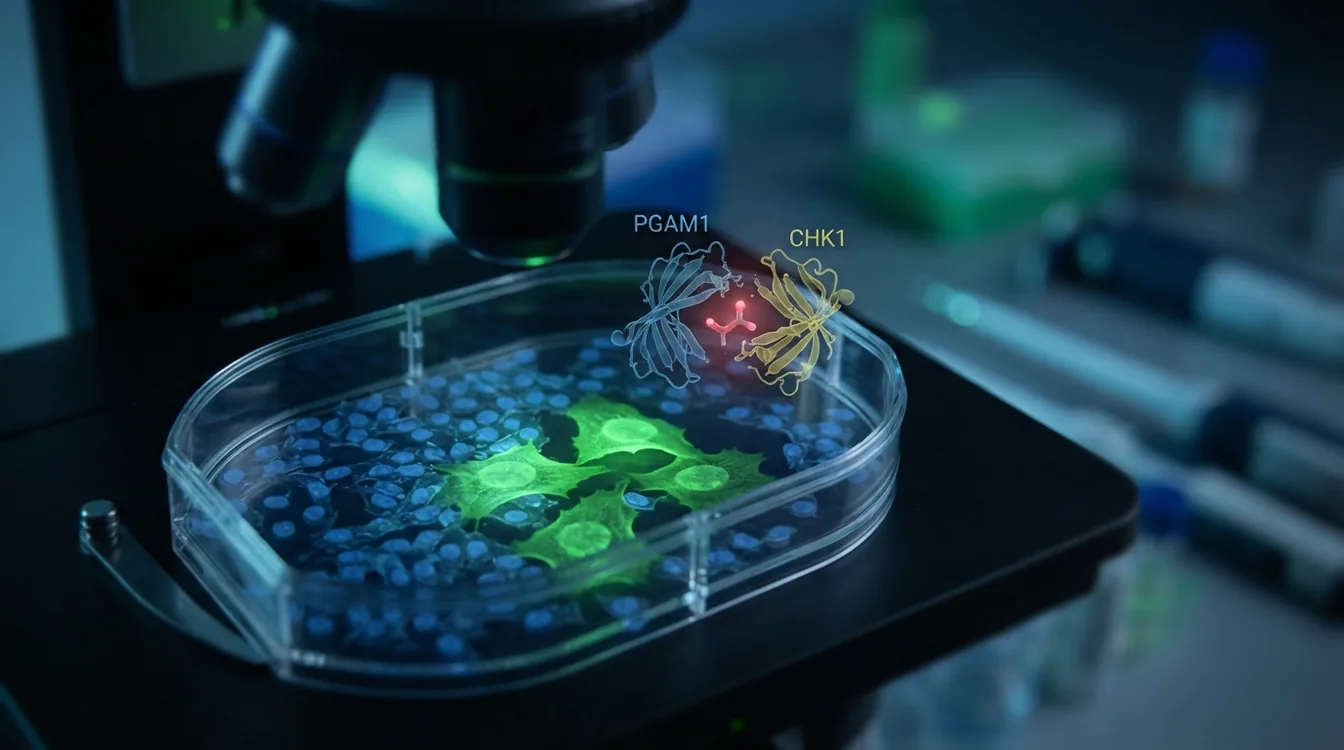
Inhibition of the PGAM1-CHK1 Interaction as a Novel Approach to Destroy Senescent Cells
Key Takeaways
  • Researchers identified binding between phosphoglycerate mutase 1 and CHK1 as supporting increased glycolysis in senescent cells.
  • Pharmacological inhibition of the PGAM1‑CHK1 interaction removed senescent cells and suppressed the senescence‑associated secretory phenotype in models.
  • PGAM1‑CHK1 inhibition alleviated organ damage and reduced pulmonary fibrosis in vivo in the reported animal studies.
Read the full article at Fight Aging!

Continue exploring

Recommended MoL Picks

MoL PickSemaglutide Extended Lifespan in Mice. What Would Make It a Human Longevity Drug?A new animal study sharpens an important question: when do benefits in a particular disease become evidence for a longer, healthier life?MoL PickApoB: The cholesterol signal LDL can missIn longevity medicine, the useful biomarkers are not always the exotic ones. ApoB is a relatively simple blood test that can sharpen cardiovascular prevention when LDL-C looks reassuring but particle burden remains high.MoL PickThe Next Obesity-Drug Race Is About What Weight You LoseRegeneron’s myostatin and activin A antibodies point to a sharper question for the GLP-1 era: not whether people can lose more weight, but whether medicine can preserve the tissue that makes weight loss healthier.