
News summary

Feasibility & Acceptability of a co-created pragmatic walkability program to promote mobility in older adults with fear of falling: A question of season and mobility profile?

Source: medRxiv • Published: 08 Sept 2026, 00:00

Summarized by Masters of Longevity from medRxiv.

A co-created 12-week group walking program for older adults with fear of falling was tested for feasibility and acceptability across seasons and walking-speed profiles.
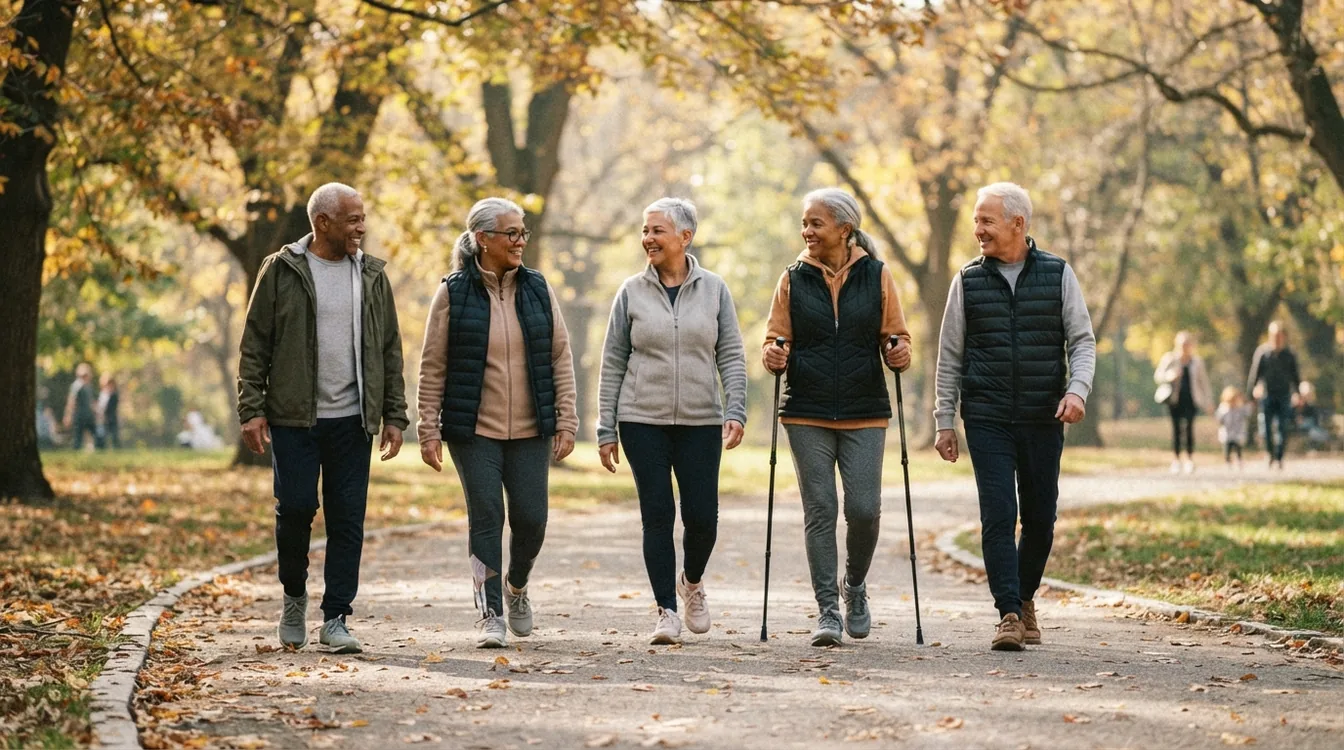
Feasibility & Acceptability of a co-created pragmatic walkability program to promote mobility in older adults with fear of falling: A question of season and mobility profile?
Key Takeaways
  • Forty-one of 52 participants (mean age 73.3 years) completed the 12-week program, with dropouts occurring only in winter.
  • Retention and adherence both exceeded 75%, and 82% of participants reported satisfaction with the intervention.
  • The program's decisional tree correctly classified 72% of participants and weather was cited as the main barrier by 17%.
Read the full article at medRxiv

Continue exploring

Recommended MoL Picks

MoL PickSemaglutide Extended Lifespan in Mice. What Would Make It a Human Longevity Drug?A new animal study sharpens an important question: when do benefits in a particular disease become evidence for a longer, healthier life?MoL PickThe Next Obesity-Drug Race Is About What Weight You LoseRegeneron’s myostatin and activin A antibodies point to a sharper question for the GLP-1 era: not whether people can lose more weight, but whether medicine can preserve the tissue that makes weight loss healthier.MoL PickCan You Really Measure Whether You’re Aging More Slowly?A younger epigenetic-age score can look like proof that an intervention is working. A major new analysis shows which clocks detect change—and why movement is not yet the same as longer healthspan.