
Longevity News

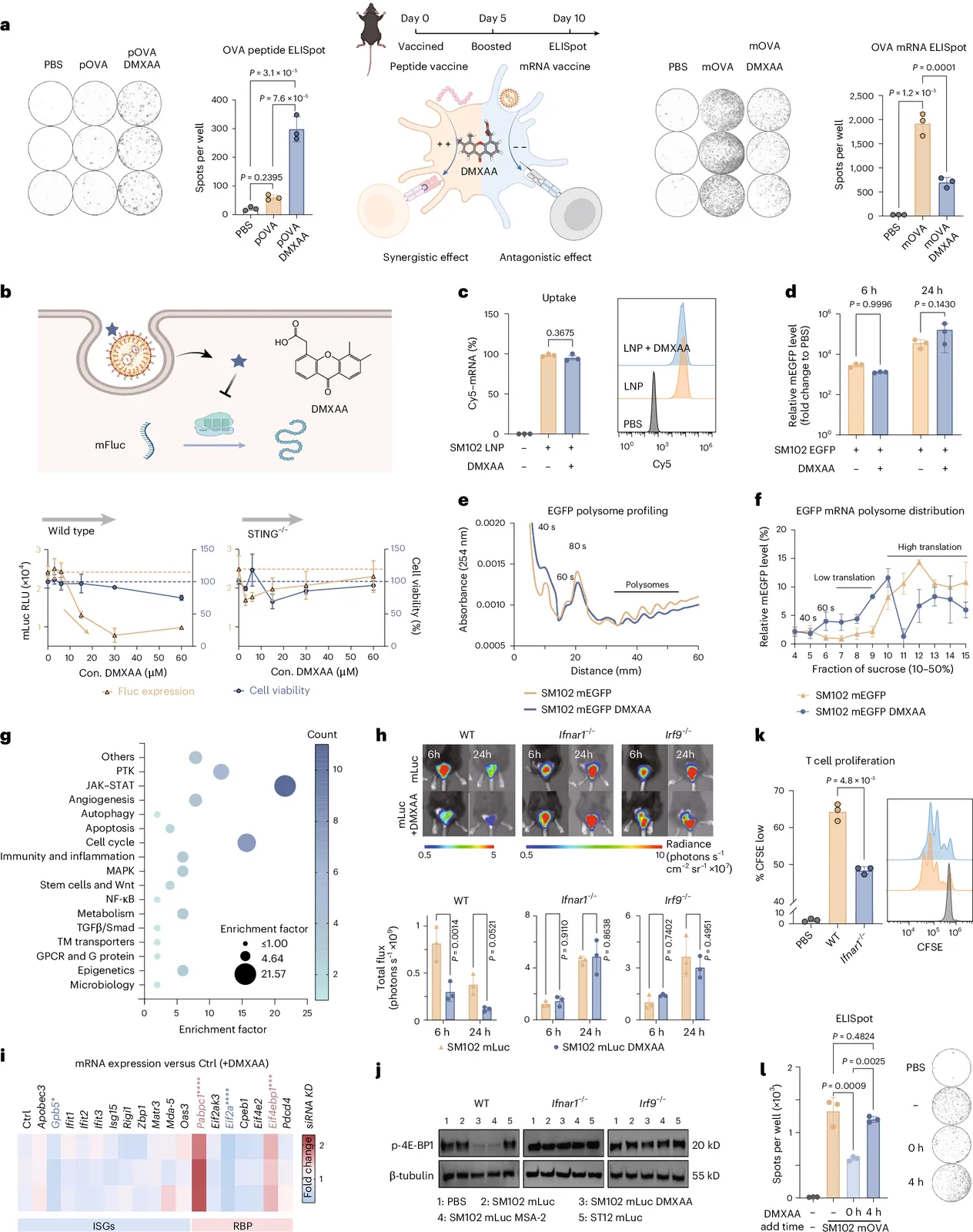
Enhanced antitumor immunity of mRNA vaccines by bioorthogonal-like delayed activation of exogeneous STING

Source: Nature - Biotechnology • Published: 19 Aug 2026, 00:00

Enhanced antitumor immunity of mRNA vaccines by bioorthogonal-like delayed activation of exogeneous STING

A study demonstrates lipid nanoparticle vaccines that delay STING activation to preserve antigen expression and boost localized antitumor immunity.

Key Takeaways
  • DMXAA release is controlled by a biodegradable linker
  • Intratumoral or subcutaneous LNPs are preferentially internalized by myeloid cells
  • Syn-STING vaccine elicits robust adaptive responses and Th1-biased T cell immunity
Read Original Source

Continue exploring

Related longevity signals

Nature - BiotechnologyPhotochemical internalization enhances in vivo immunity to peptide‑ and protein‑based vaccines with synthetic dsRNA adjuvantsPhotochemical internalization as a strategy to boost immune responses to peptide- and protein-based vaccines paired with synthetic dsRNA adjuvants; a research article preview inviting readers to learn how this method was evaluated in preclinical models.Nature - BiotechnologyComputational activation of CISD3 by a novel flavonoid compound for cardiac ageing and cardiovascular healthThis article previews a computational drug‑discovery study proposing a novel flavonoid as a candidate activator of a mitochondrial protein linked to cardiac ageing. It invites readers interested in molecular modelling, cardiometabolic interventions, and preclinical therapeutic strategies.Frontiers - HealthAnti-CD6 monoclonal antibody UMCD6 induces CD6 internalization, remodels costimulatory receptor availability, and modulates CD4+ T-cell activationExamines how an anti-CD6 monoclonal antibody triggers CD6 internalization and alters costimulatory receptor availability to reshape CD4+ T-cell activation.Nature - BiotechnologyVirus-like particles enable targeted gene engineering and pooled CRISPR screening in primary human myeloid cellsA methods-focused article describing a virus-like particle toolkit for delivering diverse CRISPR edits and enabling pooled functional genomics in primary human myeloid cells.