
Longevity News

Editorial: Multi-omics interrogation of tumor-associated macrophages: paving the way for next-generation cancer immunotherapies

Source: Frontiers - Health • Published: 25 Aug 2026, 00:00

Editorial: Multi-omics interrogation of tumor-associated macrophages: paving the way for next-generation cancer immunotherapies

Review and original studies synthesize multi-omics maps of tumor-associated macrophage diversity and therapeutic targets across multiple solid cancers.

Key Takeaways
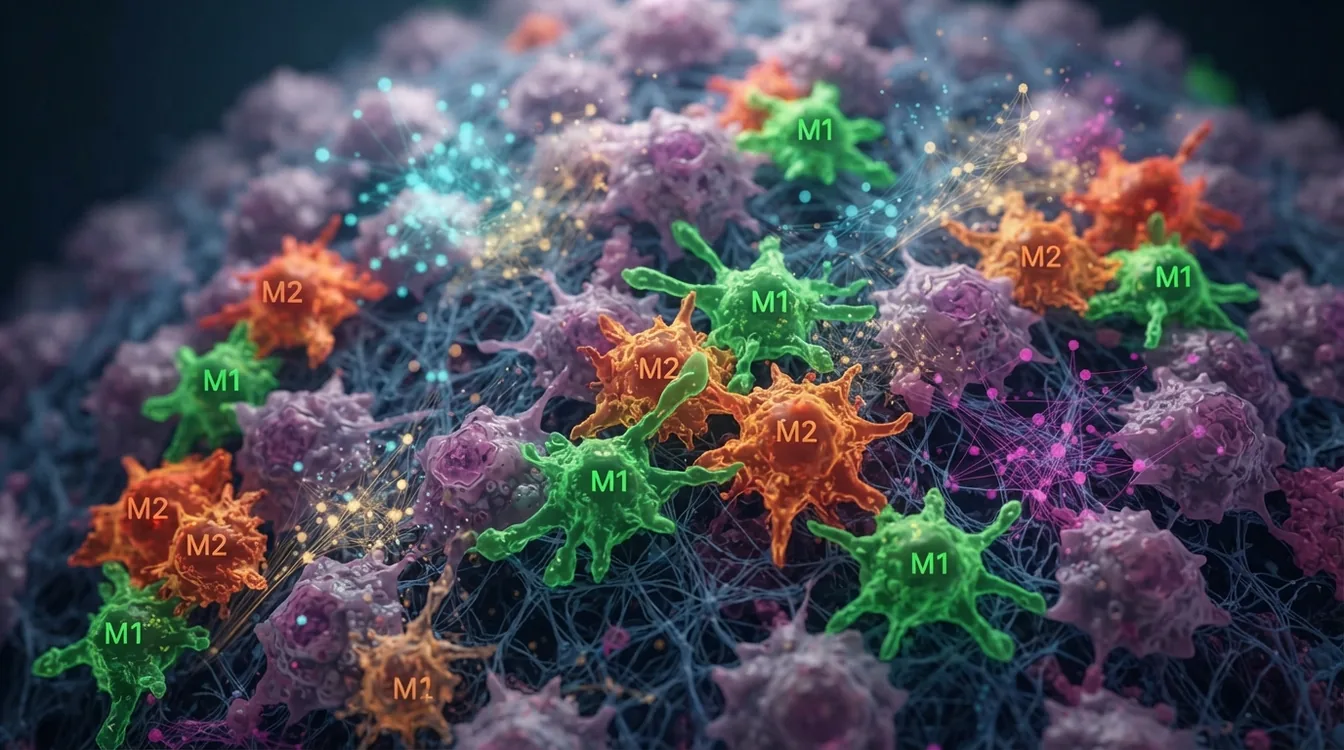
  • Within this milieu, tumor-associated macrophages (TAMs) have emerged as central orchestrators of immunosuppression
  • While traditionally oversimplified into a dichotomy of anti-tumoral (M1)
  • Present a multi-omics perspective on TAM plasticity during androgen deprivation therapy and PARP inhibition
Read Original Source

Continue exploring

Related longevity signals

Frontiers - HealthTumor-associated macrophages in gastric cancer peritoneal metastasis: orchestrating immune evasion, niche remodeling, and therapeutic resistanceReview of how diverse peritoneal macrophage populations drive immune suppression and therapeutic resistance during gastric cancer peritoneal metastasis.PR NewswireDualityBio Enters a Global Collaboration and License Agreement with Genentech to Develop Next-Generation ADCs Built on DualityBioA news article about a pharmaceutical collaboration that explains the nature of a license-and-development partnership to advance next-generation ADCs and what readers can expect to learn.Frontiers - HealthSpatial immune ecosystems and therapy resistance in large B-cell lymphoma: from single-cell multi-omics to immunotherapy-matched validationReview of how single-cell and spatial multi-omics map tumor and immune architectures in large B-cell lymphoma and guide pathology-ready biomarker development.Frontiers - HealthMachine Learning-Based Assessment of Tumor-Infiltrating Lymphocytes in Breast Cancer Histopathology: A Systematic Review and Evidence-Gap Analysis of Translational ReadinessAssessments of tumor-infiltrating lymphocytes in breast cancer using machine learning are reviewed and mapped for translational readiness and methodological gaps.