
News summary

Dibucaine induces autophagic flux and reduces Ser129-phosphorylated α-synuclein in induced pluripotent stem cell–derived neurons with SNCA duplication

Source: Frontiers - Health • Published: 22 Sept 2026, 00:00

Summarized by Masters of Longevity from Frontiers - Health.

A lab study previewing research on a small-molecule that stimulates neuronal autophagy and lowers a disease-relevant phosphorylated protein in patient-derived neurons, useful for readers interested in experimental therapeutic strategies for neurodegeneration.
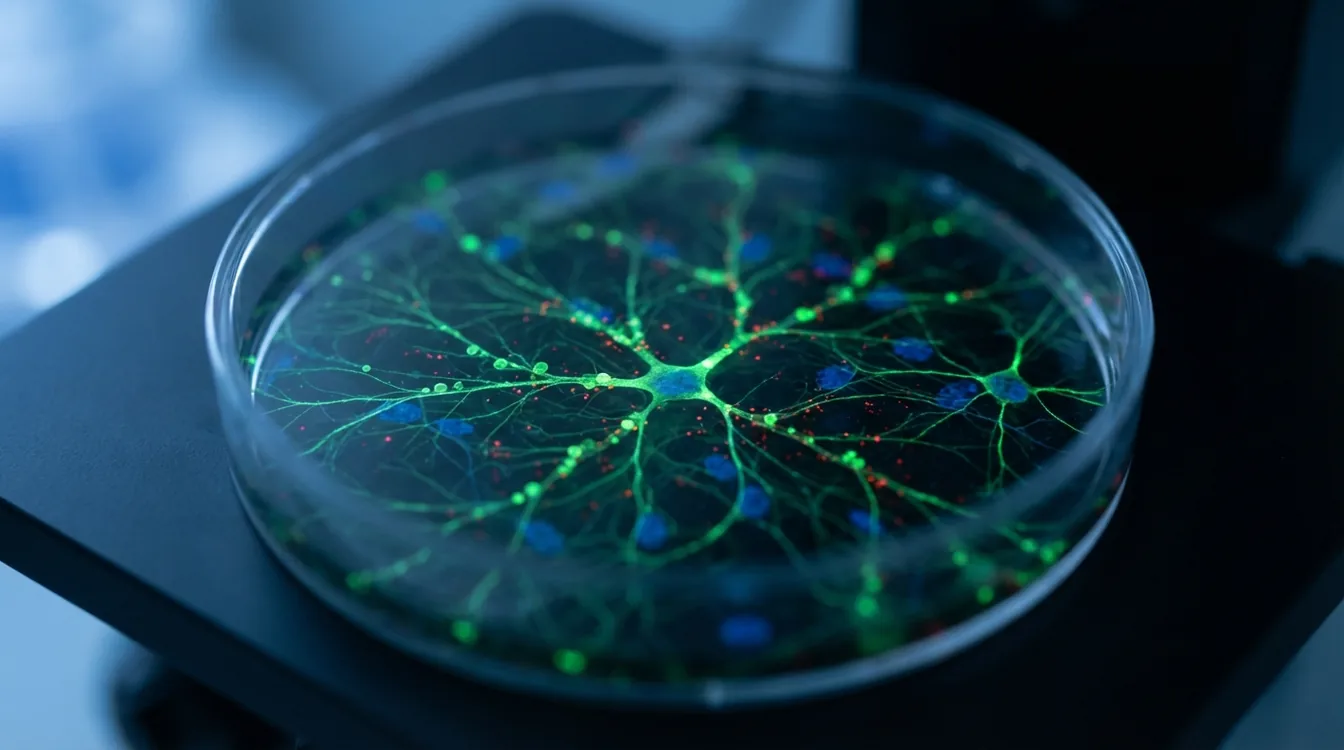
Dibucaine induces autophagic flux and reduces Ser129-phosphorylated α-synuclein in induced pluripotent stem cell–derived neurons with SNCA duplication
Key Takeaways
  • Dibucaine triggered autophagic flux in rat primary neurons and human iPSC-derived neuronal models.
  • In iPSC-derived dopaminergic neurons with SNCA duplication, dibucaine reduced cellular levels of Ser129-phosphorylated α-synuclein.
  • Dibucaine increased AMPK Thr172 phosphorylation in SH-SY5Y cells and LY364947 partly attenuated LC3-II accumulation.
Read the full article at Frontiers - Health

Continue exploring

Recommended MoL Picks

MoL PickReducing Inflammation from Ageing Cells: What a Mouse Study FoundResearchers reduced the inflammatory signals released by cells that had stopped dividing. Older mice also improved on some strength and frailty tests. Whether this approach could help people remains unknown.MoL PickWhat Changes in the Human Hippocampus with Age?A study of 40 postmortem brains maps a midlife shift in immune cells and a wider loss of cellular and genome organisation—but it does not show how to prevent cognitive decline.MoL PickApple Brings Longevity to the Wrist. What Will It Change?Apple’s new Health Age, readiness and movement tools bring long-term health into everyday view. The opportunity is turning that information into useful action.