
Longevity News

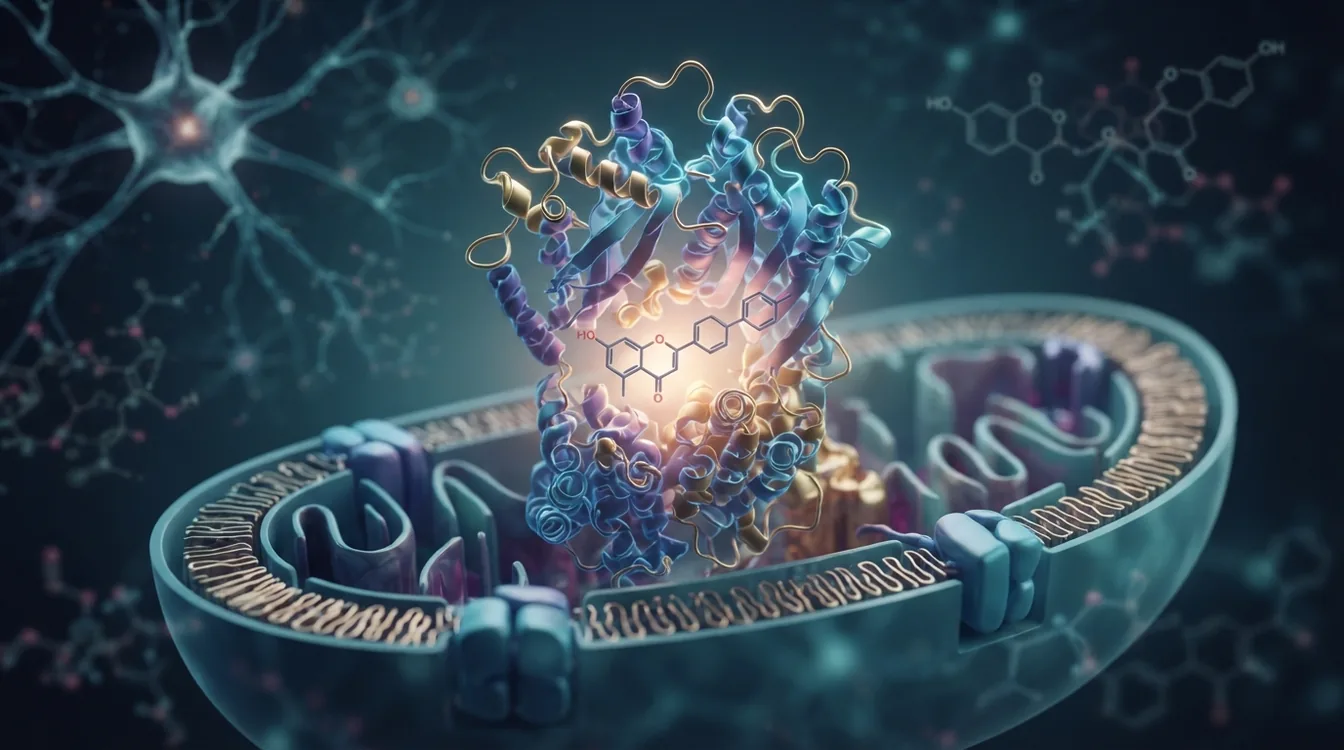
Computational activation of CISD3 by a novel flavonoid compound for cardiac ageing and cardiovascular health

Source: Nature - Biotechnology • Published: 25 Aug 2026, 00:00

Computational activation of CISD3 by a novel flavonoid compound for cardiac ageing and cardiovascular health

This article previews a computational drug‑discovery study proposing a novel flavonoid as a candidate activator of a mitochondrial protein linked to cardiac ageing. It invites readers interested in molecular modelling, cardiometabolic interventions, and preclinical therapeutic strategies.

Key Takeaways
  • It is citable and carries a permanent DOI
  • This version is subject to further edits and will be replaced automatically by the final Version of Record
  • Characterised by a 2Fe–2 S cluster and localized in the outer mitochondrial membrane
Read Original Source

Continue exploring

Related longevity signals

Nature - MainLate-life semaglutide treatment slows ageing and extends lifespan in female mice - NatureLate-life semaglutide treatment in mice: a research article examining whether a diabetes drug can mimic calorie restriction to slow ageing and preserve function. Open to learn what kind of experimental and comparative study the paper presents and why it matters for ageing research.Nature - BiotechnologyNovel antimicrobial peptides derived from Brevibacillus laterosporus DSM 25 targeting MurT ligase exhibit broad-spectrum activity against drug-resistant pathogensReports discovery and initial characterization of two antimicrobial peptides from a bacterial proteome that bind MurT ligase and kill drug-resistant bacteria in vitro.Nature - BiotechnologyNovel RNA aptamer HPE3 suppresses angiogenesis via inhibiting endocan–VEGF-A formation in Matrigel-implanted miceReport on a new high-affinity RNA aptamer that blocks endocan–VEGF-A interactions and reduces pathological angiogenesis in preclinical models.Frontiers - HealthAnti-CD6 monoclonal antibody UMCD6 induces CD6 internalization, remodels costimulatory receptor availability, and modulates CD4+ T-cell activationExamines how an anti-CD6 monoclonal antibody triggers CD6 internalization and alters costimulatory receptor availability to reshape CD4+ T-cell activation.