
News summary

Assessing the potential of biologically-activated carbon treatment, pasteurization, and particle filtration as pre/pro-biotic controls on premise plumbing microbiomes

Source: Nature - Biotechnology • Published: 14 Sept 2026, 00:00

Summarized by Masters of Longevity from Nature - Biotechnology.

Reports experiments testing biologically-activated carbon, pasteurization, and particle filtration as prebiotic or probiotic controls to shape building hot-water plumbing microbiomes and suppress pathogens.
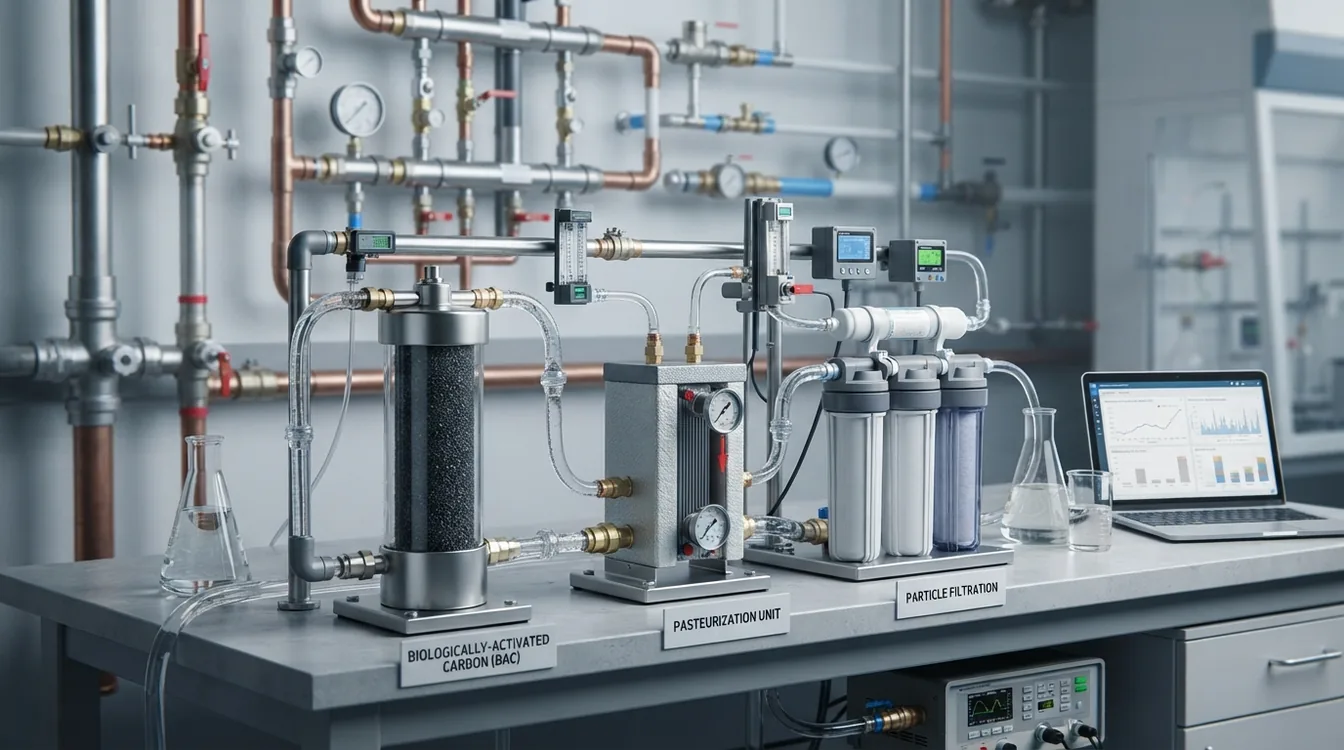
Assessing the potential of biologically-activated carbon treatment, pasteurization, and particle filtration as pre/pro-biotic controls on premise plumbing microbiomes
Key Takeaways
  • Biologically-activated carbon (BAC) reduced influent total organic carbon while increasing total and intact bacterial cell counts.
  • Particle filtration after BAC removed both microbes and biomass-associated nutrients from the treated influent.
  • In aged reactors, the BAC-based Probiotic condition showed the lowest relative abundance of Legionella compared with Control reactors.
Read the full article at Nature - Biotechnology

Continue exploring

Recommended MoL Picks

MoL PickApoB: The cholesterol signal LDL can missIn longevity medicine, the useful biomarkers are not always the exotic ones. ApoB is a relatively simple blood test that can sharpen cardiovascular prevention when LDL-C looks reassuring but particle burden remains high.MoL PickPlan Your Health Tests in Three MinutesThe free Personal Health Diagnostics Planner turns a short questionnaire into a ranked, personalised PDF: a clearer starting point for deciding which health checks deserve attention now.MoL PickCan You Really Measure Whether You’re Aging More Slowly?A younger epigenetic-age score can look like proof that an intervention is working. A major new analysis shows which clocks detect change—and why movement is not yet the same as longer healthspan.