
News summary

Translating base editors: a decade of progress from the bench to the clinic

Source: Nature - Biotechnology • Published: 16 Oct 2026, 00:00

Summarized by Masters of Longevity from Nature - Biotechnology.

Base editing’s decade-long journey from lab innovation to therapeutic development, explained in a concise review of scientific and clinical progress.
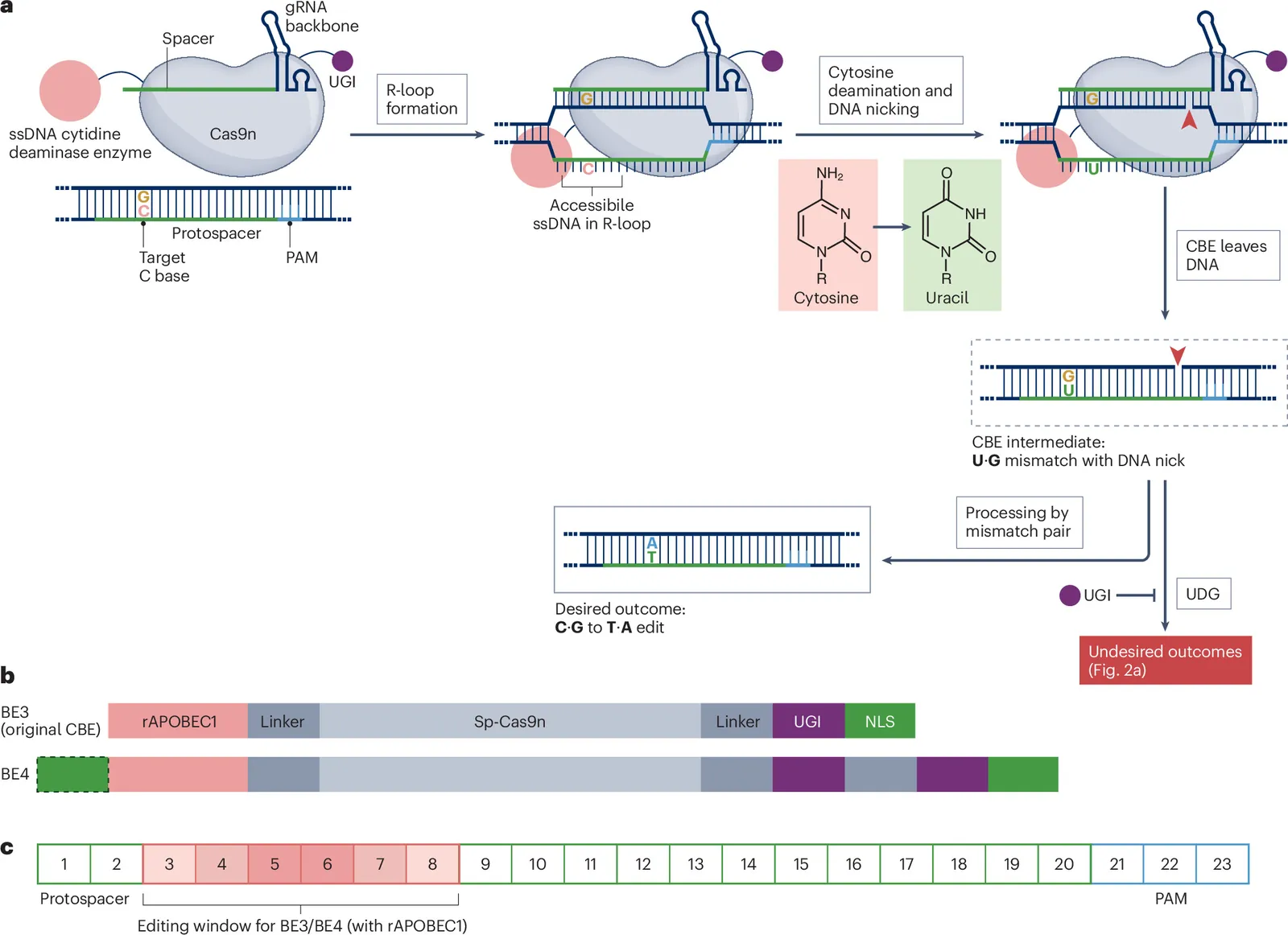
Translating base editors: a decade of progress from the bench to the clinic
Key Takeaways
  • Cytosine base editors were first described in 2016 and launched a shift toward precise chemical DNA correction.
  • Base editors progressed into adenine editors and prime editors and became core platforms for therapeutic development.
  • Base editing is now used in clinical trials for sickle cell disease, alpha-1 antitrypsin deficiency, PCSK9 hypercholesterolemia and leukemias.
Read the full article at Nature - Biotechnology ↗

Continue exploring

Recommended MoL Picks

MoL PickSeed Oils and Health: Inflammation, Processing and EvidenceHuman trials, processing risks and long-term health ask different questions. What can seed-oil research tell us—and what remains unresolved?MoL PickNucleotides and Longevity: Is the Evidence Ready?They help build DNA and keep cells working. Early human studies make nucleotide supplements interesting—but leave important questions about healthy ageing unanswered. Yet.MoL PickThe Next Obesity-Drug Race Is About What Weight You LoseRegeneron’s myostatin and activin A antibodies point to a sharper question for the GLP-1 era: not whether people can lose more weight, but whether medicine can preserve the tissue that makes weight loss healthier.