
Longevity News

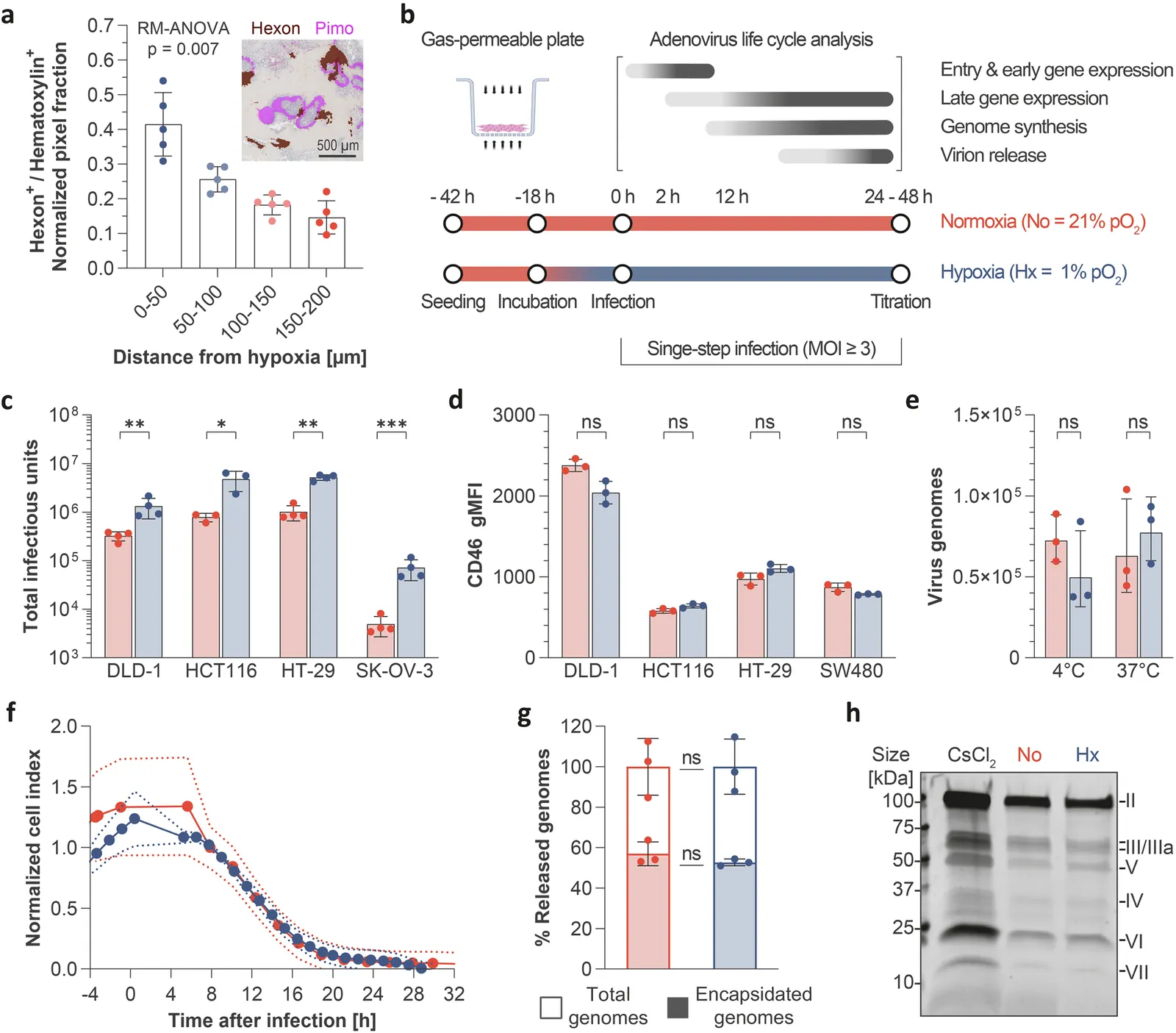
Hypoxia increases the activity of oncolytic adenoviruses through HIF-2α-stimulated E1A expression

Source: Nature - Biotechnology • Published: 11 Aug 2026, 00:00

Hypoxia increases the activity of oncolytic adenoviruses through HIF-2α-stimulated E1A expression

Report on how low-oxygen tumor environments boost adenovirus replication via a conserved hypoxia-responsive promoter element, with mechanistic and in vivo context.

Key Takeaways
  • Hypoxia increased infectious adenovirus particle yield 4- to 14-fold in multiple cancer cell lines
  • HRE in the viral E1A promoter drove a 17-fold E1A upregulation within two hours under hypoxia
  • HIF-2α and HIF-1β heterodimers bound the E1A HRE and transactivated viral gene expression
Read Original Source

Continue exploring

Related longevity signals

Nature - BiotechnologyNovel antimicrobial peptides derived from Brevibacillus laterosporus DSM 25 targeting MurT ligase exhibit broad-spectrum activity against drug-resistant pathogensReports discovery and initial characterization of two antimicrobial peptides from a bacterial proteome that bind MurT ligase and kill drug-resistant bacteria in vitro.Fight Aging!Physical Activity Correlates with Reductions in TMAO, Inflammation, and Harmful Bone RemodelingPhysical activity piece previewing research on how habitual exercise links to gut-driven inflammation and bone aging mechanisms. It invites readers curious about molecular pathways behind exercise’s skeletal benefits.Nature - BiotechnologyTIM3-targeted delivery of venetoclax overcomes drug resistance and reinvigorates NK cell activity in acute myeloid leukemiaCovers a TIM3-targeted nanoformulation that co-delivers venetoclax and NK-engaging antibodies to tackle venetoclax-resistant acute myeloid leukemia and reshape the tumor immune microenvironment.Nature - BiotechnologyDroplet digital PCR reveals that transgene copy number determines lifespan in SOD1G93A ALS miceA methods-focused research article examining how a precise DNA quantification technique maps transgene copy variation to disease trajectory in an ALS mouse model.