
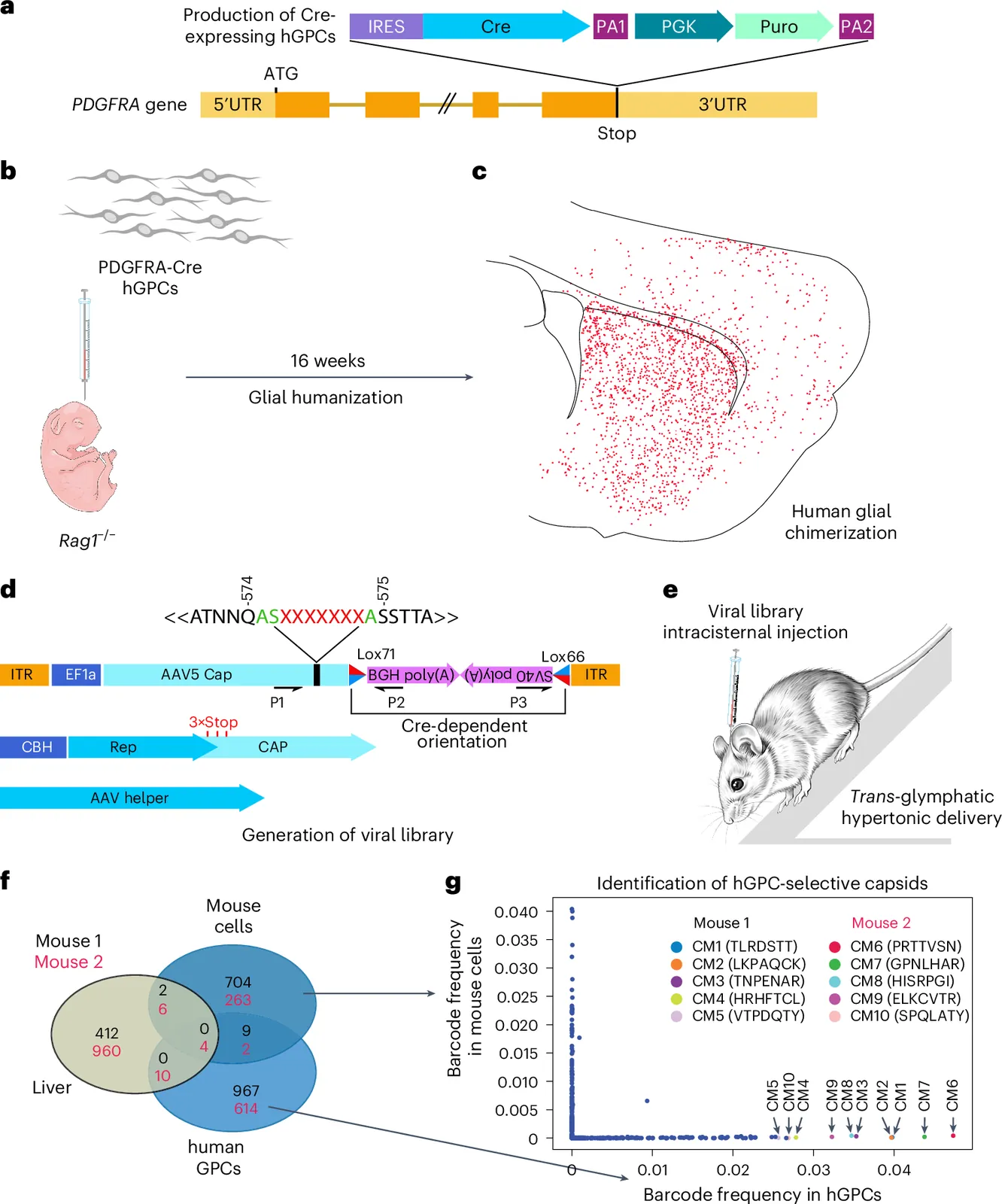
Human glial progenitor–targeting strategies are explored in a promising translational preclinical study combining vector engineering with optimized brain delivery methods.
Key Takeaways
- AAV5-based capsids were identified that preferentially infect human glial progenitor cells in vivo
- Intracisternal delivery combined with systemic hypertonicity increased glymphatic influx and intracerebral distribution
- Glymphatic delivery produced efficient transgene expression in human glia throughout the adult mouse brain