
News summary

Early electrical stimulation after spinal cord injury: the Neuromuscular Preparation and Neural Preservation Hypothesis

Source: Frontiers - Health • Published: 20 Nov 2026, 00:00

Summarized by Masters of Longevity from Frontiers - Health.

Early NMES or FES can modify paralysed muscle and neural physiology before voluntary control returns.
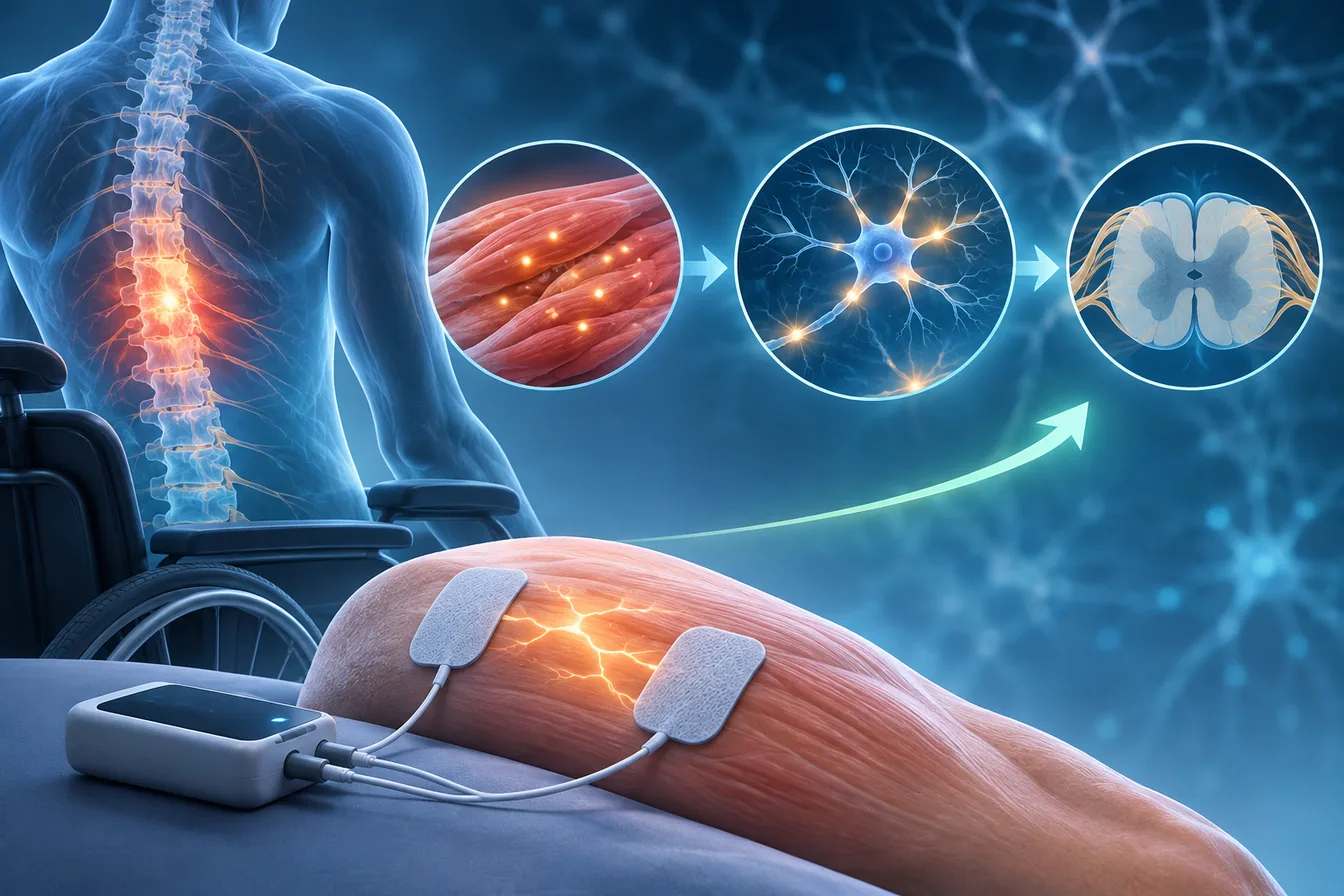
Early electrical stimulation after spinal cord injury: the Neuromuscular Preparation and Neural Preservation Hypothesis
Key Takeaways
  • Early stimulation was found to modify paralysed muscle properties.
  • Electrical activity was shown to alter spinal and peripheral physiology.
  • Causal benefit for human neurological recovery has not been established.
Read the full article at Frontiers - Health ↗

Continue exploring

Recommended MoL Picks

MoL PickReducing Inflammation from Ageing Cells: What a Mouse Study FoundResearchers reduced the inflammatory signals released by cells that had stopped dividing. Older mice also improved on some strength and frailty tests. Whether this approach could help people remains unknown.MoL PickCan Exergaming Improve Balance? What Older Adults Should KnowMotion-controlled games may make balance practice easier to repeat. The evidence supports a structured adjunct—not a fall-proofing shortcut.MoL PickNucleotides and Longevity: Is the Evidence Ready?They help build DNA and keep cells working. Early human studies make nucleotide supplements interesting—but leave important questions about healthy ageing unanswered. Yet.