
Longevity News

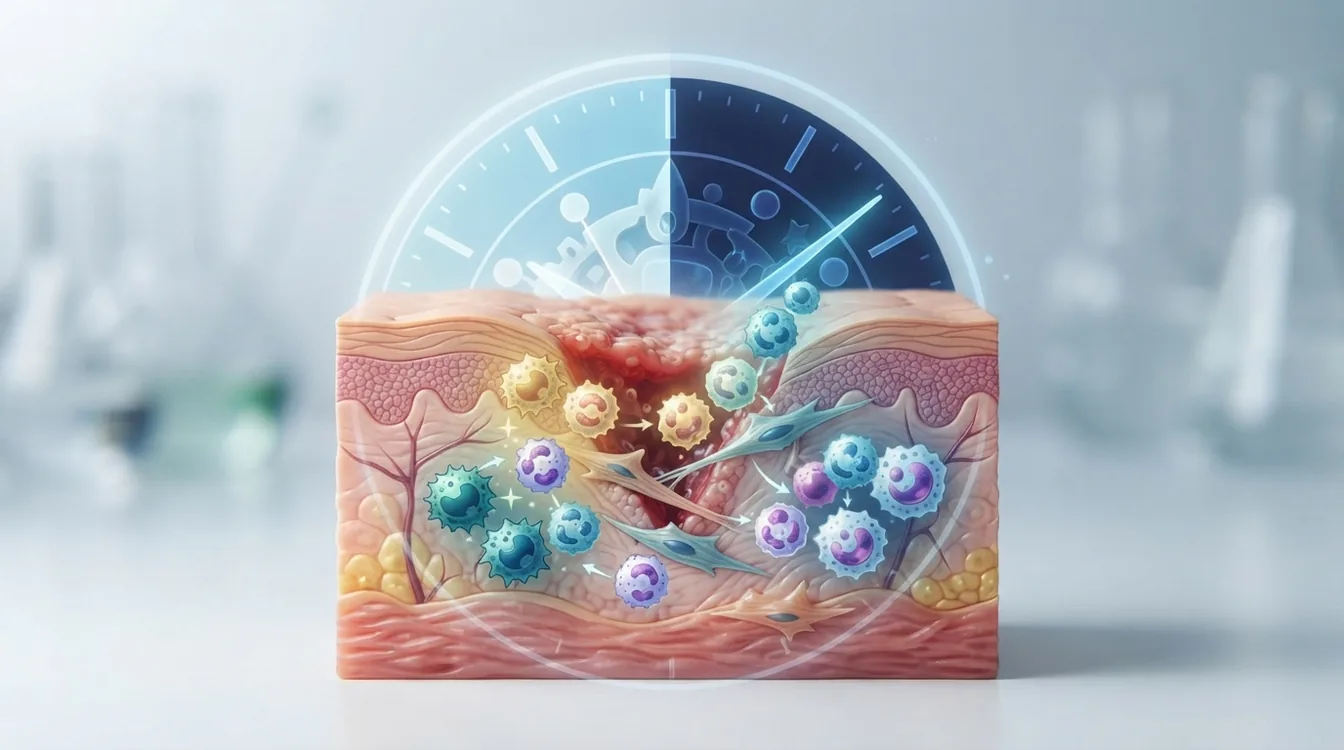
Circadian Immunoregulation in Cutaneous Wound Healing: From Immune Cell Temporal Heterogeneity to Chronotherapeutic Strategies

Source: Frontiers - Health • Published: 07 Aug 2026, 00:00

Circadian Immunoregulation in Cutaneous Wound Healing: From Immune Cell Temporal Heterogeneity to Chronotherapeutic Strategies

Examines how circadian clocks shape immune cell timing during skin wound repair and outlines time-based therapeutic strategies for chronic wounds.

Key Takeaways
  • You have multiple emails registered with Frontiers: You don't have a Frontiers account ?
  • This is an open-access article distributed under the terms of the Creative Commons Attribution License (CC BY)
  • Distribution or reproduction in other forums is permitted
Read Original Source

Continue exploring

Related longevity signals

Frontiers - HealthSpatial immune ecosystems and therapy resistance in large B-cell lymphoma: from single-cell multi-omics to immunotherapy-matched validationReview of how single-cell and spatial multi-omics map tumor and immune architectures in large B-cell lymphoma and guide pathology-ready biomarker development.Frontiers - HealthCalcitonin gene-related peptide promotes mast cell-mediated neuroimmune inflammation through the CALCRL/RAMP1–JAK3–STAT1 axis in rosaceaReports how a neuropeptide-driven signaling axis links sensory nerves to mast cell activation and inflammation in chronic facial skin disease.Frontiers - HealthToward nursing-integrated biomarker surveillance for immune-related adverse events during immune checkpoint inhibitor therapyDescribes nursing-integrated biomarker surveillance strategies to detect immune-related adverse events during immune checkpoint inhibitor therapy and how to operationalize them.Fight Aging!Immune System Signatures Correlate with the Near Term Risk of Developing AtherosclerosisImmune-system-focused reporting that previews research linking specific immune cell and protein patterns with near-term atherosclerosis risk, inviting readers curious about emerging biomarkers.