
News summary

Younger contest puts aging clocks to the test

Source: Longevity Technology • Published: 30 Sept 2026, 17:00

Summarized by Masters of Longevity from Longevity Technology.

Younger invites readers to a primer on a public six-month challenge testing many biological aging clocks together. It previews a participant-focused walkthrough of the contest format, measurements, and why side-by-side clock comparisons matter.
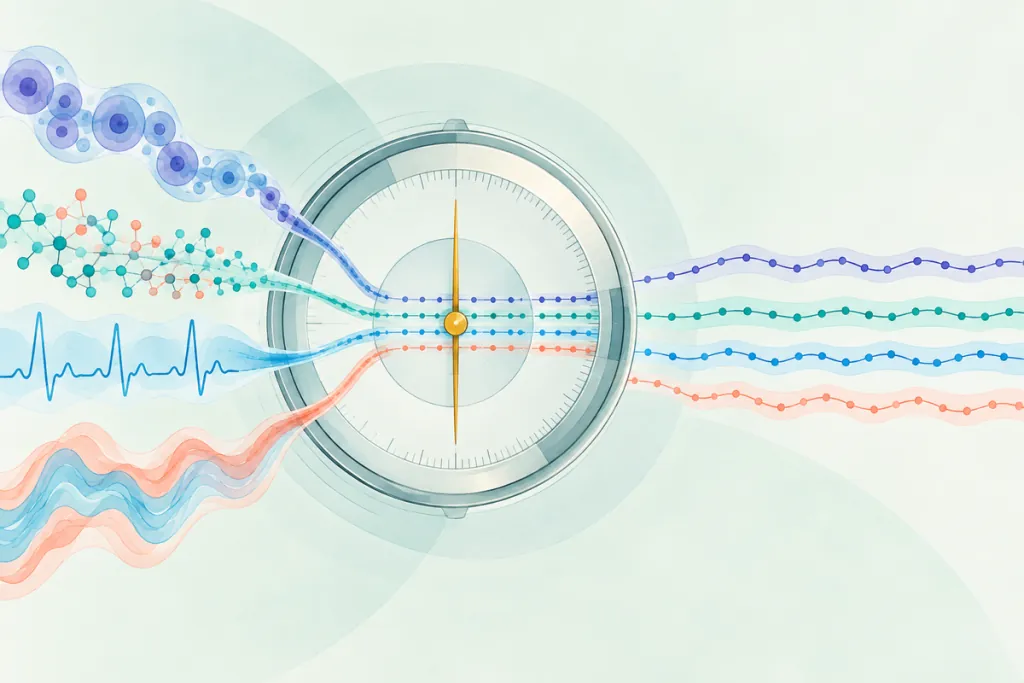
Younger contest puts aging clocks to the test
Key Takeaways
  • The Younger contest will measure multiple biological aging clocks side-by-side on the same participants at two timepoints, enabling direct comparison of clock responses to interventions.
  • Participants receive a standardized panel of tests across brain, body, and face—plus optional advanced measures—so different aging domains can be tracked concurrently.
  • Anonymized, jointly published results will reveal which clocks move together, which respond to interventions, and how interventions associate with biological age changes.
Read the full article at Longevity Technology ↗

Continue exploring

Recommended MoL Picks

MoL PickCan You Really Measure Whether You’re Aging More Slowly?A younger epigenetic-age score can look like proof that an intervention is working. A major new analysis shows which clocks detect change—and why movement is not yet the same as longer healthspan.MoL PickWhat Changes in the Human Hippocampus with Age?A study of 40 postmortem brains maps a midlife shift in immune cells and a wider loss of cellular and genome organisation—but it does not show how to prevent cognitive decline.MoL PickBiotin for Hair Growth: The Weak Evidence—and the Blood-Test Risk Most People MissBiotin deficiency can affect hair. That does not mean more biotin makes healthy hair grow—and high doses can distort important laboratory results.