
Summarized by Masters of Longevity from Nature - Main.
Cellular identity and its developmental chromatin grammar are examined as the article’s focus, inviting readers to probe a theoretical and data-informed account of how identity rules change with age.
Key Takeaways
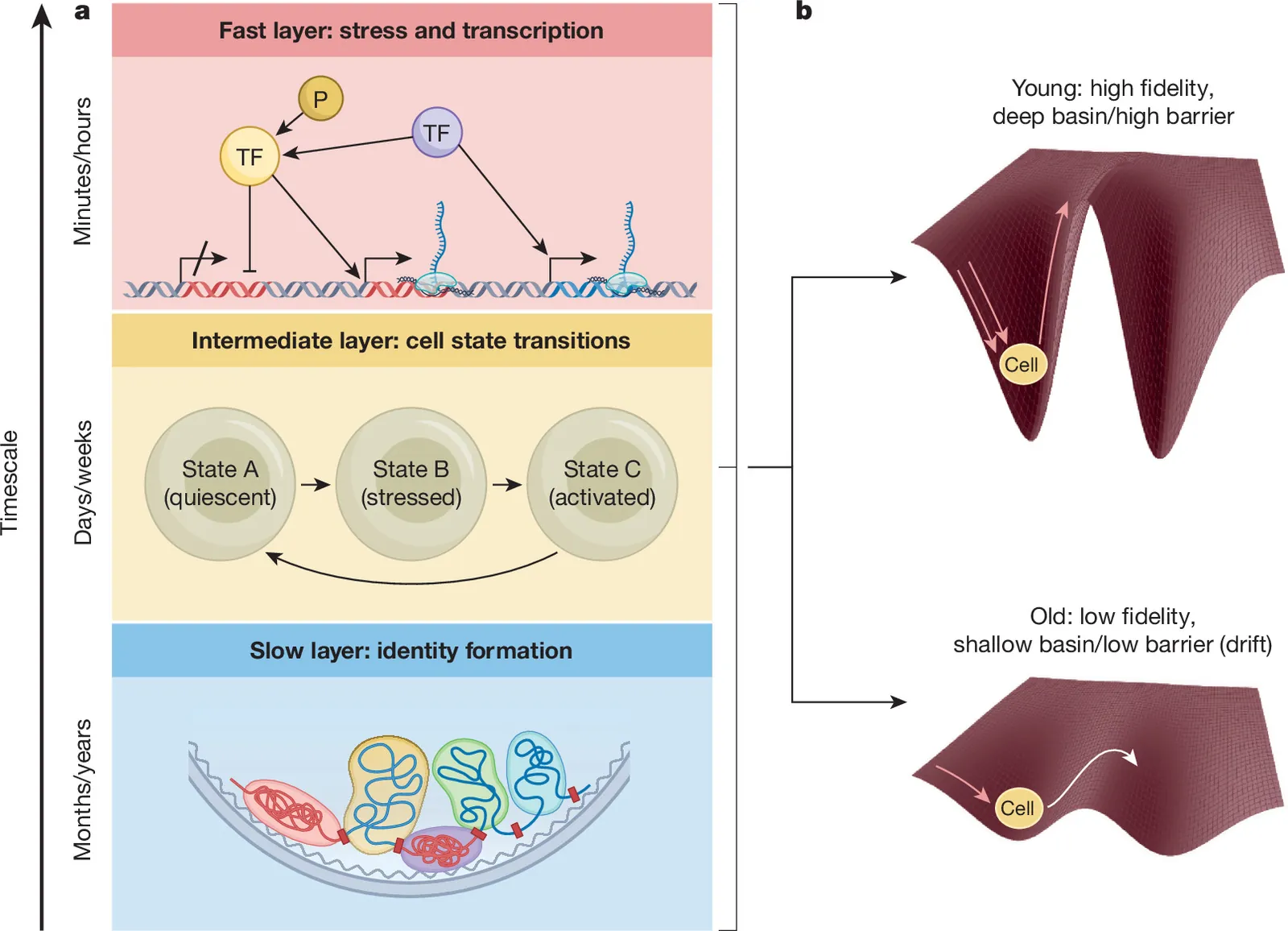
- Ageing involves progressive loss of cellular identity due to erosion of developmentally established chromatin regulatory grammar.
- Polycomb repressive complex 2 (PRC2)-bound low-methylated regions disproportionately accumulate age-associated DNA methylation gains across somatic mitotic tissues.
- Antagonistic chromatin pathways, such as PRC2 repression opposed by H3K4/36 methylation and RNA polymerase II, enforce identity boundaries that erode with age.


