
News summary

UNC13A splice correction rescues synaptic dysfunction induced by TDP-43 loss

Source: Nature - Main • Published: 11 Nov 2026, 00:00

Summarized by Masters of Longevity from Nature - Main.

Correcting UNC13A cryptic splicing rescued synaptic transmission and network synchrony.
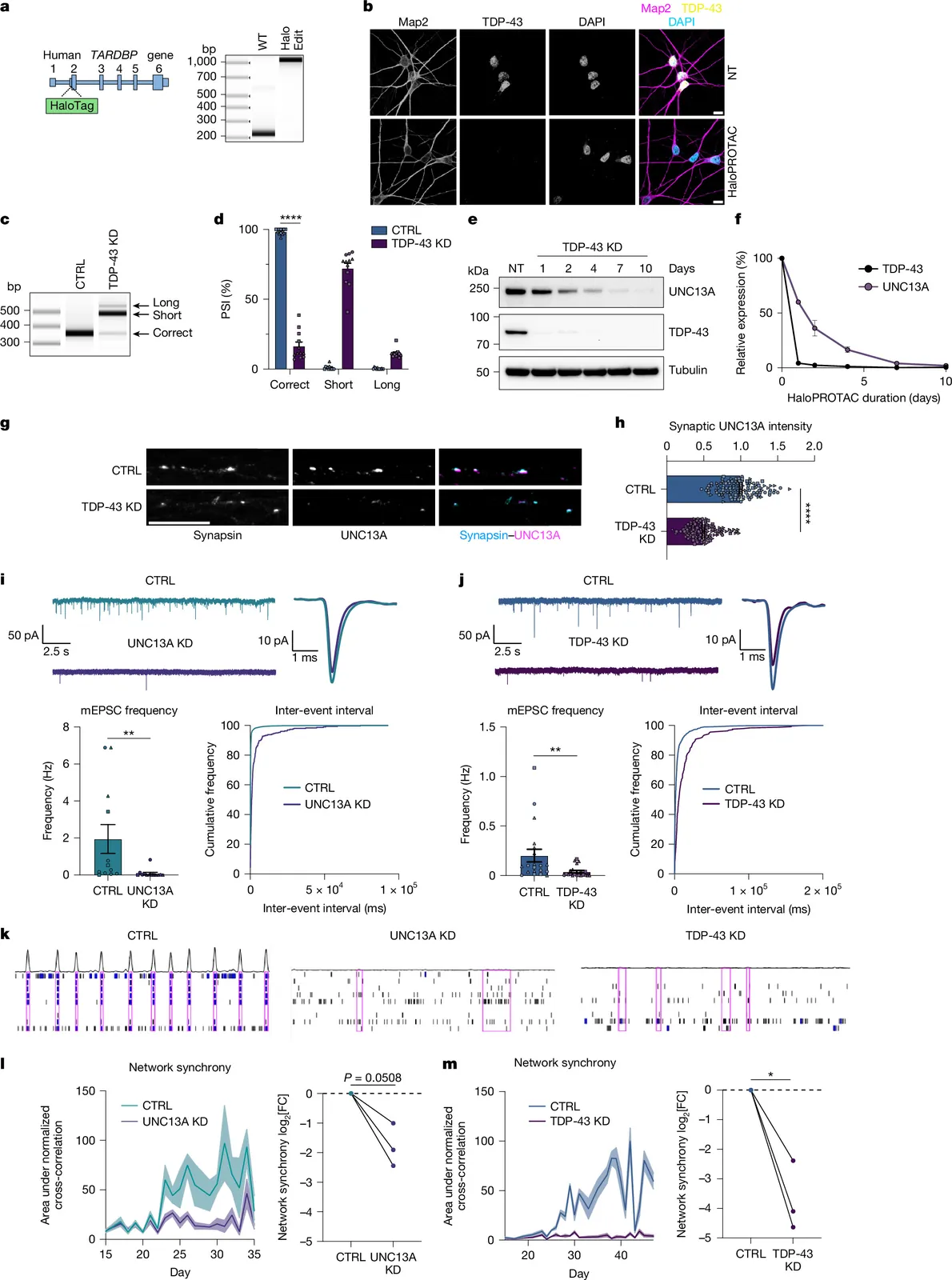
UNC13A splice correction rescues synaptic dysfunction induced by TDP-43 loss
Key Takeaways
  • TDP-43 loss is linked to widespread cryptic splicing in neurons.
  • UNC13A splice correction was sufficient to rescue synaptic deficits.
  • Findings are in human neurons and a humanized mouse model.
Read the full article at Nature - Main ↗

Continue exploring

Recommended MoL Picks

MoL PickReducing Inflammation from Ageing Cells: What a Mouse Study FoundResearchers reduced the inflammatory signals released by cells that had stopped dividing. Older mice also improved on some strength and frailty tests. Whether this approach could help people remains unknown.MoL PickGrowth Hormone Receptor Deletion Extends Mouse LifespanStudy summary: researchers switched off the growth hormone receptor in middle-aged mice and followed survival and physical function.MoL PickCreatine and Cancer: Why New Mouse Studies Point in Opposite DirectionsCreatine strengthened antitumour immune cells in one mouse study—and promoted metastasis through platelets in another. The apparent contradiction reveals why neither result is a supplement recommendation.