
News summary

The Human Ovary Exhibits Dynamic Molecular Remodeling in the Decades Post‐Menopause

Source: Aging Cell • Published: 14 Oct 2026, 05:00

Summarized by Masters of Longevity from Aging Cell.

Human ovaries after menopause are the focus of a research article that traces long-term molecular and cellular remodeling over time, inviting readers to learn how scientists map temporal changes in tissue biology and what kinds of data and approaches illuminate those patterns.
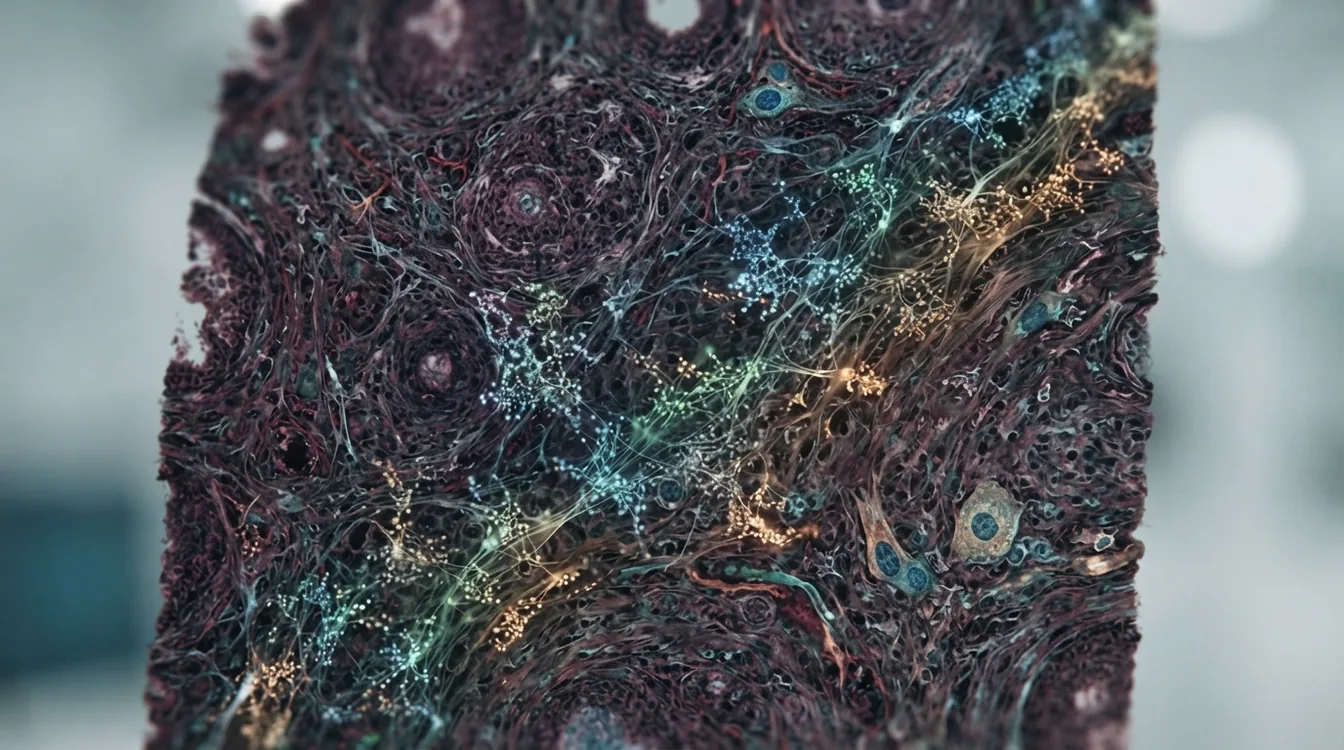
The Human Ovary Exhibits Dynamic Molecular Remodeling in the Decades Post‐Menopause
Key Takeaways
  • The study finds ongoing molecular remodeling in human ovarian tissue persisting for decades after menopause.
  • Remodeling includes altered gene expression programs and shifts in cell-type composition within postmenopausal ovaries.
  • Authors characterize temporal patterns linking specific molecular changes to time since menopause across sampled ovaries.
Read the full article at Aging Cell ↗

Continue exploring

Recommended MoL Picks

MoL PickWhat Changes in the Human Hippocampus with Age?A study of 40 postmortem brains maps a midlife shift in immune cells and a wider loss of cellular and genome organisation—but it does not show how to prevent cognitive decline.MoL PickReducing Inflammation from Ageing Cells: What a Mouse Study FoundResearchers reduced the inflammatory signals released by cells that had stopped dividing. Older mice also improved on some strength and frailty tests. Whether this approach could help people remains unknown.MoL PickGrowth Hormone Receptor Deletion Extends Mouse LifespanStudy summary: researchers switched off the growth hormone receptor in middle-aged mice and followed survival and physical function.