
News summary

The chemical fingerprint of cellular senescence

Source: Nature Aging • Published: 21 Sept 2026, 00:00

Summarized by Masters of Longevity from Nature Aging.

Cellular senescence research: a feature article introducing a new multimodal imaging approach that maps biochemical changes across senescent cells, inviting readers to learn how chemical and spatial transcriptomic data are integrated.
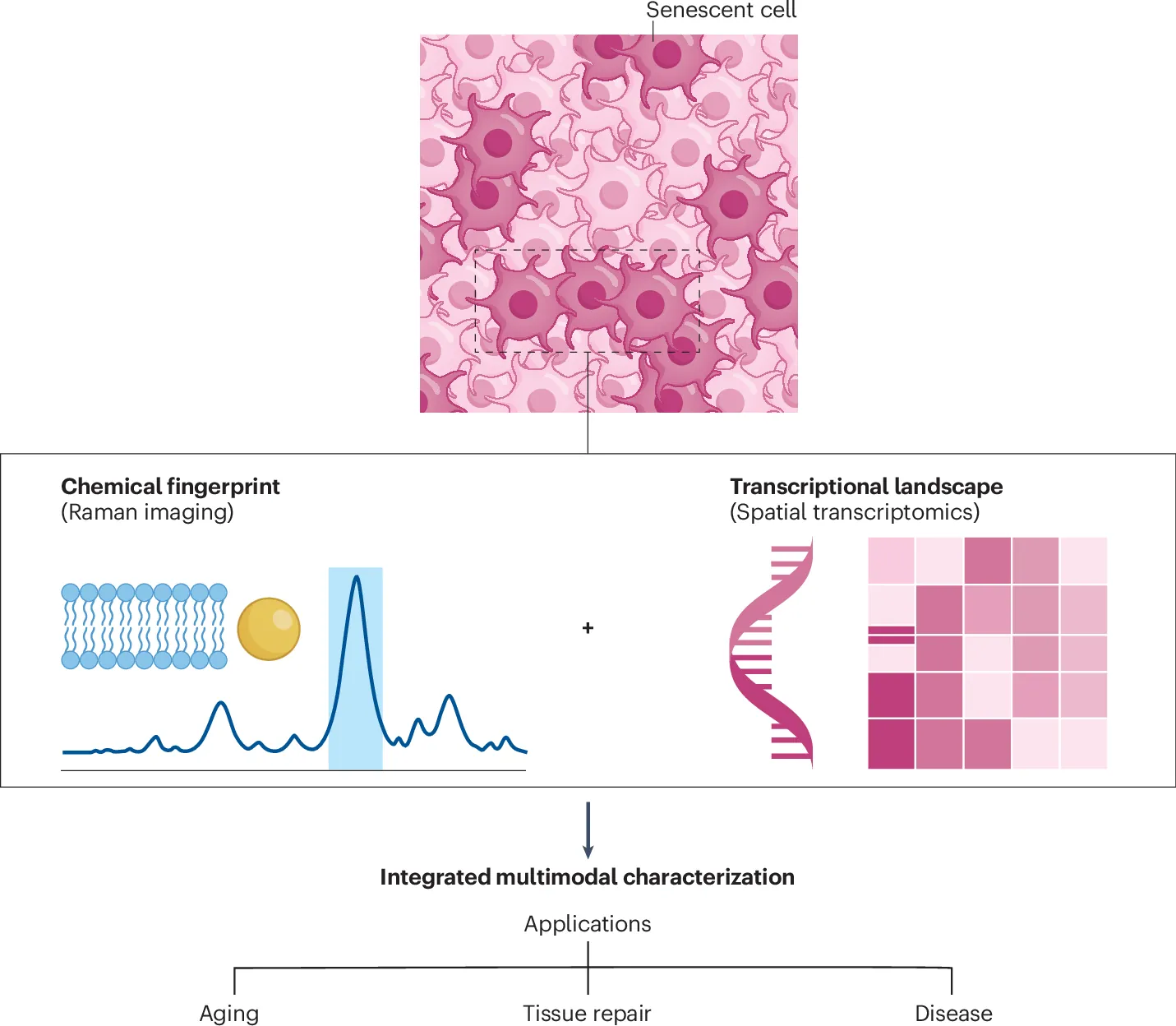
The chemical fingerprint of cellular senescence
Key Takeaways
  • View all journals The chemical fingerprint of cellular senescence Senescence has traditionally been studied largely on the basis of changes in gene expression, but senescent cells also undergo profound biochemical remodeling.
  • Article PubMed PubMed Central Google Scholar Ma, S.
Read the full article at Nature Aging ↗

Continue exploring

Recommended MoL Picks

MoL PickReducing Inflammation from Ageing Cells: What a Mouse Study FoundResearchers reduced the inflammatory signals released by cells that had stopped dividing. Older mice also improved on some strength and frailty tests. Whether this approach could help people remains unknown.MoL PickWhat Changes in the Human Hippocampus with Age?A study of 40 postmortem brains maps a midlife shift in immune cells and a wider loss of cellular and genome organisation—but it does not show how to prevent cognitive decline.MoL PickFrom Metrics to Better LivingEverstride’s May 2026 Consumer Health Market Briefing shows a wellness market moving from products to systems, from tracking to guidance, and from optimization to meaning. The next winners in longevity may not be the companies that measure the most. They may be the ones that help consumers translate health data into a life they actually want to live.