
News summary

Targeting Ero1L by Parthenolide Alleviates Cellular Senescence and Fibrosis of Localized Scleroderma by Regulating Mitochondria‐Associated Endoplasmic Reticulum Membranes Stabilization

Source: Aging Cell • Published: 30 Sept 2026, 04:57

Summarized by Masters of Longevity from Aging Cell.

Targeting a specific oxidative enzyme with a natural compound: a research article examining cellular mechanisms behind anti-fibrotic and anti-senescence effects and their therapeutic potential.
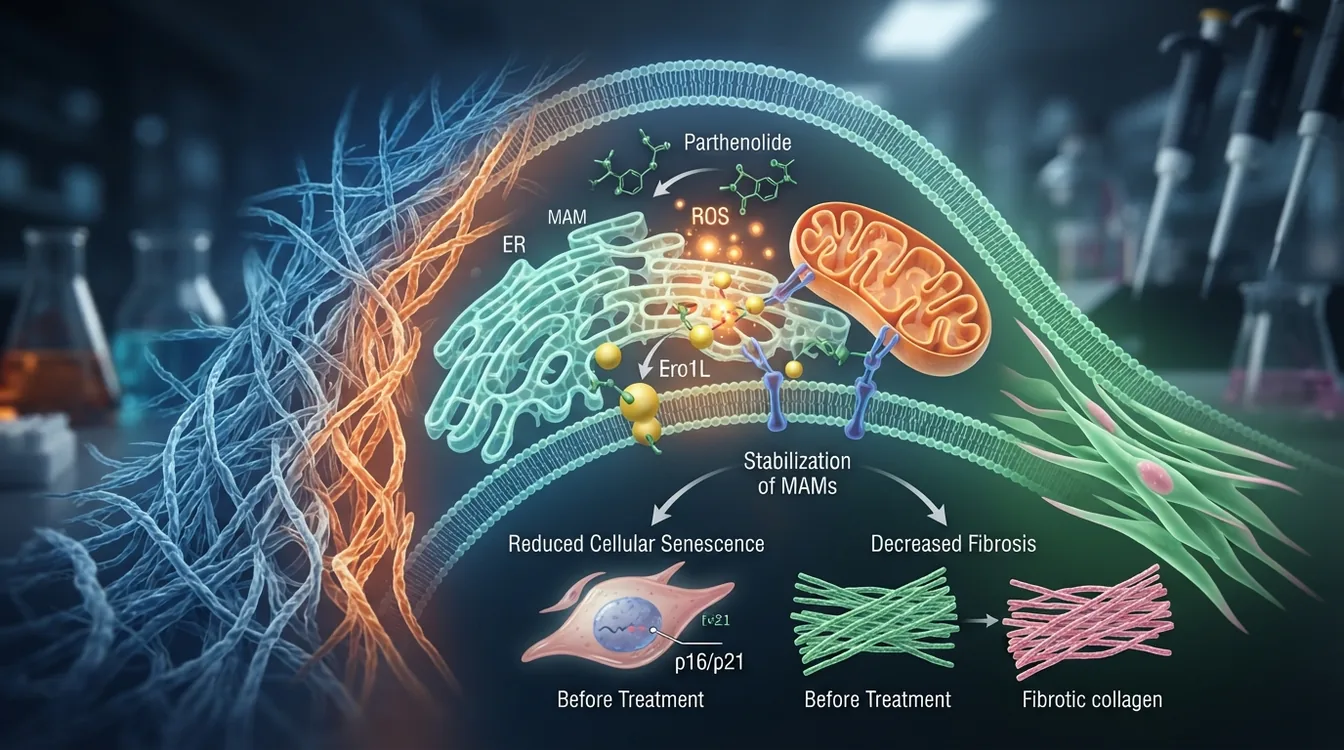
Targeting Ero1L by Parthenolide Alleviates Cellular Senescence and Fibrosis of Localized Scleroderma by Regulating Mitochondria‐Associated Endoplasmic Reticulum Membranes Stabilization
Key Takeaways
  • Ero1L inhibition by parthenolide decreased senescence markers in scleroderma-relevant cells.
  • Parthenolide treatment reduced fibrotic phenotypes in cellular and tissue models.
  • Stabilization of mitochondria-associated endoplasmic reticulum membranes mediated the observed anti-fibrotic effects.
Read the full article at Aging Cell ↗

Continue exploring

Recommended MoL Picks

MoL PickReducing Inflammation from Ageing Cells: What a Mouse Study FoundResearchers reduced the inflammatory signals released by cells that had stopped dividing. Older mice also improved on some strength and frailty tests. Whether this approach could help people remains unknown.MoL PickWhat Changes in the Human Hippocampus with Age?A study of 40 postmortem brains maps a midlife shift in immune cells and a wider loss of cellular and genome organisation—but it does not show how to prevent cognitive decline.MoL PickThe Next Obesity-Drug Race Is About What Weight You LoseRegeneron’s myostatin and activin A antibodies point to a sharper question for the GLP-1 era: not whether people can lose more weight, but whether medicine can preserve the tissue that makes weight loss healthier.