
News summary

Single-cell atlas of transcriptomic vulnerability across brain disorders

Source: Nature - Main • Published: 23 Sept 2026, 00:00

Summarized by Masters of Longevity from Nature - Main.

A large-scale single-cell research article mapping cell-type transcriptomes in the human dorsolateral prefrontal cortex to compare molecular vulnerability across brain disorders, inviting readers to explore cross-disease and disease-progression patterns.
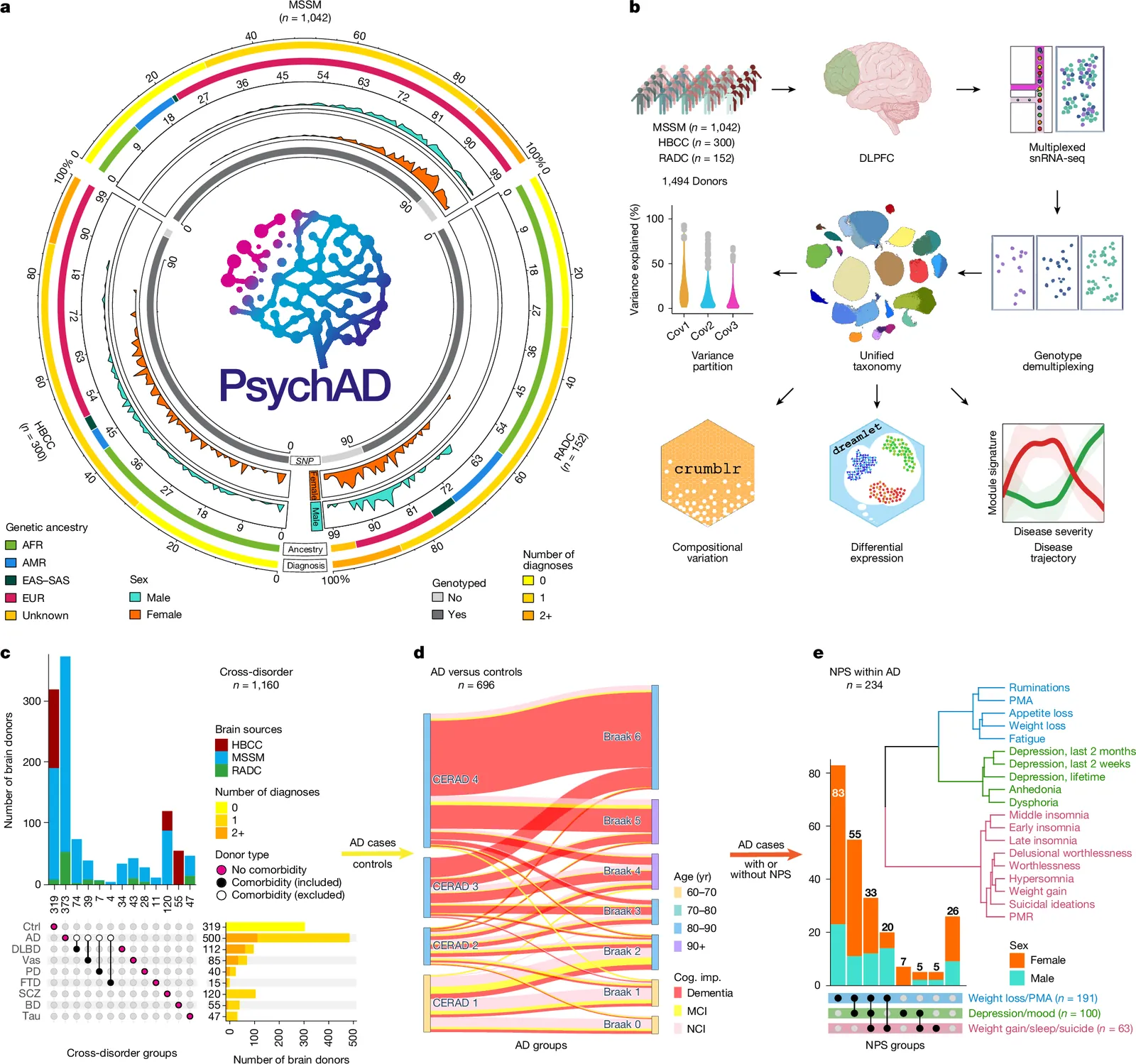
Single-cell atlas of transcriptomic vulnerability across brain disorders
Key Takeaways
  • The PsychAD cohort profiled over 6.3 million nuclei from 1,494 donors to create a DLPFC single‑cell atlas.
  • Shared transcriptomic vulnerability across disorders involves mRNA processing and protein localization pathways.
  • Alzheimer’s progression shows reduced neuronal abundance with increased immune and vascular cell populations.
Read the full article at Nature - Main

Continue exploring

Recommended MoL Picks

MoL PickWhat Changes in the Human Hippocampus with Age?A study of 40 postmortem brains maps a midlife shift in immune cells and a wider loss of cellular and genome organisation—but it does not show how to prevent cognitive decline.MoL PickSeed Oils and Health: Inflammation, Processing and EvidenceHuman trials, processing risks and long-term health ask different questions. What can seed-oil research tell us—and what remains unresolved?MoL PickReducing Inflammation from Ageing Cells: What a Mouse Study FoundResearchers reduced the inflammatory signals released by cells that had stopped dividing. Older mice also improved on some strength and frailty tests. Whether this approach could help people remains unknown.