
News summary

Senescent Fibroblasts Impair B Cell Proliferation via Cell–Cell Contact

Source: Aging Cell • Published: 16 Oct 2026, 10:26

Summarized by Masters of Longevity from Aging Cell.

Senescent fibroblasts and their direct interactions with immune cells are examined in a research article, guiding readers into how cellular neighborhoods influence B cell expansion.
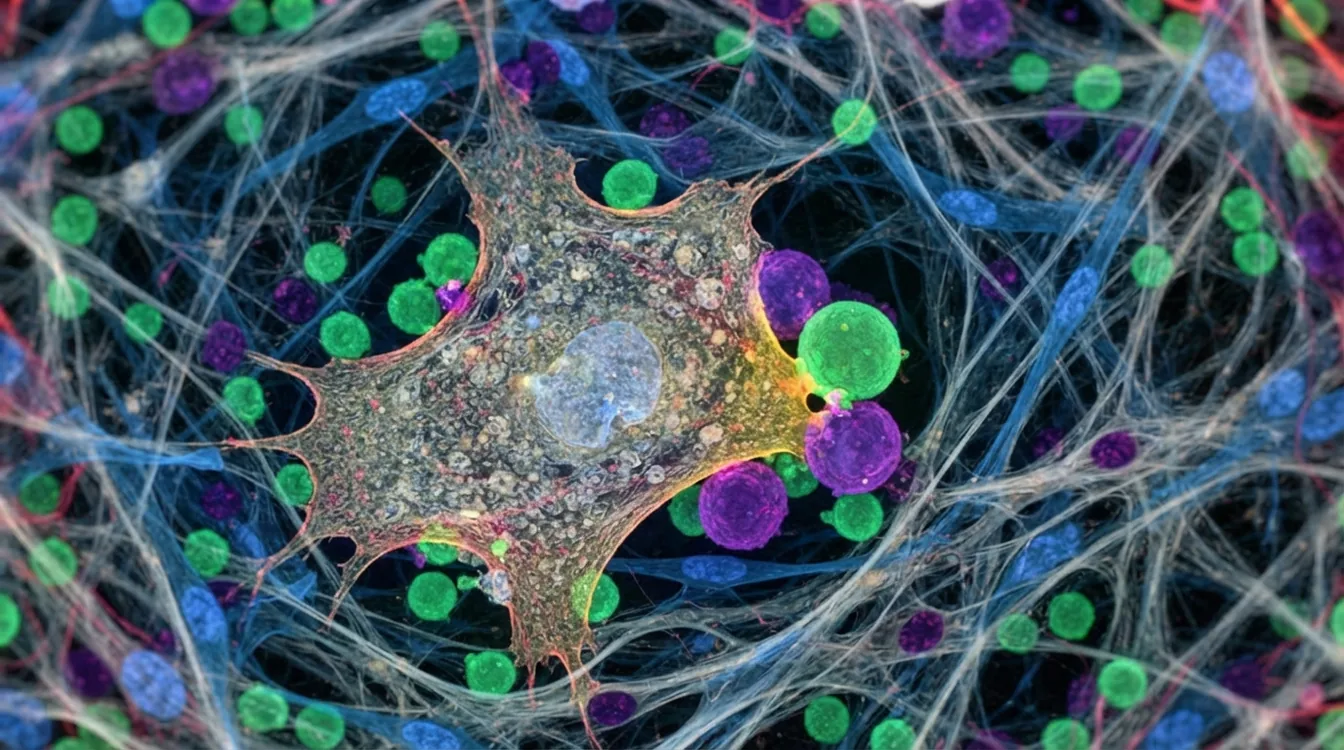
Senescent Fibroblasts Impair B Cell Proliferation via Cell–Cell Contact
Key Takeaways
  • Senescent fibroblasts reduce B cell proliferation through direct cell–cell contact rather than secreted factors alone.
  • Contact-dependent inhibition involved surface interactions between senescent fibroblasts and B cells in co-culture experiments.
  • The study links stromal senescence to impaired adaptive immune cell expansion, suggesting tissue microenvironment effects on immunity.
Read the full article at Aging Cell ↗

Continue exploring

Recommended MoL Picks

MoL PickReducing Inflammation from Ageing Cells: What a Mouse Study FoundResearchers reduced the inflammatory signals released by cells that had stopped dividing. Older mice also improved on some strength and frailty tests. Whether this approach could help people remains unknown.MoL PickCreatine and Cancer: Why New Mouse Studies Point in Opposite DirectionsCreatine strengthened antitumour immune cells in one mouse study—and promoted metastasis through platelets in another. The apparent contradiction reveals why neither result is a supplement recommendation.MoL PickWhat Changes in the Human Hippocampus with Age?A study of 40 postmortem brains maps a midlife shift in immune cells and a wider loss of cellular and genome organisation—but it does not show how to prevent cognitive decline.