
News summary

Reverse bioengineering of the liver: developmental principles for next-generation liver-on-a-chip systems

Source: Nature - Biotechnology • Published: 16 Sept 2026, 00:00

Summarized by Masters of Longevity from Nature - Biotechnology.

Liver development–focused feature explaining how developmental principles can guide next-generation liver-on-a-chip platforms. It invites readers curious about design frameworks and future directions.
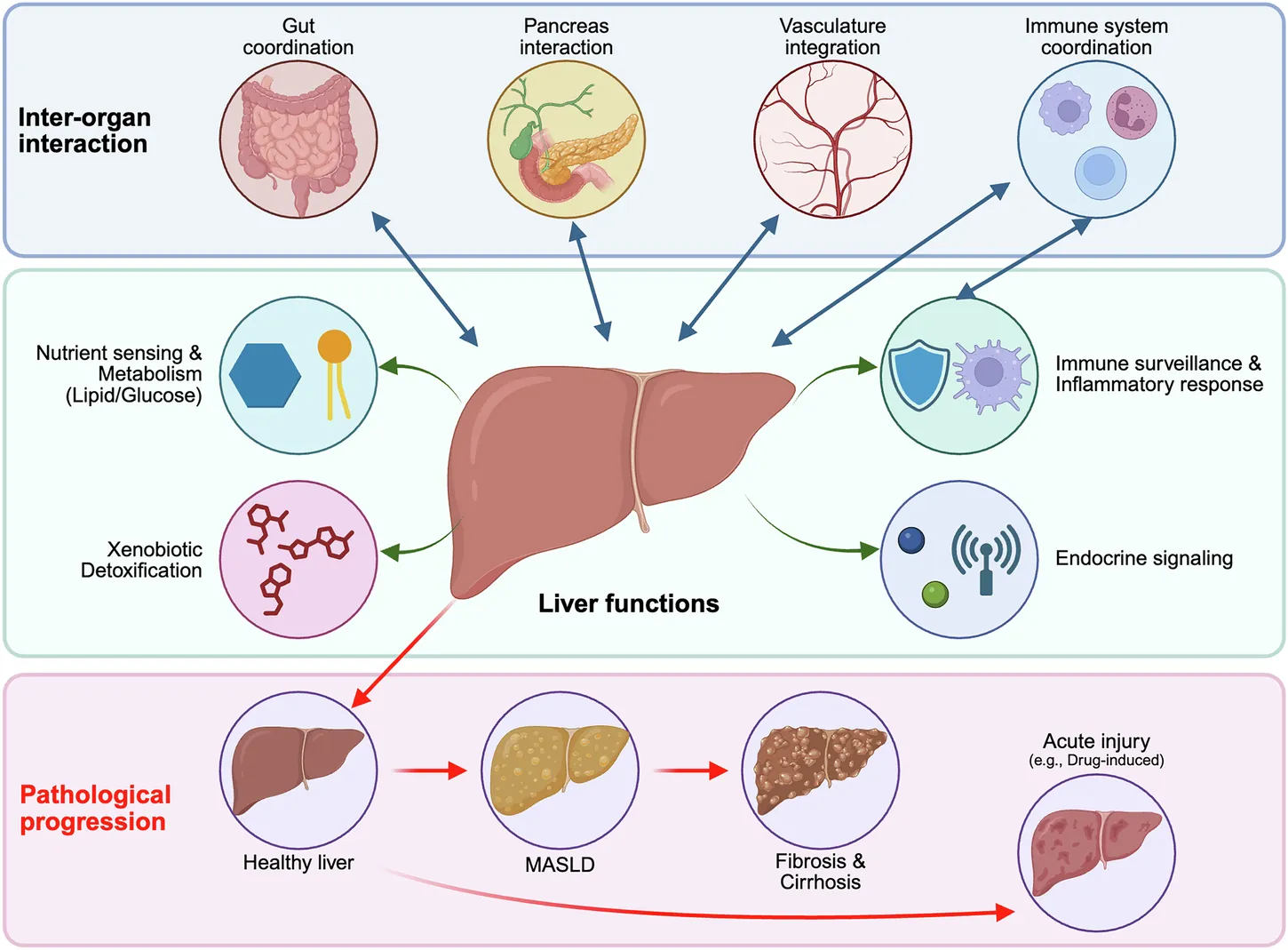
Reverse bioengineering of the liver: developmental principles for next-generation liver-on-a-chip systems
Key Takeaways
  • Pluripotent stem cells, organoids, and microphysiological systems each capture complementary but incomplete aspects of liver development, so integrating these modalities can better reconstruct developmental trajectories.
  • Future liver-on-a-chip progress requires developmentally coordinated multi-organ models, quantitative developmental benchmarks, and AI-enabled digital twins to guide and interpret system design.
Read the full article at Nature - Biotechnology ↗

Continue exploring

Recommended MoL Picks

MoL PickFrom Metrics to Better LivingEverstride’s May 2026 Consumer Health Market Briefing shows a wellness market moving from products to systems, from tracking to guidance, and from optimization to meaning. The next winners in longevity may not be the companies that measure the most. They may be the ones that help consumers translate health data into a life they actually want to live.MoL PickThe Next Obesity-Drug Race Is About What Weight You LoseRegeneron’s myostatin and activin A antibodies point to a sharper question for the GLP-1 era: not whether people can lose more weight, but whether medicine can preserve the tissue that makes weight loss healthier.MoL PickCreatine and Cancer: Why New Mouse Studies Point in Opposite DirectionsCreatine strengthened antitumour immune cells in one mouse study—and promoted metastasis through platelets in another. The apparent contradiction reveals why neither result is a supplement recommendation.