
News summary

Protracted Fate Acquisition and Epigenetic De‐Aging During Induced Neural Stem Cell Conversion of Human Blood Cells

Source: Aging Cell • Published: 04 Oct 2026, 03:40

Summarized by Masters of Longevity from Aging Cell.

Induced neural stem cell conversion from blood is examined as a study of how cell identity emerges over time and how epigenetic age shifts during reprogramming, offering readers a timely look at cellular reprogramming dynamics and potential rejuvenation processes.
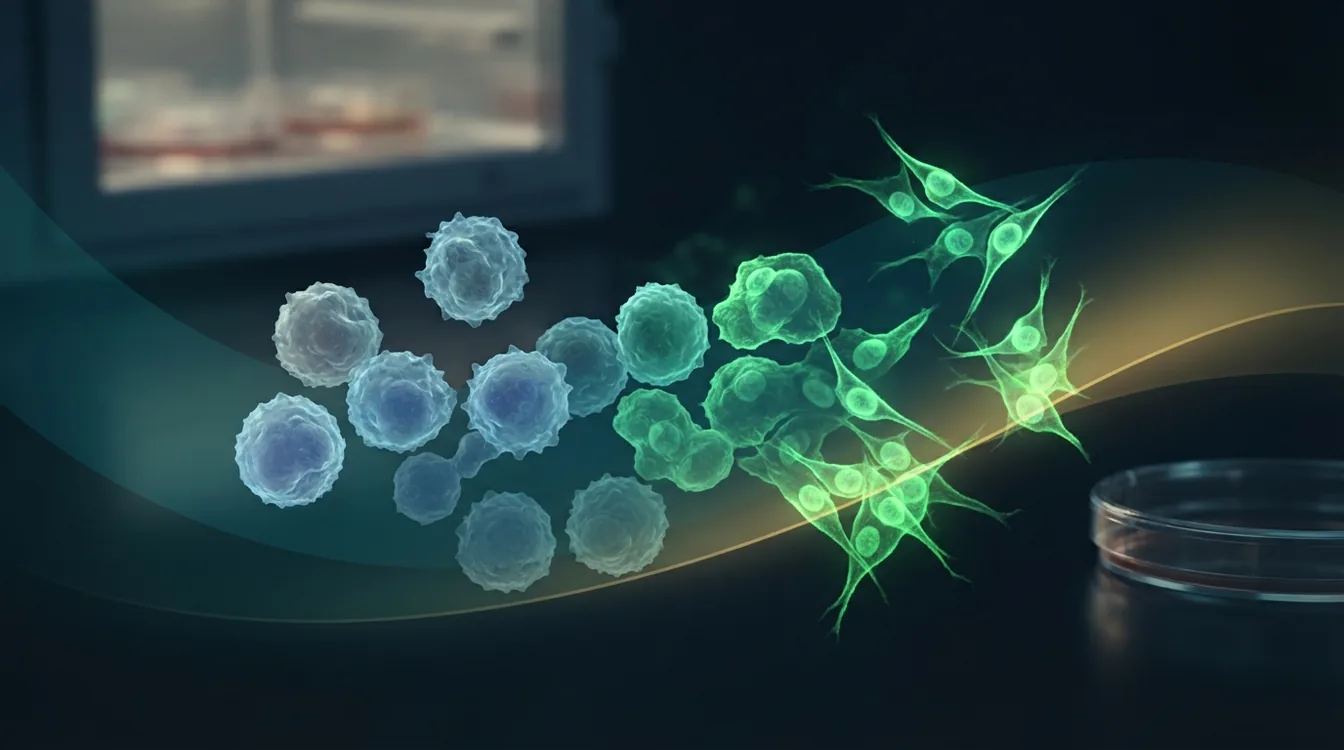
Protracted Fate Acquisition and Epigenetic De‐Aging During Induced Neural Stem Cell Conversion of Human Blood Cells
Key Takeaways
  • Conversion of human blood cells to induced neural stem cells shows a delayed establishment of neural cell fate compared with expected timelines.
  • Epigenetic age markers decrease during the induced neural stem cell conversion process, indicating partial epigenetic rejuvenation.
  • The protracted fate acquisition and epigenetic de-aging were observed in human blood-derived cells undergoing the described reprogramming protocol.
Read the full article at Aging Cell ↗

Continue exploring

Recommended MoL Picks

MoL PickCan You Really Measure Whether You’re Aging More Slowly?A younger epigenetic-age score can look like proof that an intervention is working. A major new analysis shows which clocks detect change—and why movement is not yet the same as longer healthspan.MoL PickBiotin for Hair Growth: The Weak Evidence—and the Blood-Test Risk Most People MissBiotin deficiency can affect hair. That does not mean more biotin makes healthy hair grow—and high doses can distort important laboratory results.MoL PickApoB: The cholesterol signal LDL can missIn longevity medicine, the useful biomarkers are not always the exotic ones. ApoB is a relatively simple blood test that can sharpen cardiovascular prevention when LDL-C looks reassuring but particle burden remains high.