
News summary

Polyamines from the Gut Microbiome Affect Life Span in Flies

Source: Fight Aging! • Published: 02 Oct 2026, 10:11

Summarized by Masters of Longevity from Fight Aging!.

Report on a gnotobiotic fly study testing whether gut bacterial polyamines influence host lifespan, gene expression, and physiological aging markers.
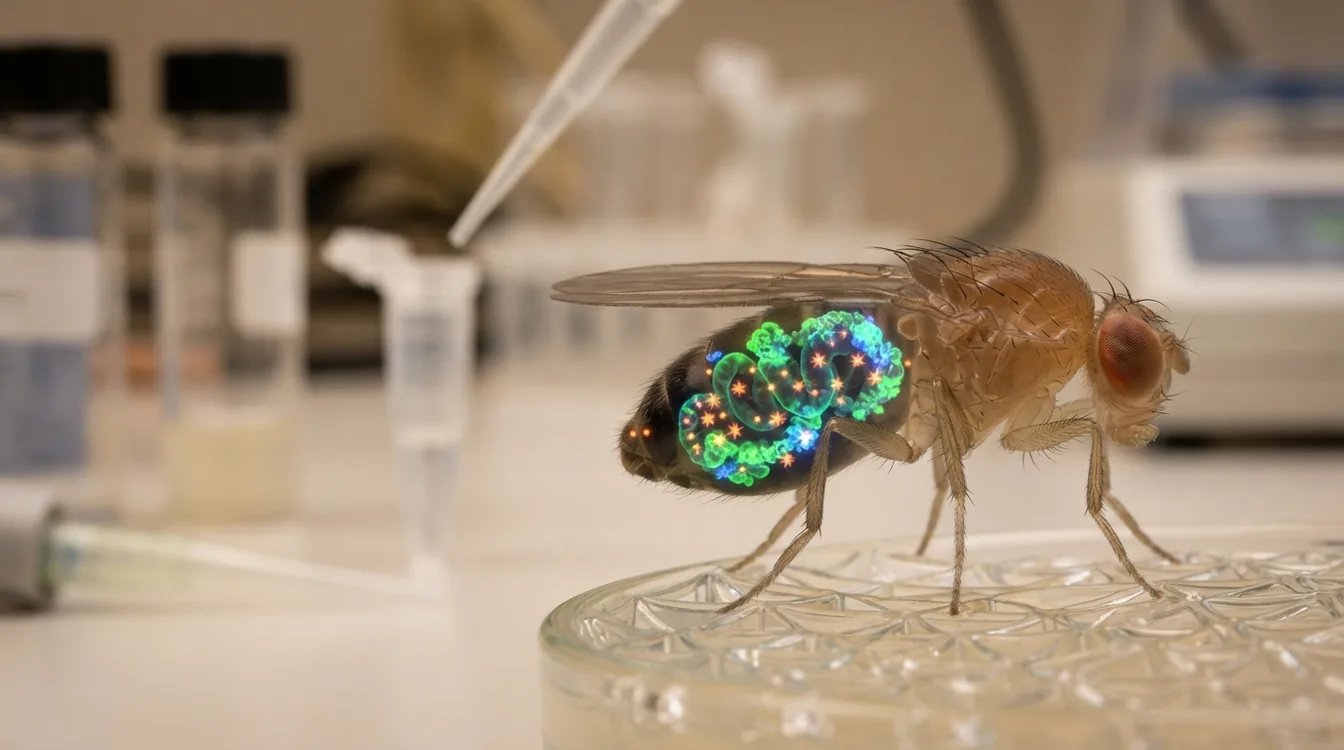
Polyamines from the Gut Microbiome Affect Life Span in Flies
Key Takeaways
  • Gnotobiotic flies colonized with polyamine-producing Escherichia coli lived significantly longer than flies colonized with polyamine-deficient mutants.
  • Flies fed a polyamine-free diet still showed lifespan extension when their gut bacteria produced putrescine and spermidine.
  • Expression of stress-related genes TotM and Halo was lower in flies colonized with polyamine-producing bacteria compared with polyamine-deficient bacteria.
Read the full article at Fight Aging! ↗

Continue exploring

Recommended MoL Picks

MoL PickSemaglutide Extended Lifespan in Mice. What Would Make It a Human Longevity Drug?A new animal study sharpens an important question: when do benefits in a particular disease become evidence for a longer, healthier life?MoL PickBiotin for Hair Growth: The Weak Evidence—and the Blood-Test Risk Most People MissBiotin deficiency can affect hair. That does not mean more biotin makes healthy hair grow—and high doses can distort important laboratory results.MoL PickPlan Your Health Tests in Three MinutesThe free Personal Health Diagnostics Planner turns a short questionnaire into a ranked, personalised PDF: a clearer starting point for deciding which health checks deserve attention now.