
News summary

Patient-derived teratomas as a humanized platform for dystrophin restoration by ex vivo cell therapy and in vivo base editing

Source: Nature - Biotechnology • Published: 01 Oct 2026, 00:00

Summarized by Masters of Longevity from Nature - Biotechnology.

Patient-derived teratomas are presented as a humanized experimental platform to test cell- and gene-based strategies for restoring dystrophin in DMD models, offering a way to evaluate therapeutic delivery, editing, and myogenic maturation in a patient-specific context.
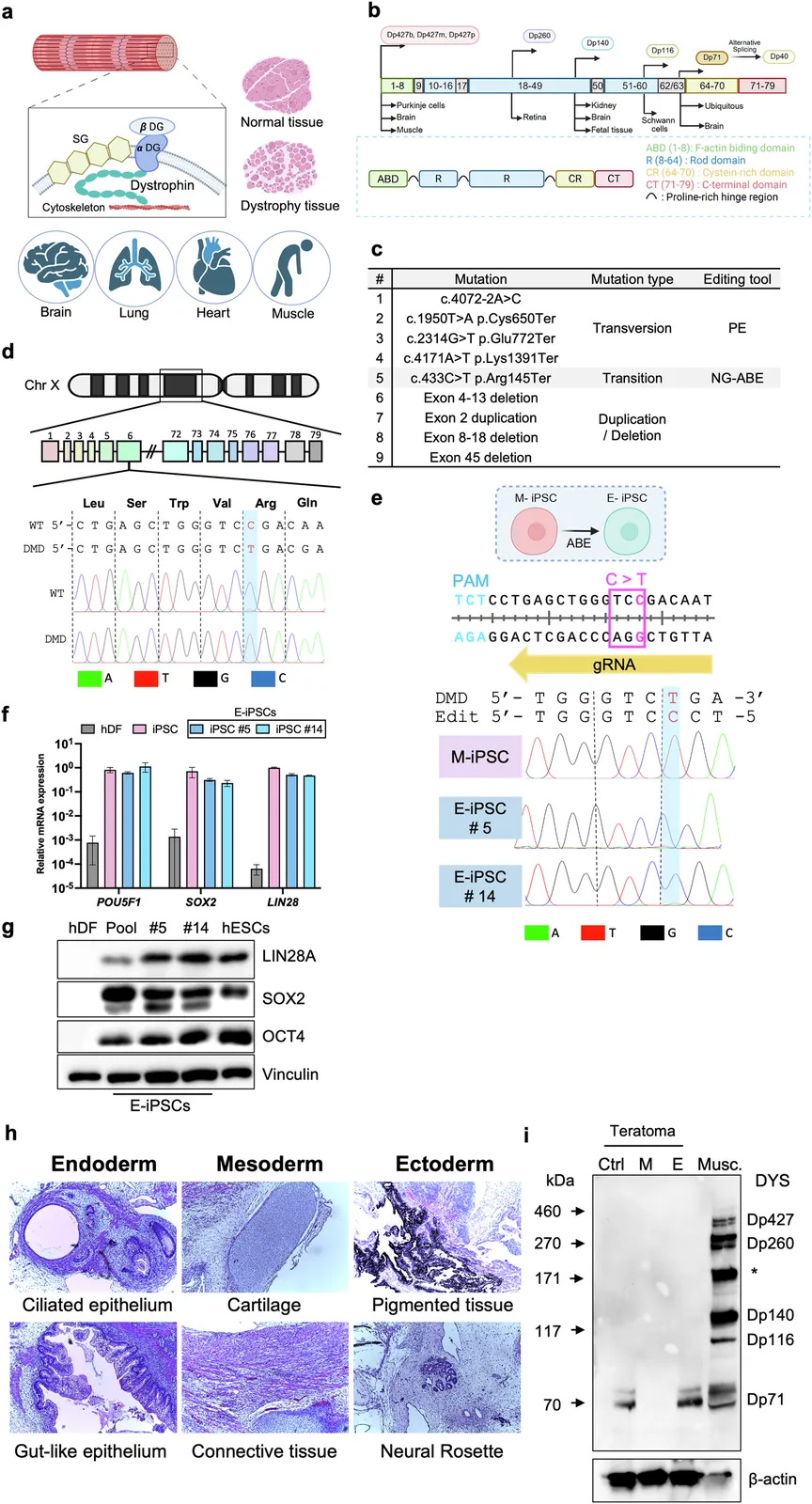
Patient-derived teratomas as a humanized platform for dystrophin restoration by ex vivo cell therapy and in vivo base editing
Key Takeaways
  • Patient-derived teratomas from DMD iPS cells produced skeletal muscle-like tissue suitable for therapeutic testing.
  • Ex vivo transplantation of adenine base editor–corrected myogenic progenitors partially restored shorter dystrophin isoforms but did not reproducibly recover full-length Dp427m.
  • Local lipid nanoparticle delivery of adenine base editor mRNA achieved dose-dependent editing and restoration of shorter dystrophin isoforms including Dp71.
Read the full article at Nature - Biotechnology ↗

Continue exploring

Recommended MoL Picks

MoL PickBiotin for Hair Growth: The Weak Evidence—and the Blood-Test Risk Most People MissBiotin deficiency can affect hair. That does not mean more biotin makes healthy hair grow—and high doses can distort important laboratory results.MoL PickCan You Really Measure Whether You’re Aging More Slowly?A younger epigenetic-age score can look like proof that an intervention is working. A major new analysis shows which clocks detect change—and why movement is not yet the same as longer healthspan.MoL PickApoB: The cholesterol signal LDL can missIn longevity medicine, the useful biomarkers are not always the exotic ones. ApoB is a relatively simple blood test that can sharpen cardiovascular prevention when LDL-C looks reassuring but particle burden remains high.