
News summary

Nurse Practitioner and Hello Dose Founder Bracha Banayan, RN, FNP, Releases "Why Are You Still Hungry?" -- A Patient Guide to GLP-1 Medications and Lasting Habit Change

Source: PR Newswire • Published: 07 Oct 2026, 13:02

Summarized by Masters of Longevity from PR Newswire.

A clinician-founder published a patient guide explaining how GLP-1 and GIP medications interact with biology and behavior and offering a four-part habit-change framework.
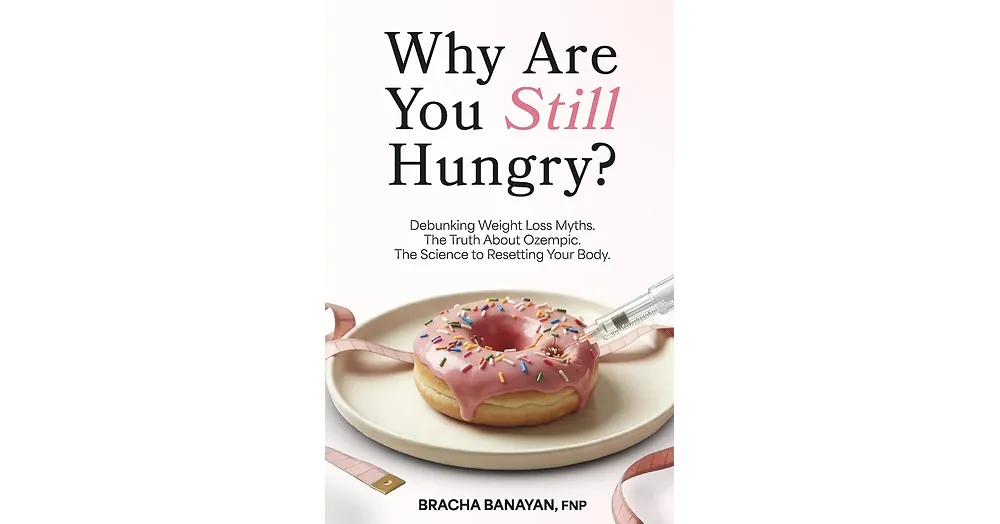
Nurse Practitioner and Hello Dose Founder Bracha Banayan, RN, FNP, Releases "Why Are You Still Hungry?" -- A Patient Guide to GLP-1 Medications and Lasting Habit Change
Key Takeaways
  • Banayan walks readers through the biological factors that can make weight management so challenging, including insulin resistance, the body's set point and "food noise," the persistent, intrusive thoughts about food that many people describe.
  • She once gave patients the familiar advice to eat less and move more, until she gained roughly 20 pounds during the COVID-19 pandemic and spent nearly two years unable to lose it through diet and exercise alone.
  • She eventually tried semaglutide under appropriate medical care, and the experience reshaped how she practices.
Read the full article at PR Newswire ↗

Continue exploring

Recommended MoL Picks

MoL PickThe Next Obesity-Drug Race Is About What Weight You LoseRegeneron’s myostatin and activin A antibodies point to a sharper question for the GLP-1 era: not whether people can lose more weight, but whether medicine can preserve the tissue that makes weight loss healthier.MoL PickSemaglutide Extended Lifespan in Mice. What Would Make It a Human Longevity Drug?A new animal study sharpens an important question: when do benefits in a particular disease become evidence for a longer, healthier life?MoL PickCan You Really Measure Whether You’re Aging More Slowly?A younger epigenetic-age score can look like proof that an intervention is working. A major new analysis shows which clocks detect change—and why movement is not yet the same as longer healthspan.