
News summary

Lsp2 links mTORC1 to TOP mRNA translation and lifespan in Drosophila

Source: Nature - Main • Published: 23 Sept 2026, 00:00

Summarized by Masters of Longevity from Nature - Main.

A Drosophila adipose protein, induced by dietary essential amino acids, links mTORC1 activity to selective TOP mRNA translation and affects lifespan.
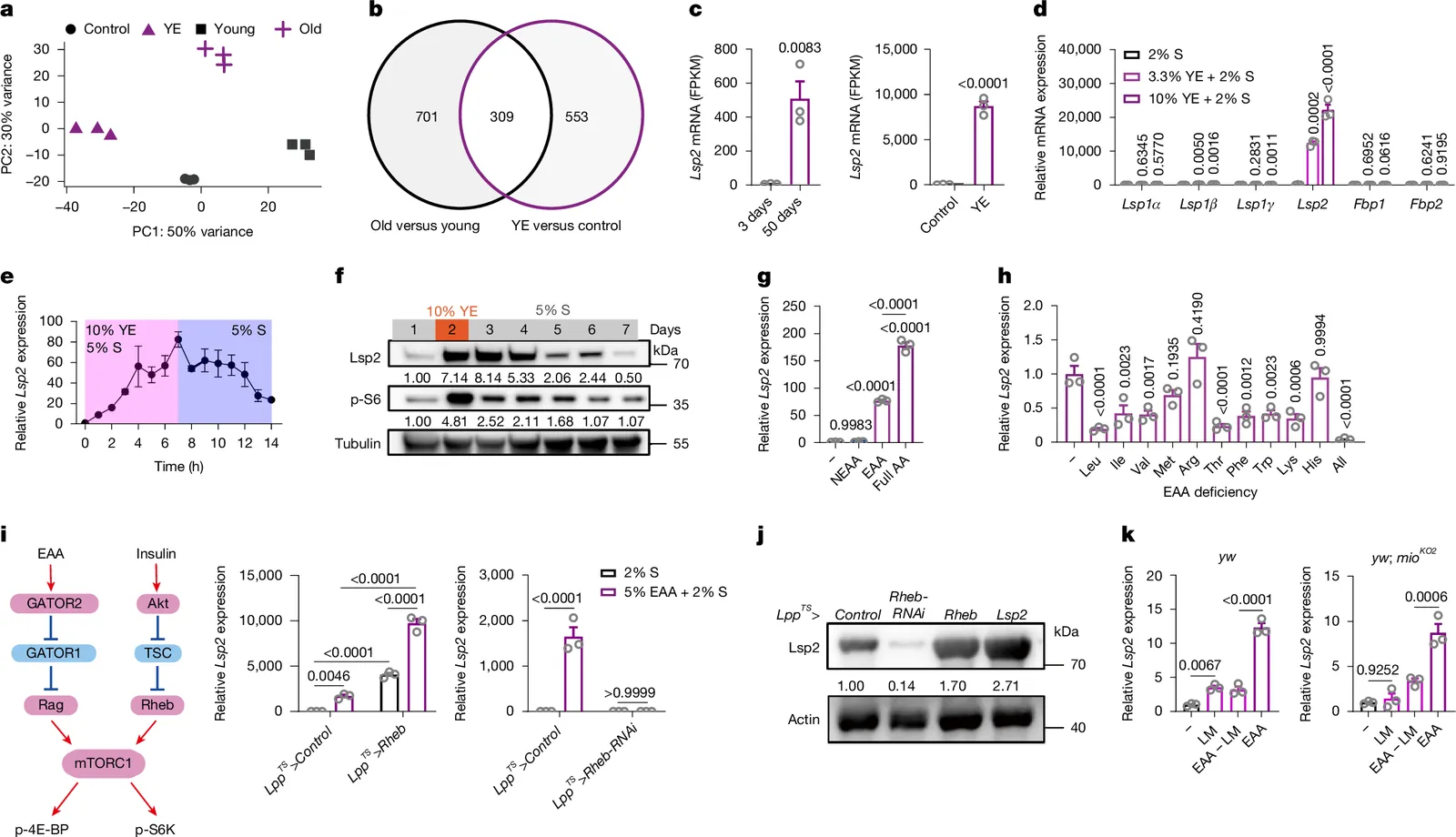
Lsp2 links mTORC1 to TOP mRNA translation and lifespan in Drosophila
Key Takeaways
  • Mechanistic target of rapamycin complex 1 (mTORC1) senses nutrient availability to orchestrate metabolic processes that are crucial for physiological homeostasis and ageing 1.
  • MTORC1 preferentially regulates the translation of 5′-terminal oligopyrimidine (TOP) motif-containing mRNAs (which encode mainly ribosomal proteins) through the 4E-BP translational repressor 2 ; however, this function of mTORC1 is resistant to rapamycin inhibition 3.
  • TOP mRNAs are exceptionally abundant, and thus impose a major translational burden on cells, but how their translation is physiologically tuned and linked with lifespan remains unclear.
Read the full article at Nature - Main

Continue exploring

Recommended MoL Picks

MoL PickGrowth Hormone Receptor Deletion Extends Mouse LifespanStudy summary: researchers switched off the growth hormone receptor in middle-aged mice and followed survival and physical function.MoL PickSemaglutide Extended Lifespan in Mice. What Would Make It a Human Longevity Drug?A new animal study sharpens an important question: when do benefits in a particular disease become evidence for a longer, healthier life?MoL PickApoB: The cholesterol signal LDL can missIn longevity medicine, the useful biomarkers are not always the exotic ones. ApoB is a relatively simple blood test that can sharpen cardiovascular prevention when LDL-C looks reassuring but particle burden remains high.