
News summary

Loneliness and isolation linked to fewer disease-free years in 277,489 adults

Source: Longevity Docs News • Published: 21 Oct 2026, 00:00

Summarized by Masters of Longevity from Longevity Docs News.

Loneliness and social isolation are examined in a population study as predictors of fewer disease-free years, with attention to mental and physical health impacts and lifestyle interactions.
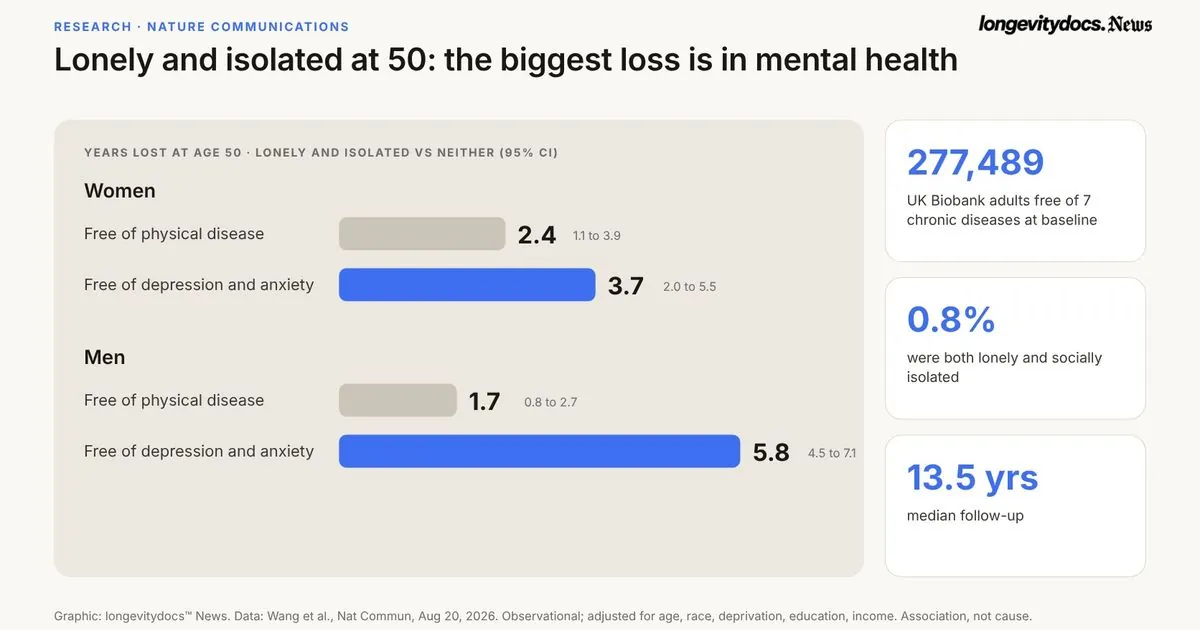
Loneliness and isolation linked to fewer disease-free years in 277,489 adults
Key Takeaways
  • Adults who were both lonely and socially isolated experienced 2.2 to 3.0 fewer disease-free years from age 50 across major chronic conditions.
  • The largest reductions in disease-free years were for mental health, with up to 5.8 fewer years free of depression and anxiety in men.
  • Healthier lifestyle behaviors narrowed the isolation-related gap but did not significantly reduce the loneliness-associated loss in disease-free years.
Read the full article at Longevity Docs News ↗

Continue exploring

Recommended MoL Picks

MoL PickCan Exergaming Improve Balance? What Older Adults Should KnowMotion-controlled games may make balance practice easier to repeat. The evidence supports a structured adjunct—not a fall-proofing shortcut.MoL PickPlan Your Health Tests in Three MinutesThe free Personal Health Diagnostics Planner turns a short questionnaire into a ranked, personalised PDF: a clearer starting point for deciding which health checks deserve attention now.MoL PickMelatonin and Heart Failure: What the Evidence Actually ShowsA 2025 study linked melatonin use with heart failure. A 2026 analysis found no significant association. Their different designs explain why the question remains open.