
News summary

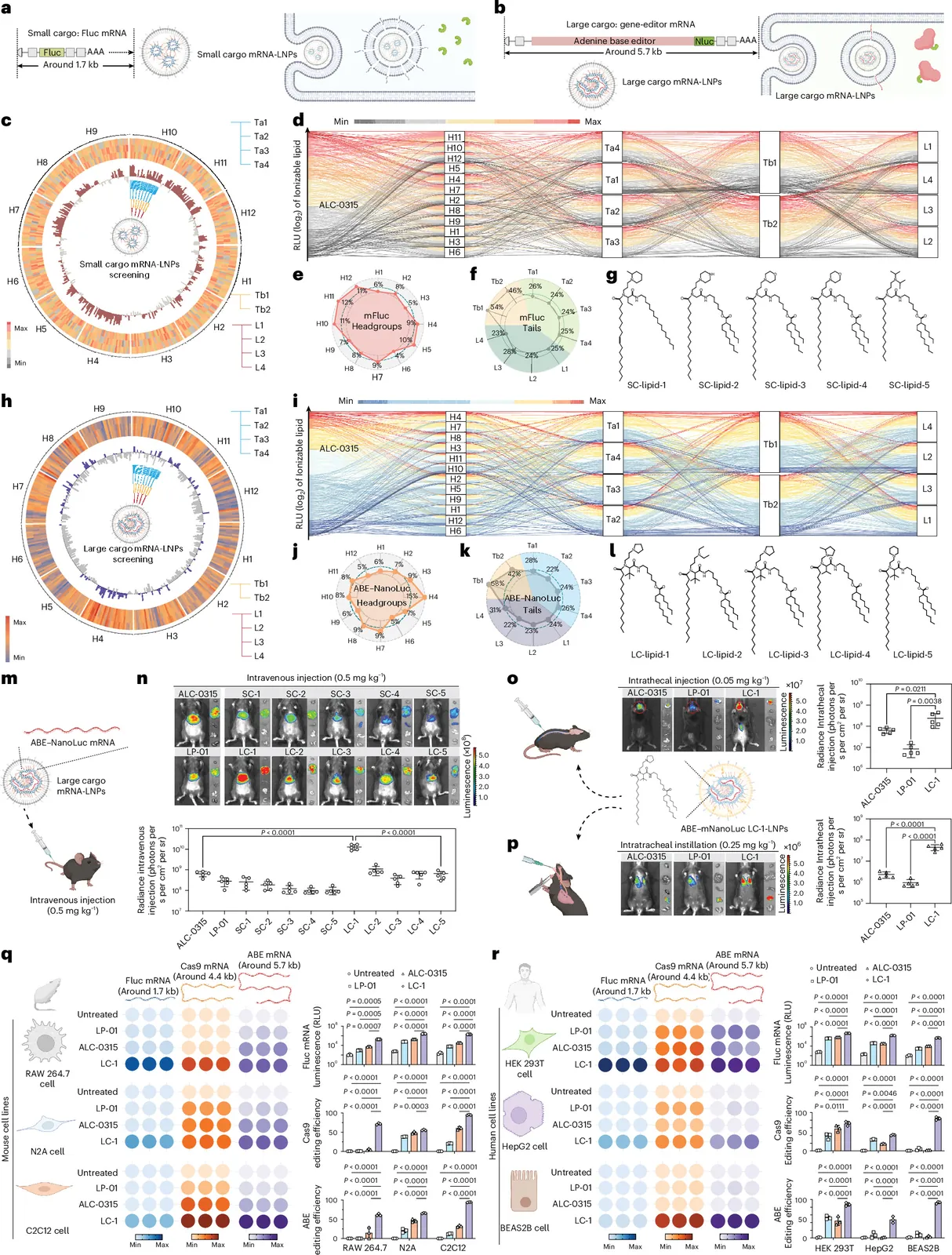
Lipid nanoparticles optimized for large RNA cargo and tissue targeting enhance in vivo genome editing

Source: Nature - Biotechnology • Published: 28 Sept 2026, 00:00

Summarized by Masters of Longevity from Nature - Biotechnology.

Lipid nanoparticle research focused on designing carriers for large RNA cargo and targeted tissue delivery, previewing a methods-and-mechanism article.
Lipid nanoparticles optimized for large RNA cargo and tissue targeting enhance in vivo genome editing
Key Takeaways
  • A 384-lipid combinatorial screen using a 5.7 kb reporter mRNA identified LC-1 as a large-cargo-optimized ionizable lipid.
  • LC-1 LNPs achieved up to 79% Cas9 knockout in liver and 48% and 27% editing in brain and lung respectively.
  • Mechanistic analysis showed LC-1 maintains ordered fusogenic structure and stronger lipid–RNA interactions as mRNA size increases.
Read the full article at Nature - Biotechnology ↗

Continue exploring

Recommended MoL Picks

MoL PickWhat Changes in the Human Hippocampus with Age?A study of 40 postmortem brains maps a midlife shift in immune cells and a wider loss of cellular and genome organisation—but it does not show how to prevent cognitive decline.MoL PickThe Next Obesity-Drug Race Is About What Weight You LoseRegeneron’s myostatin and activin A antibodies point to a sharper question for the GLP-1 era: not whether people can lose more weight, but whether medicine can preserve the tissue that makes weight loss healthier.MoL PickMelatonin and Heart Failure: What the Evidence Actually ShowsA 2025 study linked melatonin use with heart failure. A 2026 analysis found no significant association. Their different designs explain why the question remains open.